
Vision Board Ideas for Students
Ideas for anyone in school, college, university or adult study, built around effort you control rather than outcomes you do not.
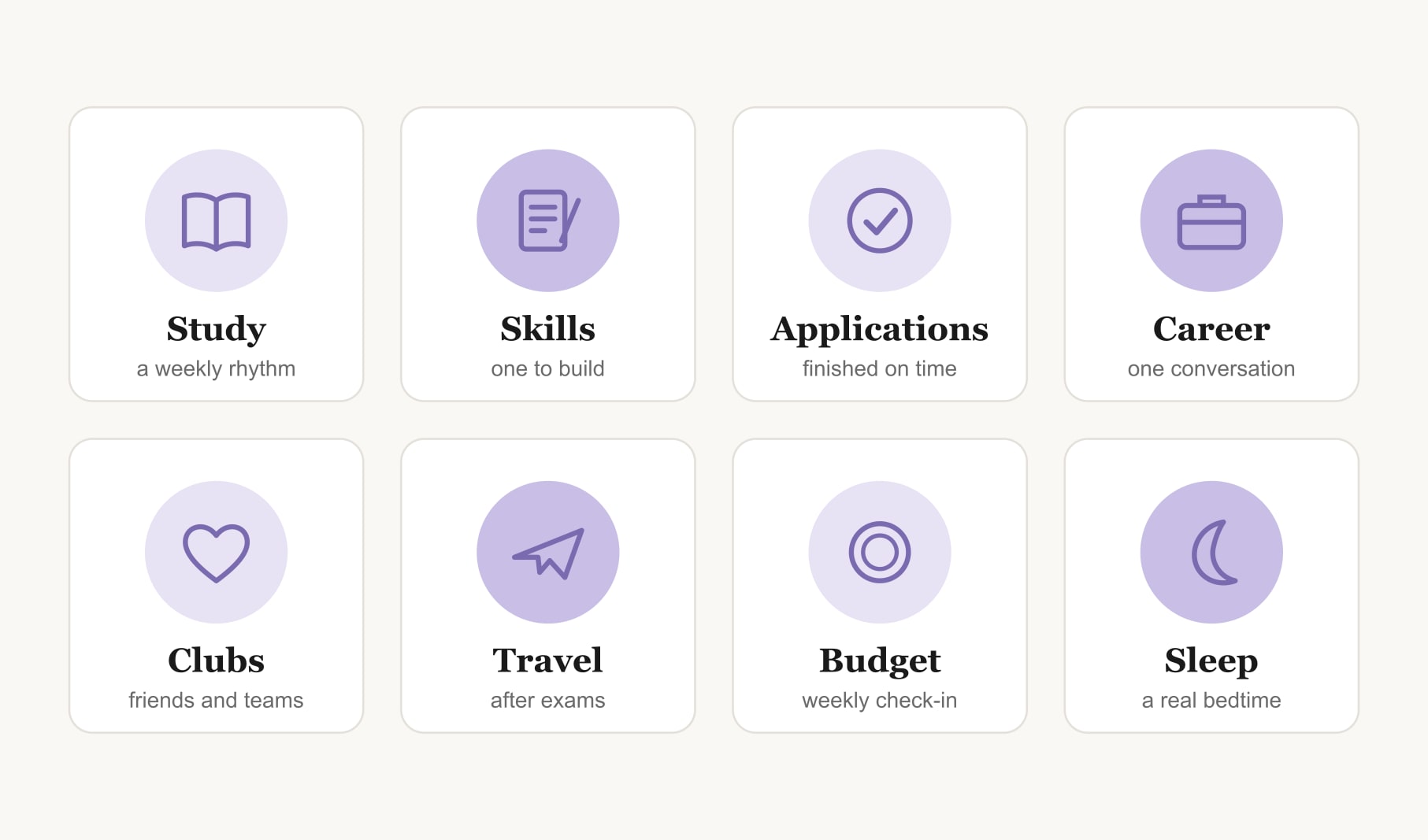
The best vision board ideas for students focus on habits you control: a weekly study rhythm, a skill to build, an application to finish, a club to join, a budget to keep and enough sleep. Picture each one, add a deadline from your term calendar, and write the smallest possible first step underneath.

Student life comes with built-in deadlines, which makes it perfect for a vision board. These vision board ideas for students work whether you are in secondary school, college, university or studying as an adult alongside a job. The trick is to aim the board at things you control, like effort and habits, rather than things you do not, like exam results.
What are good vision board ideas for students?
Study and grades
- A calm, tidy study spot, pictured the way you want it.
- A weekly study rhythm, like three focused forty minute sessions.
- A grade target, written as the effort behind it: “practise past papers every Sunday”.
- A finished project or dissertation, with its hand-in month.
Skills and the future
- A course, certificate or language you are adding alongside your studies.
- An application finished: university, internship, scholarship or first job.
- A career you want to explore, with one conversation to book. A career vision board for students is built for exactly this.
Life beyond the books
- A club, team or society you want to join.
- A study abroad term, or a trip after exams.
- A weekly budget you can actually keep.
- Sleep: a bedtime that gives you enough rest to think clearly.
- Time with friends that has nothing to do with work.
Notice that none of these ideas are about being the best in the class. They are about showing up for yourself in a way you can keep up, which is what actually carries you through a long year of study.
For money and wellbeing goals, these are ideas for a board, not financial or medical advice. If study stress is getting heavy, talk to someone you trust or to your school’s support services.
Why should student vision boards focus on effort, not results?
Because effort is the part you control. Nobody can promise you a grade, but you can decide to practise past papers every Sunday. Effort goals also protect you on the day a result disappoints: the habits are still there, and they still count. Put the result on the board if it motivates you, but write the effort underneath it.

How do students use a vision board with a busy timetable?
Use your term calendar as the backbone. Put deadlines and exam dates next to the relevant images, then work backwards to weekly steps. If you tend to put things off, you are in good company, since procrastination is one of the most studied habits in psychology. The fix is usually a first step so small it feels silly, like opening the document. Track those small wins in a habit tracker for your vision board.
Can a class or group make vision boards together?
Yes, and it works well in classrooms, clubs and study groups. Everyone makes their own board, then shares one goal with the group for a little encouragement. Keep personal goals personal if sharing them feels uncomfortable. For ready layouts, try the school vision board or the academic goals vision board.
What does a student vision board look like in practice?
Here is a simple one for a term. At the top, the word “steady”. Below it, five images. A tidy desk, with “three forty minute study sessions a week, first step: block them in my calendar.” A stack of past papers, with “one paper every Sunday, first step: print the first one.” A campus notice board, with “join the climbing club, first step: go to the taster session.” A jar of coins, with “a weekly food budget, first step: check it every Friday.” And a dark, calm bedroom, with “bed by eleven on weeknights, first step: phone charging outside the room.” Five goals, five tiny steps, one term.
Should students make a paper or a digital vision board?
Whichever you will actually see. A paper board above your desk works well if you study in the same place every day. A digital board on your phone suits students who move between classes, libraries and part-time jobs. Many students do both: a paper board at home and a photo of it as their lock screen, so it follows them to every lecture and every late-night study session.
When should students update their vision board?
At the start of each term or semester, when the timetable and deadlines change. Take down goals you have reached, and keep them somewhere as proof of a term well used. Add the next set of deadlines, choose new first steps, and give the board a quick look each week. A student board that changes with the calendar stays useful all year instead of fading by the second week of term.
Keep reading
Vision board ideas for students: your questions
Good vision board ideas for students include a tidy study spot, a weekly study rhythm, a skill or course, a finished application, a club to join, a budget to keep and a regular bedtime. Focus on habits you control and add a deadline to each one.
Students can put grade targets on a vision board, but pair each with the effort behind it, such as practising past papers every Sunday. Effort is what you control, and it keeps the board useful even when a result does not go the way you hoped.
Students can make a vision board by choosing three to five goals for the term or year, finding one image per goal, adding a deadline from the term calendar and writing a small first step under each. Paper, digital and browser boards all work well.
A vision board can help students with procrastination by keeping goals visible and pairing each one with a tiny first step, such as opening the document. Small, specific actions are easier to start than big vague tasks, and each small win builds momentum.
A university student might put a study rhythm, a dissertation or project deadline, an internship or graduate application, a society, a budget, travel after exams and a healthy sleep routine on a vision board. Choose three to five for this term.
Yes. Teachers often use vision boards with students to encourage goal setting. Each student makes a personal board, then shares one goal if they feel comfortable. Keep the focus on effort and habits, and let students keep private goals to themselves.
Students should update a vision board at the start of each term or semester, when deadlines and priorities change. A quick weekly look at progress helps too. Swap goals once they are done and add new ones as the next timetable arrives.
Keep your vision board alive
A board built in your browser resets when you close the tab. Vision Boardly saves your boards, reminds you as each vision date arrives, and tracks the habits and moods moving you toward them.
Get Vision Boardly Free