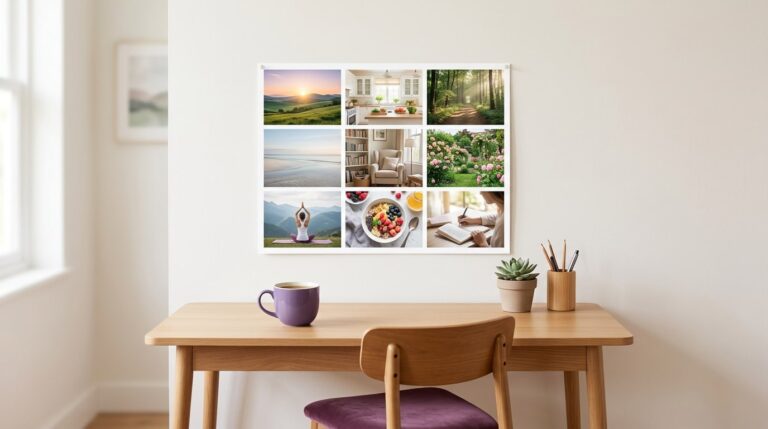
Vision Board Goals
Vision Board Goals
A picture shows where you are going. A goal tells you how to get there. Here is how I turn one into the other.
Vision board goals turn each image into something you can act on. For every picture, write one specific goal, a target date and the first step you will take this week. Keep three to five goals on a board, review them weekly, and move dates when life changes rather than abandoning the board.

The prettiest board in the world does nothing if the pictures never turn into plans. That is where vision board goals come in. The image holds the feeling and the goal holds the instructions. You need both, and the good news is that the second part takes about ten minutes per picture.
What is the difference between a vision and a goal?
A vision is the picture: a calm home, a trip, a body that feels strong. A goal is the specific thing you will do or reach, by a certain time. “A calm home” is a vision. “Clear and repaint the living room by the end of spring” is a goal. The vision keeps you wanting it. The goal tells you what Tuesday looks like.

How do you write vision board goals that work?
I use a simple check, loosely based on the SMART criteria that many coaches and managers use. Each goal should be:
- Specific. Name the thing. Not “travel”, but “a week in the mountains”.
- Measurable. You can tell when it is done.
- Yours. It passes the “do I actually want this?” test.
- Dated. A target month, written under the image.
- Started. It has a first step you can take this week.
That last one is my own addition, and it is the one that matters most. A goal without a first step is still a wish. If you like this structure, a SMART goals vision board is built around it.
How many goals should a vision board have?
Three to five for most people, nine at the very most. Every goal needs attention every week, and attention is limited. If you have fifteen goals, pick the five that would make the biggest difference and park the rest on a list. They are not rejected, just waiting their turn.
How do you track vision board goals?
Once a week, look at each goal and ask one question: what moved? Tick progress, write the next first step, and move any date that needs moving. I keep the tracking separate from the board so the board stays beautiful. A goal tracker for your vision board does exactly that, with every goal and its progress in one place.
For habit-based goals, like running or saving, track the habit rather than the outcome. You cannot control whether a promotion happens this month, but you can control whether you practised the skill four times.

How do you break a big vision board goal into steps?
Big goals are where boards stall, because “write a book” gives you nothing to do on a Wednesday evening. So work backwards. Start with the finished goal, then ask what has to be true a month before, then a month before that, until you reach something you could do this week. “Write a book” becomes “finish chapter one by March”, which becomes “write for twenty minutes on three evenings this week”. Put the nearest milestone on the board, not the mountain. When you reach it, swap in the next one and give yourself a moment to enjoy the swap.
What if you are not reaching your vision board goals?
First, be kind about it. Most goals take longer than planned, and that is normal rather than failure. Then check three things: is the goal still yours, is the first step small enough, and is the board somewhere you actually see it? Usually one of those is the problem. Shrink the step, move the date or move the board, and keep going.
It also helps to tell one person. Not the whole internet, just one friend who will ask how it is going. A little gentle accountability does a lot of quiet work.
Which goals work best on a vision board?
Goals you can picture. “Finish my course” becomes a photo of a desk by a window. “Save for a deposit” becomes a photo of the kind of front door you want. Abstract goals, like “be more confident”, work better as a feeling image plus a concrete action: a photo of a small, friendly event, with “say one thing in every team meeting” underneath.
One more thing: celebrate when a goal is done. Take the image down, write the date you reached it on the back, and keep it somewhere. That little stack of finished goals becomes proof, on the harder days, that your board works.
For ideas by life area, browse my vision board ideas, and for setting up the board itself, see how to make a vision board. Then pick your three to five, give each a date and a first step, and start this week.
Keep reading
Vision board goals: your questions
Vision board goals are the specific, dated targets behind each image on your board. The picture shows what you want, and the goal states exactly what you will do or reach and by when. Pairing each image with a goal and a first step turns the board into a plan.
Three to five goals is the sweet spot for most vision boards, with nine as a sensible maximum. Each goal needs attention every week, so fewer goals usually means more progress. Keep extra ideas on a list and add them as current goals are reached.
Write each vision board goal so it is specific, measurable, truly yours, dated and started. For example: a week in the mountains by September, first step, choose the week. Keep it to one sentence under the image, so it is easy to read at a glance.
Yes, a target date makes vision board goals far more likely to move. It tells you what to focus on now and what can wait. Treat dates as guides rather than verdicts, and move them when life changes instead of giving up on the goal itself.
Review your vision board goals once a week. Ask what moved, write the next small step and adjust any dates. Keep detailed tracking in a separate goal tracker or notebook, so the board stays clear and easy to read while progress is recorded elsewhere.
Break big vision board goals into smaller milestones and put the nearest one on the board. A goal like writing a book becomes finishing chapter one by a certain month. Small, visible wins build momentum and make the larger goal feel achievable again.
Yes, but pair each feeling with an action. A goal like feeling calmer works best with a concrete habit, such as ten quiet minutes every morning. The feeling gives the vision board goal its meaning, and the action gives you something to do this week.
Keep your vision board alive
A board built in your browser resets when you close the tab. Vision Boardly saves your boards, reminds you as each vision date arrives, and tracks the habits and moods moving you toward them.
Get Vision Boardly Free