Vision Board Word Ideas
Not another list. Six places to find words that are already yours, and six formats that make them work on a board.
The best vision board word ideas come from your own life: words you repeat in your journal, the feeling you want from each goal, a verb from the goal itself, a place you love or your hobby’s vocabulary. Then try formats such as word pairs, "less, more" lines, "from, to" lines and identity words like reader or host.
There are plenty of word lists out there, including my own lists of vision board words by life area. This piece is different. The vision board word ideas below are about where to find words that are already yours, and how to shape them so they work hard on a board. A word you found in your own life will always mean more than one you picked from a list.
Why look for vision board word ideas in your own life?
Because borrowed words fade. “Abundance” or “flourish” can look lovely and still feel like someone else’s language by February. A word you already use, or one tied to something you love, carries memories and meaning with it. When you see it, you do not just read it. You remember why it matters.
Where do your best words come from?
I use six sources, and most people find their word in the first three.
- Your own notes. Read back through a journal, your phone notes or old messages to friends. Which words do you repeat when you describe what you want? Those are your words.
- The feeling behind each goal. For every goal on your board, finish the sentence “When this happens, I will feel…”. The last word is often the right one.
- A verb from the goal itself. If the goal is to plant a vegetable bed, the word might be “grow”. If it is to finish a course, it might be “complete”.
- A place you love. The name of a coastline, a mountain or a grandparent’s town can stand for a whole feeling.
- A language you grew up with. A word from your family’s language can hold more warmth than any English one.
- Your hobby’s vocabulary. Runners have “tempo”. Gardeners have “harvest”. Bakers have “proof”. Musicians have “rehearse”. These words are specific, active and private jokes with yourself.
What formats can a word take?
A single word is only one option. Try these formats too.
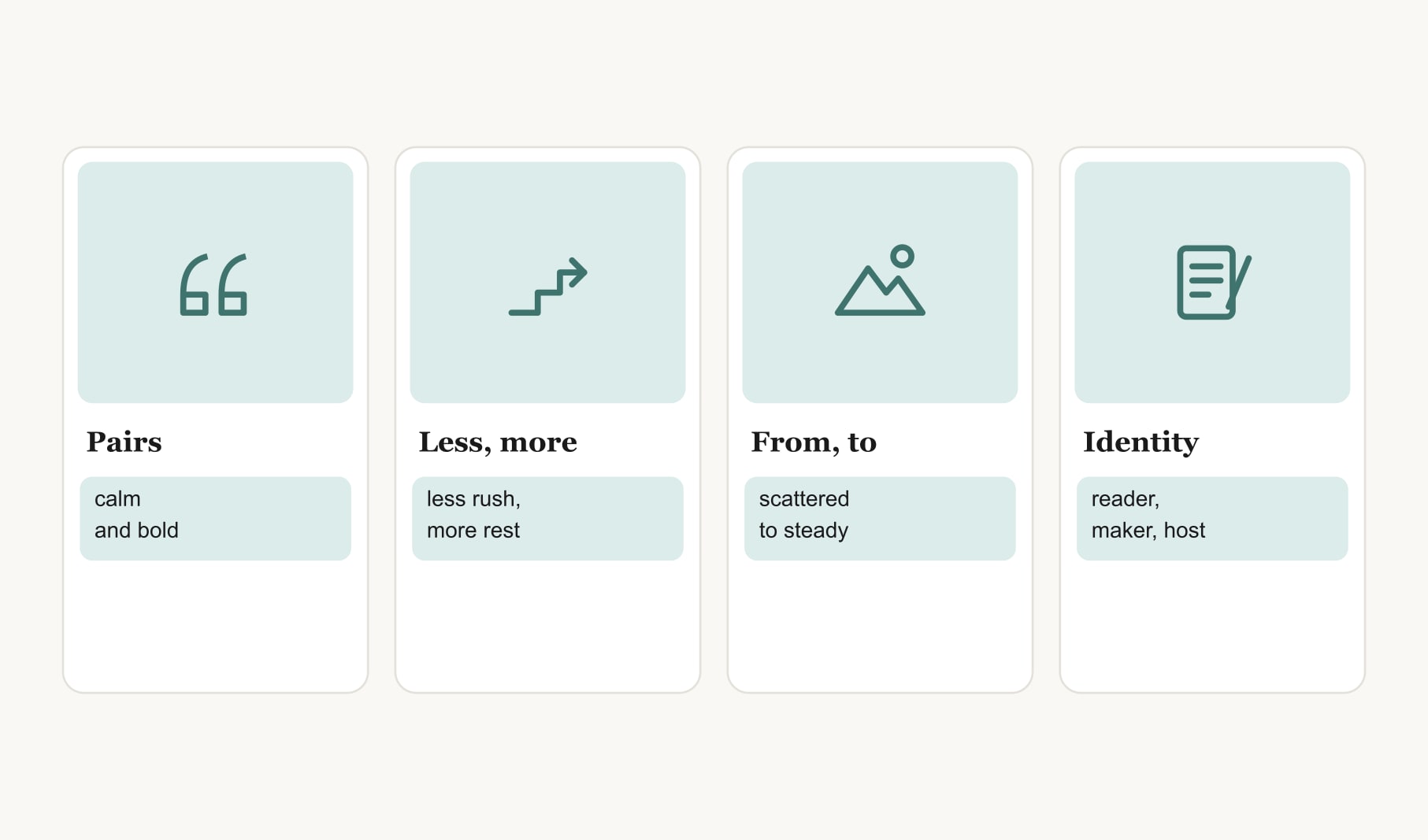
- Word pairs: two words that balance each other, such as “calm and bold” or “rest and rise”.
- Less, more lines: “less rush, more rest”, “less scrolling, more making”. They name the swap you want.
- From, to lines: “from scattered to steady”, “from renting to rooted”. They describe the change.
- Identity words: a role you are growing into, such as “reader”, “maker”, “host” or “runner”.
- Number words: “four walks”, “twelve books”. Specific and easy to track.
- Question words: “what if?” or “why not?”, for a year of experiments.
How do you test a word idea?
Say it out loud three times. Then imagine reading it on a grey Tuesday when nothing is going right. If it still gives you a small lift, it passes. If it makes you feel judged, drop it. A good board word should feel like a friend’s nudge, never a boss’s memo.
If you want help turning a word into a full sentence, the affirmation generator can draft a few versions around it, and you can keep the one that sounds most like you.
Where do word ideas go on a board?
Match the format to the spot. A single guiding word or an identity word goes at the top, large. Less, more lines and from, to lines sit under the image they describe. Number words go in captions, right next to the date. Hobby words can sit anywhere, small, like a wink. Building the layout in a vision board maker lets you add a caption to every square, which is where most of these formats live.
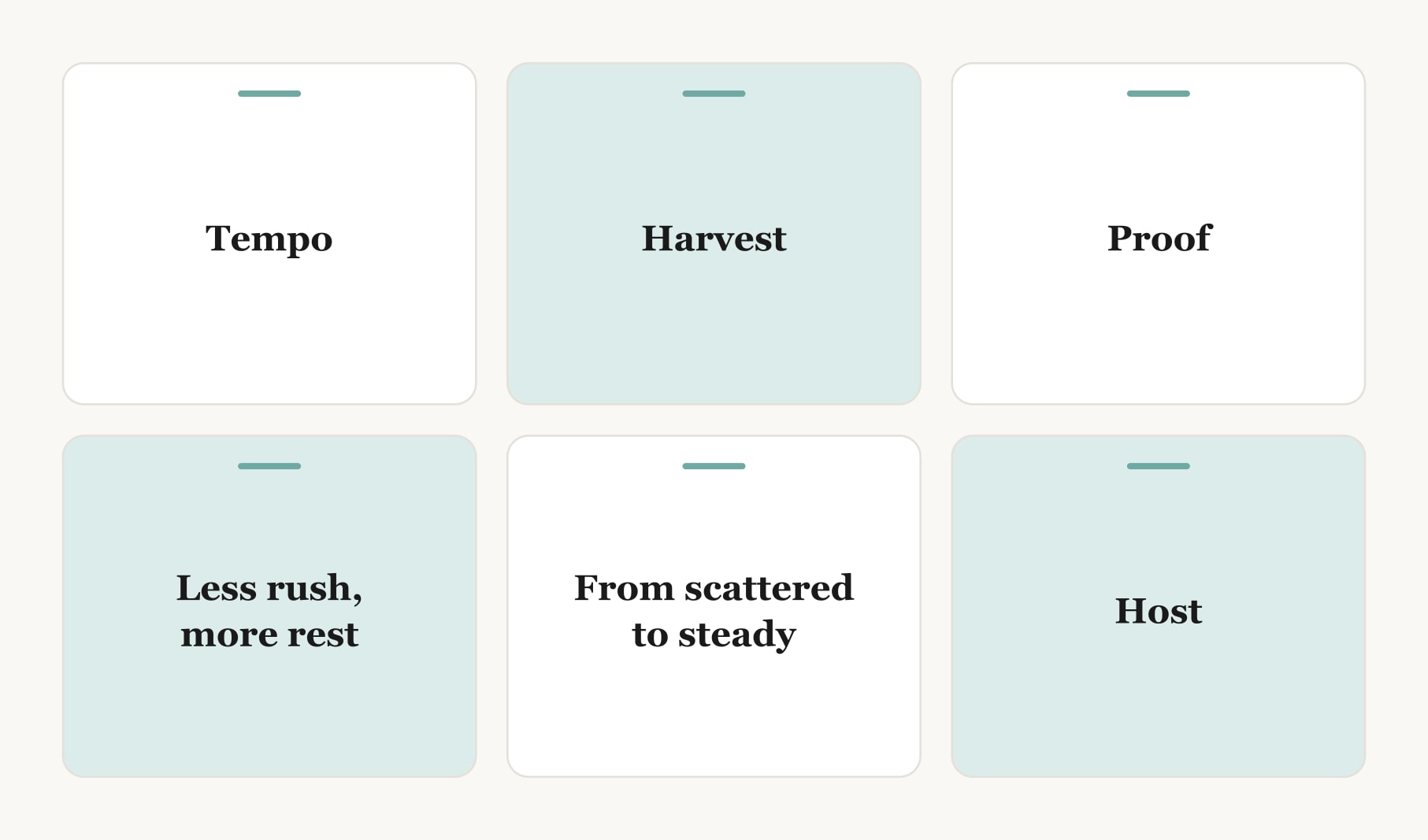
What does a finished board with word ideas look like?
Here is one for a runner who is also changing jobs. At the top, the identity word “runner”. Under a race photo, “tempo” and “half marathon, October”. Under a new office, “from stuck to stretching”. Under a calm living room, “less rush, more rest”. Under a bookshelf, “twelve books”. Under a table of friends, “host, monthly”. Six squares, six different word formats, and every word came from the person’s own life. That is what makes it work.
Which words tend to fall flat on a board?
Words that sound impressive but mean little to you, such as grand abstract nouns you would never say out loud. Words that describe how others should see you rather than how you want to live. Words that carry a hidden scold, like “finally” or “should”. And words so common that your eye no longer registers them. None of these is wrong, but each one is easy to skim past. A plain word with a personal story behind it will outlast them all, because every time you read it, you remember where it came from.
How many words should one board hold?
One per square at most, plus one guiding word at the top. Fewer is often better. If you love more words than you have squares, keep the extras on a list and swap them in when a goal moves to a new stage.
How do you know a word is still working?
Notice how you feel when you pass the board. A quick daily note in a mood tracker for your vision board shows whether a word still lifts you or has turned into wallpaper. When it fades, go back to the six sources and find the next one. Your vision board word ideas will keep coming as long as you keep living, noticing and writing things down.
Keep reading
Vision board word ideas: your questions
Look in your own life first. Reread your journal or phone notes for words you repeat, finish the sentence "When this happens, I will feel" for each goal, or borrow a word from a hobby or a place you love. Those words mean more on a vision board than any list.
Besides single words, try word pairs such as "calm and bold", less and more lines such as "less rush, more rest", from and to lines, identity words like "reader" or "host", number words like "twelve books" and question words such as "what if?" on your vision board.
Say the word aloud three times, then imagine reading it on a day when nothing is going right. If it still lifts you, it belongs on your vision board. If it makes you feel judged or pressured, drop it and try another source.
Put a single guiding word or identity word at the top of the vision board, large. Place less and more or from and to lines under the images they describe, and keep number words in captions beside the dates. Hobby words can sit anywhere, small.
Use one word or short line per square at most, plus one guiding word at the top. Fewer words often work better on a vision board, because each one gets noticed. Keep extra word ideas on a list and swap them in as goals change.
Yes. A word from a language you grew up with or love can hold more warmth than any English word. Use it on your vision board exactly as you would say it, and add a small translation underneath only if you want others to understand it.
Hobby words are terms from something you love doing, such as "tempo" for runners, "harvest" for gardeners or "proof" for bakers. They are specific and active, and on a vision board they work like a private reminder of the person you are becoming.
Keep your vision board alive
A board built in your browser resets when you close the tab. Vision Boardly saves your boards, reminds you as each vision date arrives, and tracks the habits and moods moving you toward them.
Get Vision Boardly Free