
What Is a Vision Board
What Is a Vision Board
A vision board is a picture of the life you are building, kept where you can see it. Here is what that really means, and what it does not.
A vision board is a collage of images and words that represent your goals, kept somewhere you see it every day. It turns vague wishes into a visual reminder of what you want, so you notice chances to act. The best ones pair each image with a date and a first step.
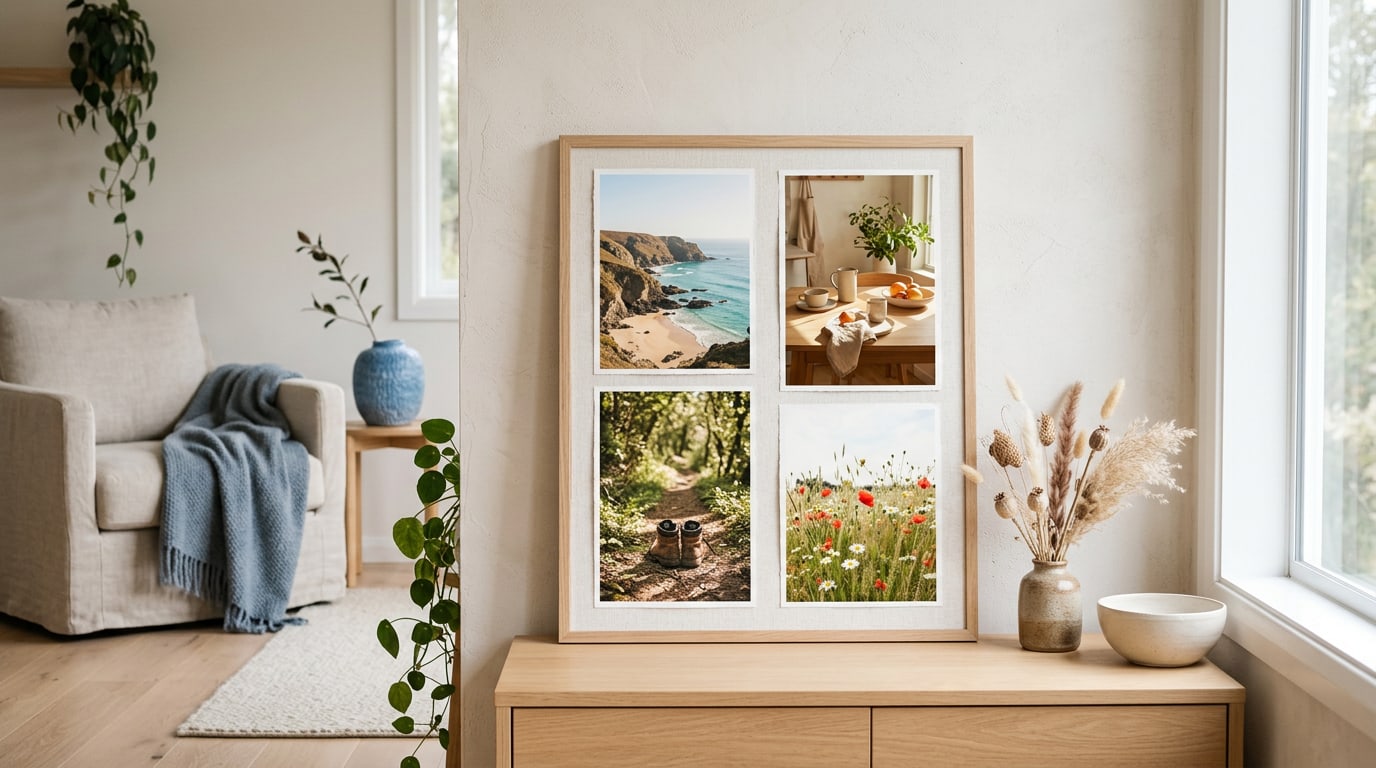
If you have ever saved a photo of a place and thought “one day,” you already get the idea. So, what is a vision board? It is that feeling, made visible and put somewhere you cannot ignore it: a board, a page or a screen that holds pictures and words for the things you want in your life.
The Cambridge Dictionary definition of a vision board is a collection of pictures and words that someone puts together to represent their goals. I love that definition because it is plain. Nothing mystical is required and there is nothing you need to believe first. You pick what you want, you make it visible and you keep it close.
What is a vision board used for?
At its simplest, a vision board is a focus tool. Life is loud and your goals are usually quiet. A board keeps them in your eyeline, so on an ordinary Wednesday you still remember the course you wanted to take or the trip you are saving for.
People use vision boards in very different ways, and all of them are valid. Goal-setters use them as a visual plan. Some people make one as part of a spiritual practice, whether that is prayer, intention setting or manifestation. Creative people love the process of making them. New year planners use them to mark a fresh start. Same tool, different reasons.
What goes on a vision board?
Mostly images: photos of places, moments, spaces and feelings you want more of. Add a few words if they help, like a one-line reminder of why a goal matters. My favourite addition is a date and a first step under each image, which I will come back to. For a long list of options, here is what to put on a vision board, from images to words to small details.
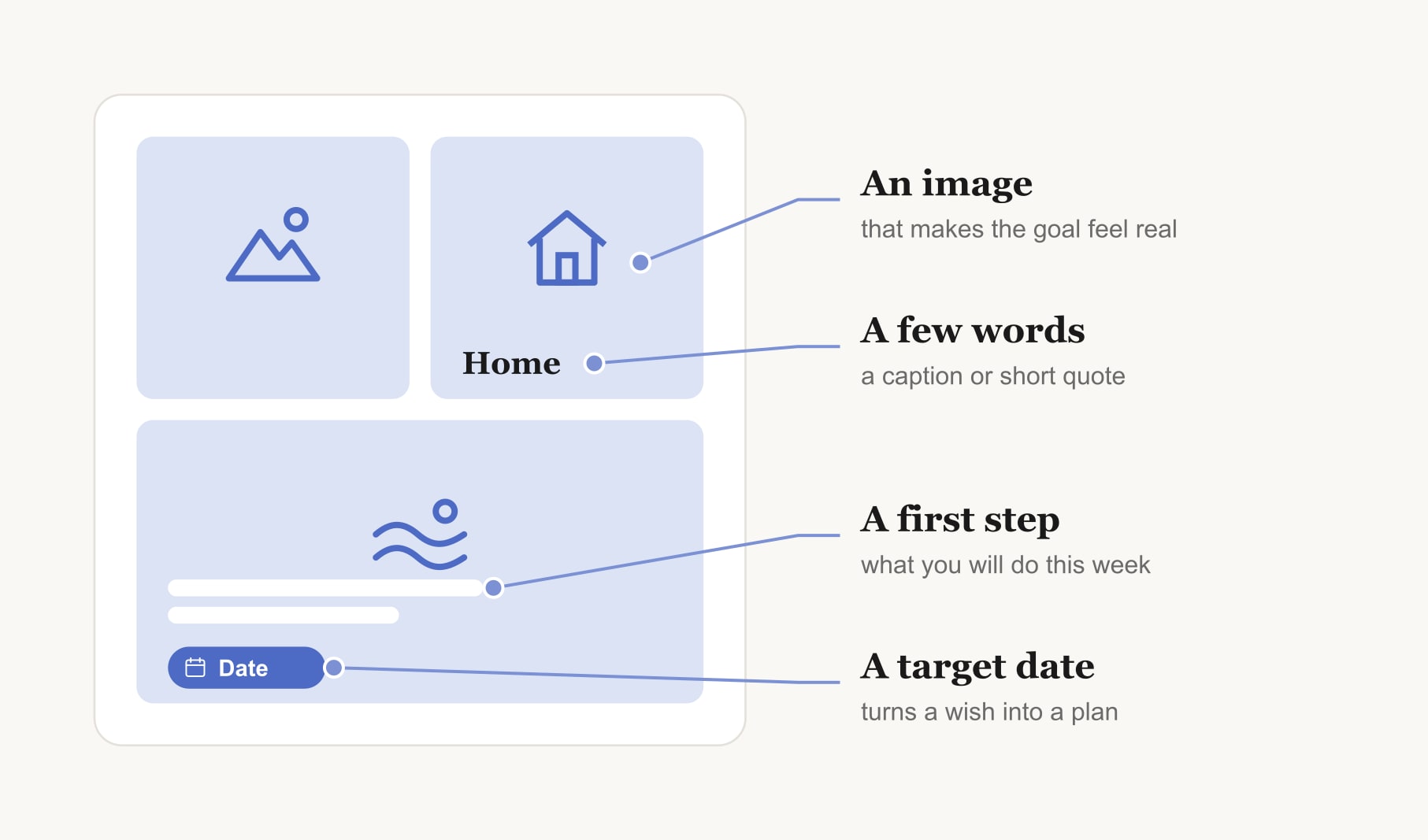
Keep it to the goals that genuinely matter to you right now. Three to five is plenty for most people, and nine is about the limit before a board turns into wallpaper.
Where did vision boards come from?
Collage is old, and so is the habit of keeping reminders of what we are working toward. The modern vision board, also called a dream board, became popular through self-help books and talk shows in the early 2000s. Wikipedia’s entry on the dream board notes that the writer Octavia E. Butler kept handwritten affirmations in private notebooks, which some see as an early version of the idea. Today you see vision boards everywhere, from classroom walls to phone lock screens.
Does a vision board actually work?
My honest answer: a vision board works when you treat it as the start of a plan, not the whole plan. Looking at a picture of your dream home will not buy it. What the board can do is keep your goals front of mind, so you make small choices in their favour more often.
Research backs up that nuance. The psychologist Gabriele Oettingen has found that fantasising about a perfect outcome can leave people feeling as if they already got there, and less driven to act. Studies on goal setting keep finding that specific goals with a plan beat vague hopes. So the version of a vision board I trust pairs every image with a target date and one first step. It keeps the dream and adds the doing.
It also helps to record what happens next. A manifestation tracker lets you note what you did toward a vision each day, which turns the board into something you practise rather than something you hang.
How is a vision board different from a goal list?
A goal list tells you what to do. A vision board shows you why you want to do it. The list is the logic and the board is the feeling, and you need both. When motivation dips, a sentence like “save for a deposit” is easy to ignore. A photo of a sunny kitchen with a table full of friends is much harder to walk past.
That is why I suggest a short written goal under each image. You get the pull of the picture and the clarity of the words on the same board.
What does a simple vision board example look like?
Picture a board with five squares. Running shoes on a trail, with “run a 10K within six months, first step: three short runs this week.” A calm desk by a window, with “finish my course this year, first step: book two study evenings.” A beach, with “a week by the sea with my best friend, first step: pick dates together.” A cosy room full of people, with “host dinner once a month, first step: send the invite.” And an open notebook, with “write every morning, first step: ten minutes before work.”
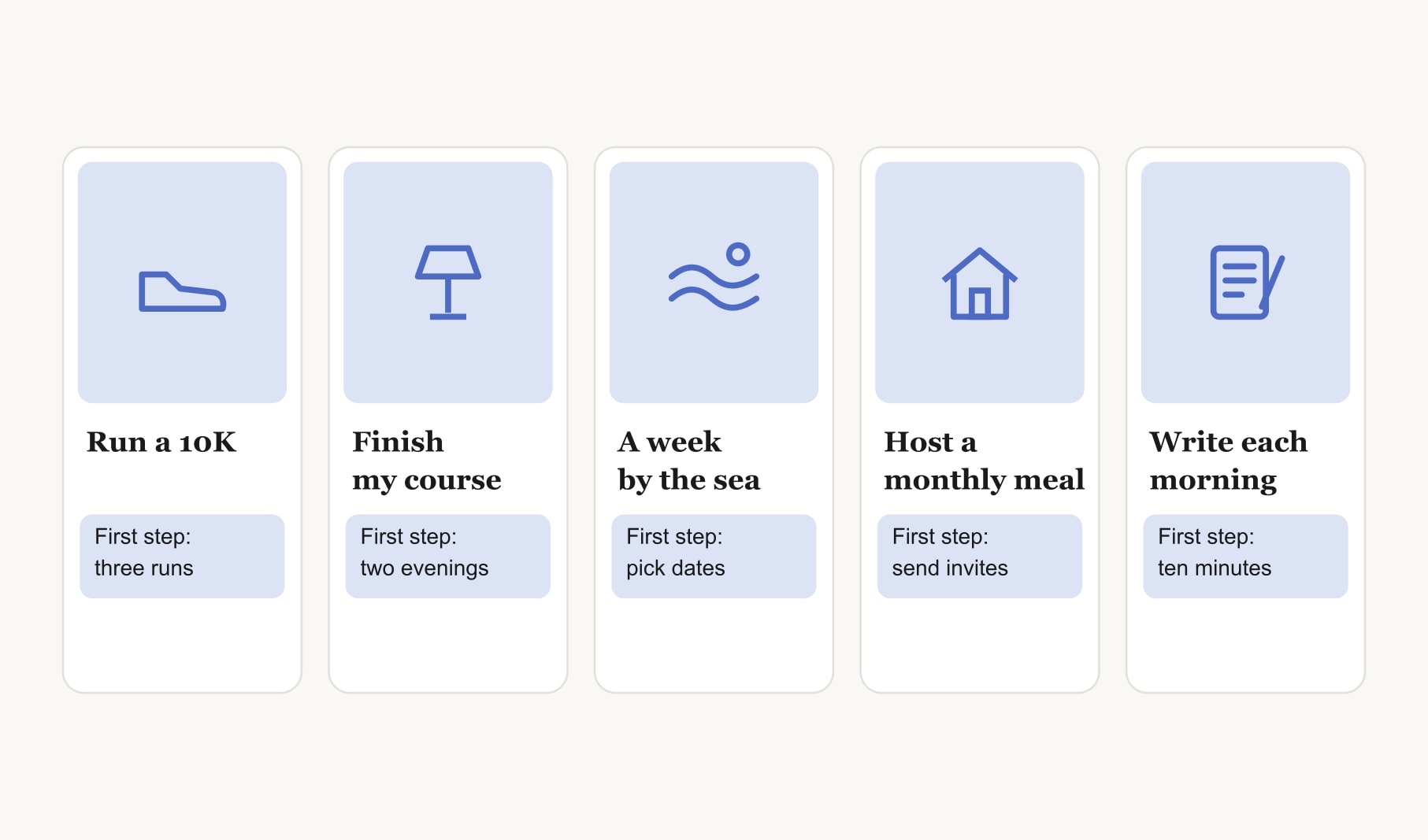
Five pictures, five dates, five tiny actions. That is a vision board that works.
How do you start your own vision board?
Start small. Pick three areas of your life, write one goal for each and find one image per goal. My step-by-step guide on how to make a vision board walks you through the whole thing, and if you want inspiration first, browse these vision board ideas for every area of life. Or pick a ready layout from the free vision board templates and fill it in tonight.
So that is my honest answer to what is a vision board. Whatever you believe about how goals come to you, a vision board does the same simple job: it keeps you pointed at them. It promises nothing on its own. It is a reminder you design yourself, of a life you are choosing to build, and that is more than enough.
Keep reading
What is a vision board: common questions
The purpose of a vision board is to keep your goals visible, so they shape your everyday choices. Seeing images of what you want each day keeps you clear on your priorities, helps you notice chances to act, and reminds you why a goal matters when your motivation dips.
A vision board and a dream board are the same thing under two names. Both are collages of images and words that represent your goals. Some people use dream board for looser, more aspirational boards and vision board for ones tied to plans, but there is no formal difference.
A vision board is not religious in itself. It is a visual goal tool that anyone can use. Some people make one as part of prayer, intention setting or manifestation practice, while others use a vision board purely as a planning aid. It fits any belief system, or none at all.
The main types of vision board are paper boards made with printed images and card, digital boards made on a phone or computer, and themed boards focused on one area such as career, travel or health. You can also make a yearly board, or a shared vision board with family.
A vision board can be any size you will actually look at. A sheet of card or a small cork board suits most homes, a notebook page works for private goals, and a phone screen works for a digital vision board. Leave room for three to nine images, and no more.
Yes, a vision board works at any age. Adults often use one for career, home, travel and relationship goals. Children and teenagers enjoy making a vision board about school, hobbies and friendships, and it gives families a gentle way to talk about what everyone hopes for.
Leave off anything you feel you should want rather than genuinely want. Also skip images that make you compare yourself unkindly with others, goals that depend entirely on someone else changing, and so many pictures that the vision board becomes cluttered and easy to ignore.
Keep your vision board alive
A board built in your browser resets when you close the tab. Vision Boardly saves your boards, reminds you as each vision date arrives, and tracks the habits and moods moving you toward them.
Get Vision Boardly Free