What to Put on a Vision Board
Not a list of stuff, a way of deciding. Three questions I ask of everything before it earns a place on my board.
What to put on a vision board comes down to three questions for each item: do I truly want this, can I picture my own version of it, and is there a first step I can take this week? Keep what passes all three, balance a few life areas, and leave everything else off for now.
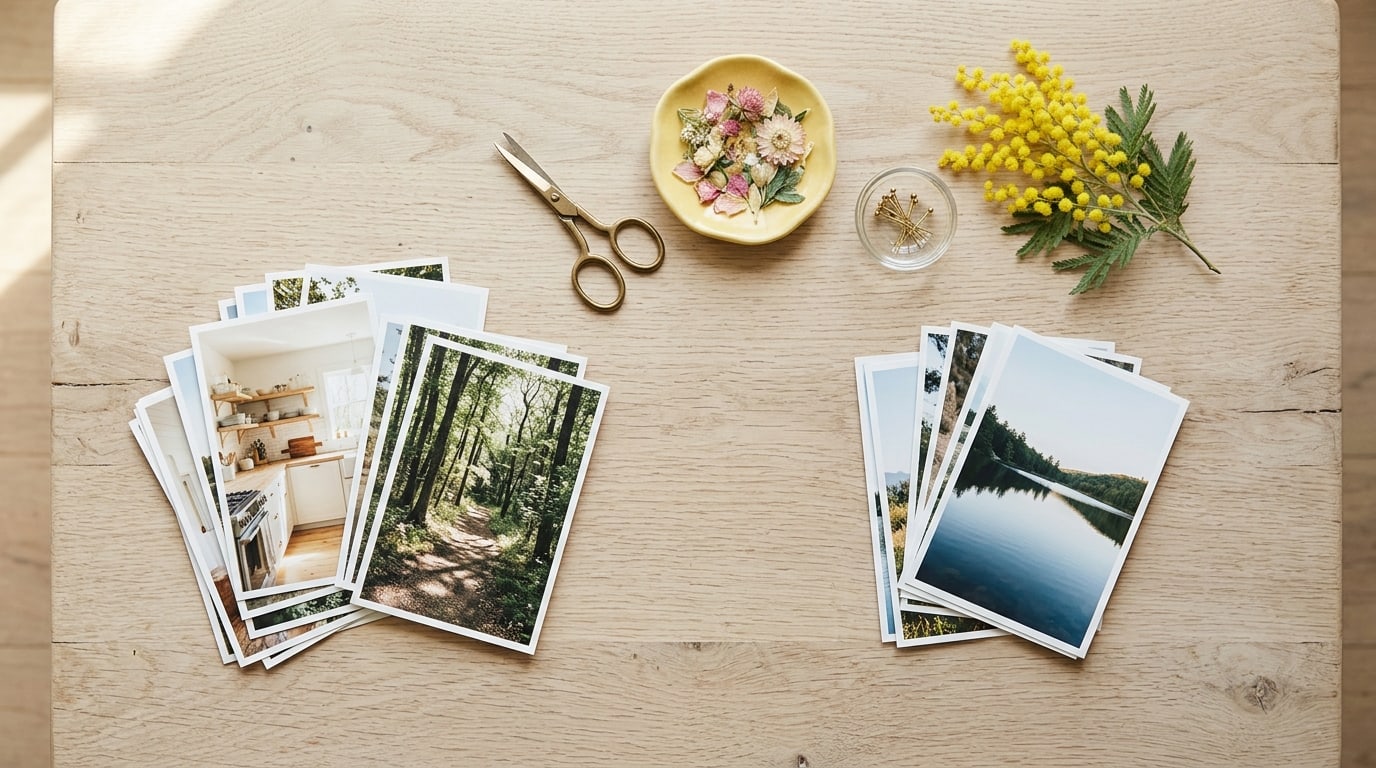
If you are staring at a pile of images wondering what to put on a vision board, the problem is usually not a lack of ideas. It is too many ideas and no way to choose. So instead of another list, here is the filter I use. If you want a list to feed into it, my guide to things to put on a vision board has plenty.
How do you decide what to put on a vision board?
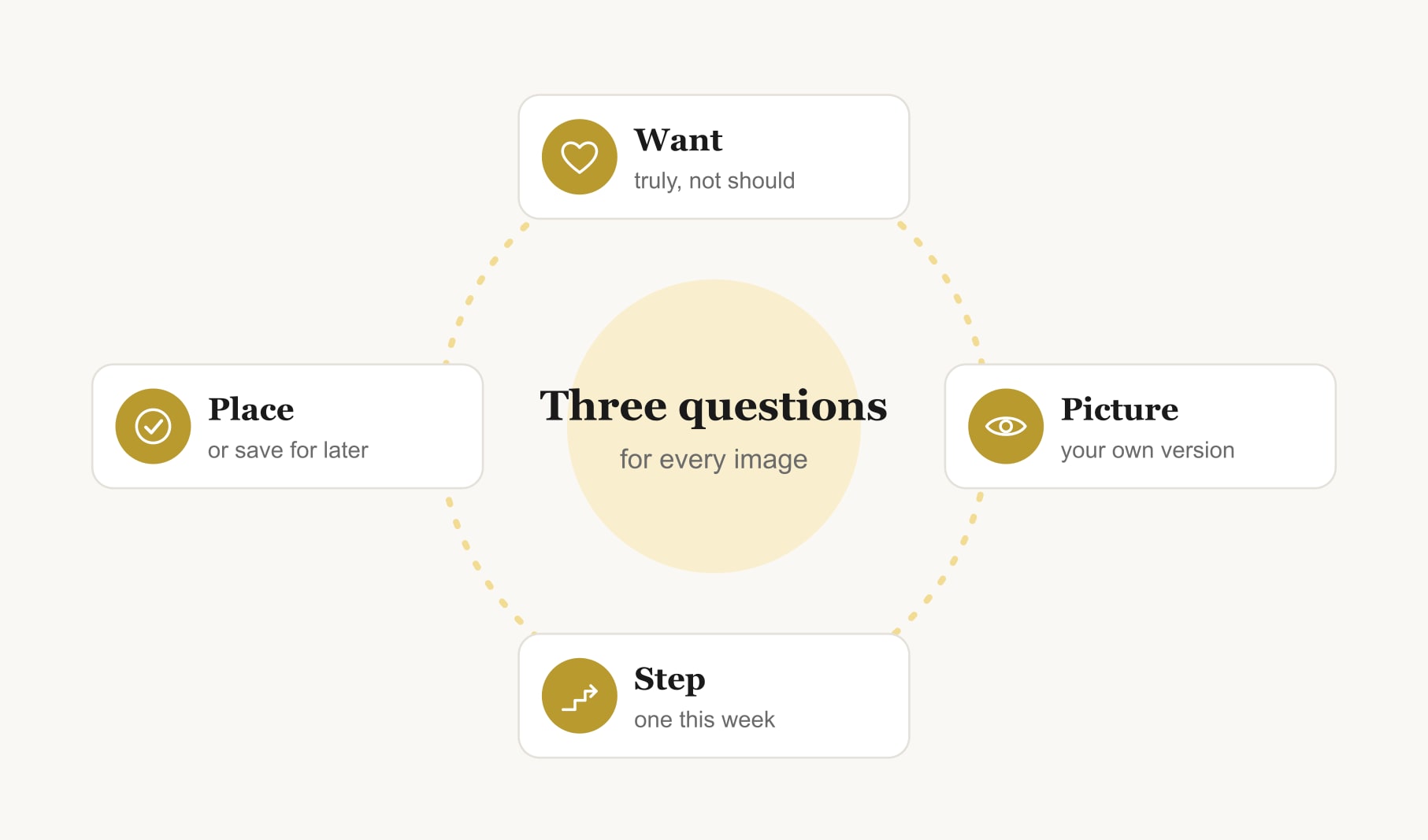
Every image, word or keepsake has to pass three questions:
- Do I truly want this? Not should, not would be nice. Want.
- Can I picture my own version? Not the magazine version, the one that fits your life, your home and your budget.
- Is there a first step I can take this week? If not, it might be a dream for a later board.
Anything that passes all three goes on. Anything that fails one goes in a folder for later. You are not throwing dreams away, you are choosing which ones get your attention now. The second question matters more than it looks: decades of research on goal setting keep finding that specific goals beat vague ones, and picturing your own version is what makes a goal specific.
Should your vision board cover every area of life?
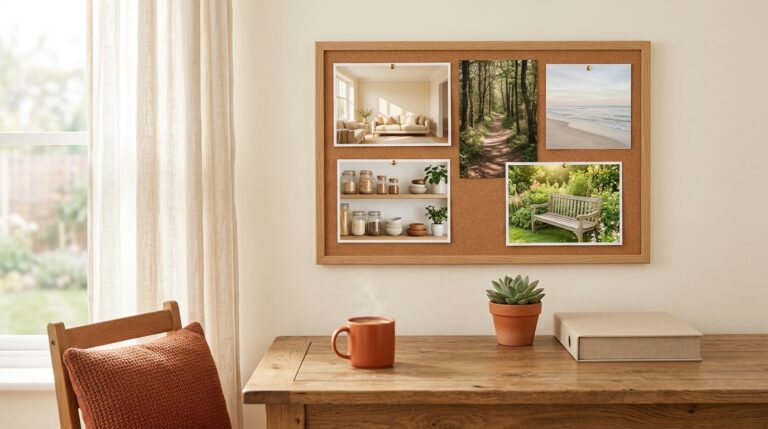
Not necessarily. A balanced board touches three to five areas, which stops one part of life taking over. But a focused board, all career or all rest, is just as valid when one area needs your full attention. Decide the purpose first: a whole-life board, a year board or a single-theme board. The purpose tells you what belongs. If you want help naming the areas, here are the main vision board categories.
How does the purpose of your board change what goes on it?
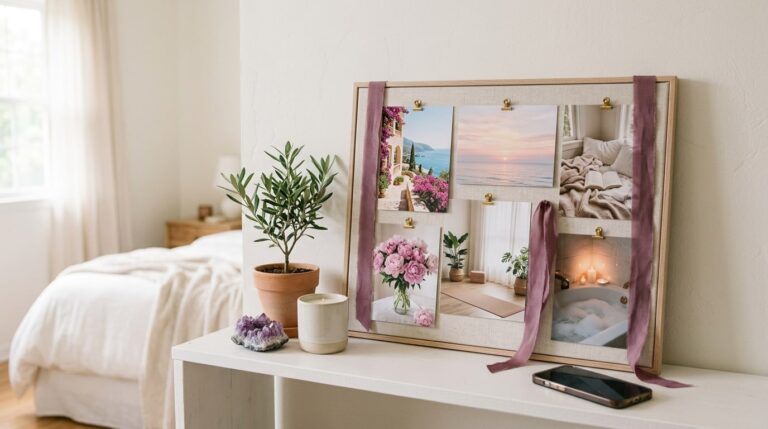
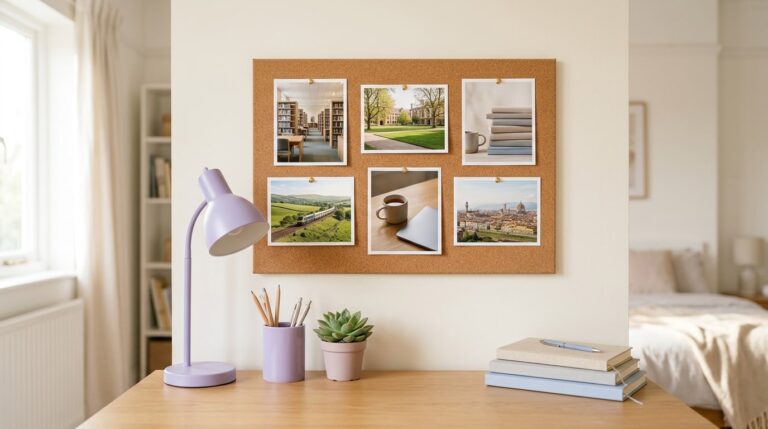
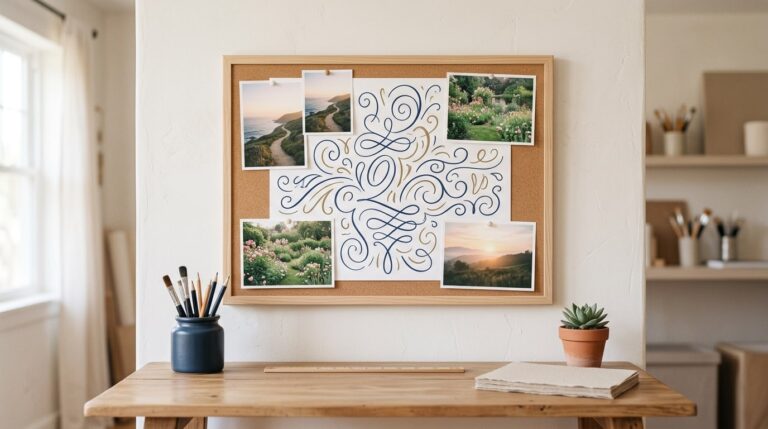
A whole-life board wants breadth: one image each for three to five areas, so you see your life as a whole. A year board wants time: goals spread across the months, with a word for the year at the top. A single-theme board wants depth: several images from one area, showing different parts of the same goal, like the course, the portfolio and the first client for a career change. Name the purpose in one sentence before you choose anything, and the three questions get much easier to answer.
What should the balance of images and words be?
Mostly images. I aim for roughly nine parts pictures to one part words: one word or quote for the whole board, plus a short date and first step under each image. Words explain and pictures pull. You need both, but the pull comes first. The layout itself is covered in my guide on how to make a vision board.
What should you leave off a vision board?
- Goals you feel you should want.
- Images that make you compare yourself unkindly with someone else.
- Anything that depends entirely on another person changing.
- Pictures you picked only because they looked pretty.
- More than nine things at once.
Keep the leftovers somewhere kind, not in the bin. I have a folder called “later” with dozens of images that did not make this year’s board. Every time I make a new one, I start by looking through it, and something that failed the first question two years ago often passes with flying colours now.
That last one is the hardest. Leaving things off feels like giving up on them. It is the opposite: a smaller board gives each goal a real chance of moving.

How do you know you have chosen the right things?
Look at the finished board and notice your first reaction. A small lift, or a sense of “yes, that is my life”, means you chose well. A heavy feeling or a list of chores means something borrowed slipped through. Take it off. Then give the board a week. If an image never catches your eye, it is telling you something too, and it is fine to swap it for one from your later folder.
What should beginners put on a vision board?
Start with three things: one goal you are excited about, one thing you want more of day to day, and one small comfort you want to protect. Three images, three dates, three first steps. It is enough to feel the board working, and you can add more once the habit of looking at it is set. Tracking those first steps in a goal tracker for your vision board makes the early progress easy to see, which is exactly what keeps you coming back.
Whatever you choose, remember the board is yours to change. Run anything new through the same three questions, and what to put on a vision board will never feel like guesswork again.
Keep reading
What to put on a vision board: your questions
Put things on your vision board that pass three questions: you truly want it, you can picture your own version, and there is a first step you can take this week. That usually means six to nine images, a word or quote, and a date under each image.
Decide what to put on a vision board by testing each image against three questions: do I want this, can I picture my version, and can I start this week? Keep what passes all three and save the rest in a folder for a future board.
Not necessarily. A whole-life vision board usually covers three to five areas, which keeps things balanced. A focused board on a single area, such as career or rest, is just as valid when that part of life needs your full attention right now.
Keep text to about a tenth of a vision board. One word or quote for the whole board, plus a short date and first step under each image, is plenty. The pictures create the pull, and the few words explain what to do about it.
Leave off goals you feel you should want, images that make you compare yourself unkindly, goals that depend entirely on someone else and pictures chosen only because they look pretty. If an item fails any of the three questions, save it for later instead.
A beginner can put just three things on a vision board: one exciting goal, one thing to have more of day to day and one comfort to protect. Add a date and first step to each. It is enough to feel the board working without any overwhelm.
Yes, and you should. Change what is on your vision board when a goal is reached, when something stops feeling like yours or when life shifts. Run new items through the same three questions, so the board stays honest and focused on what you want now.
Keep your vision board alive
A board built in your browser resets when you close the tab. Vision Boardly saves your boards, reminds you as each vision date arrives, and tracks the habits and moods moving you toward them.
Get Vision Boardly Free