Bullet Journal Vision Board Ideas
A bullet journal already holds your days. These ten spreads let it hold your visions too, right where you plan.
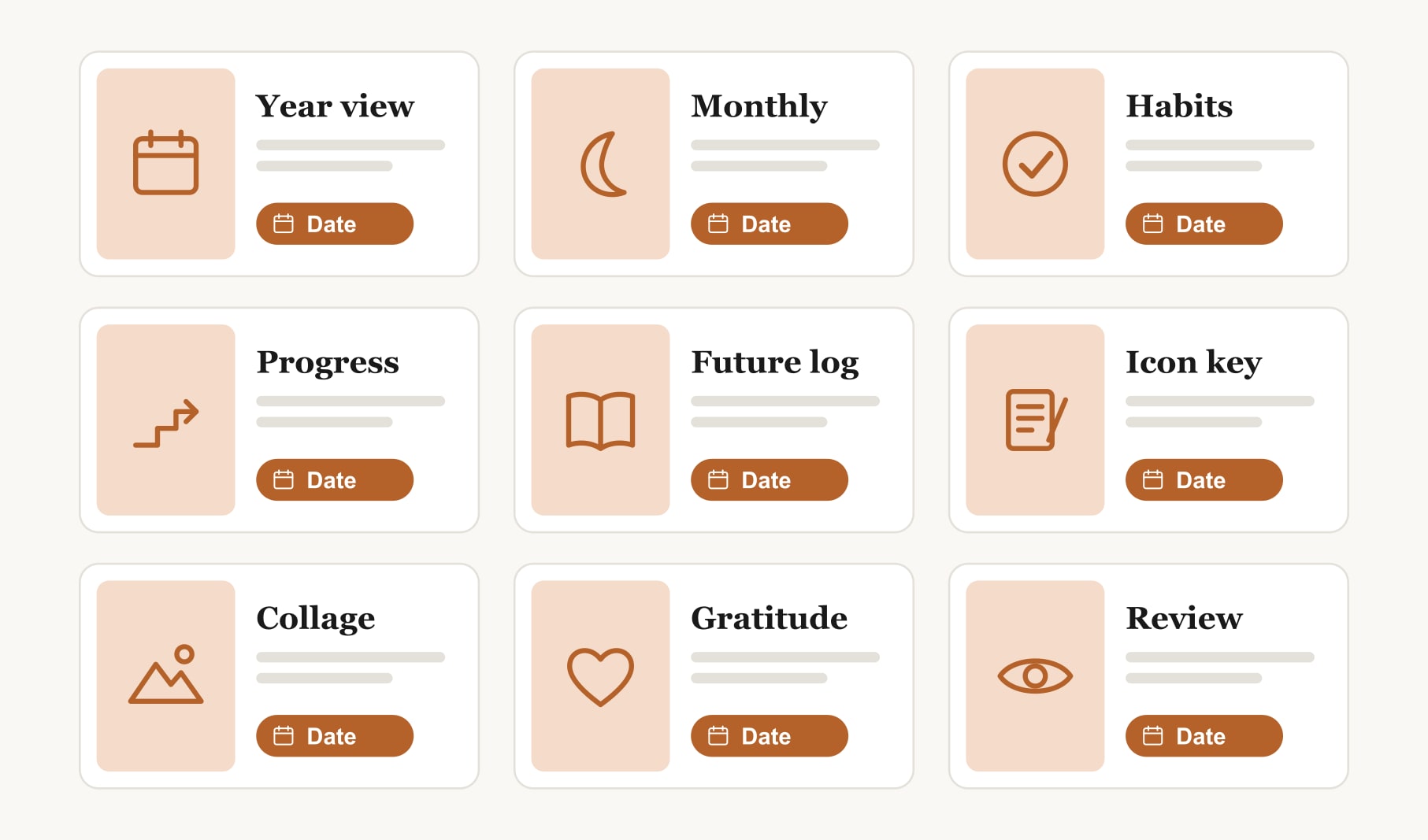
Good bullet journal vision board ideas include a year-at-a-glance vision spread, a mini board on each monthly opener, a habit tracker under each vision, progress bars for big goals, a future log with dated visions, an icon key, a collage spread, a gratitude log, a one-word page and a quarterly review spread.
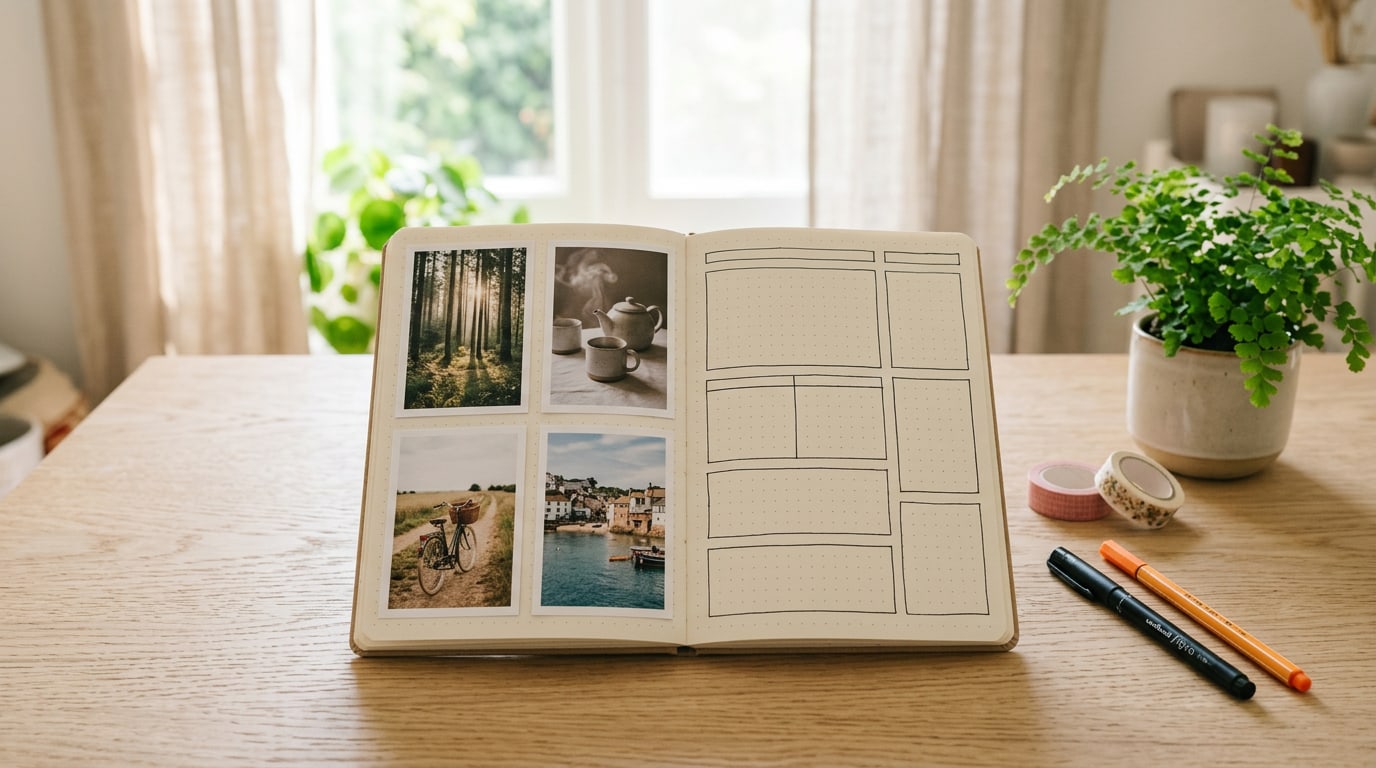
The lovely thing about a bullet journal is that you open it every day. That makes it one of the best homes a vision board can have. These bullet journal vision board ideas put your visions right beside your daily lists, habit trackers and monthly plans, so the big picture and the next step live on neighbouring pages. You do not need artistic skill. Neat boxes and a few printed photos go a long way.
If the method is new to you, the bullet journal overview on Wikipedia explains the basic system of logs and an index. Everything below slots into it.
What are the best bullet journal vision board ideas?
1. A year-at-a-glance vision spread
Near the front, give the whole year a spread. Glue in one small photo for each of your three to six visions, with the target month beside it. This is the page you return to when you lose the thread.
2. A mini board on each monthly opener
On the first page of each month, add a mini board of two or three images for the visions you will focus on that month. Changing it monthly keeps the journal fresh and stops you trying to push every goal at once.
3. A habit tracker under each vision
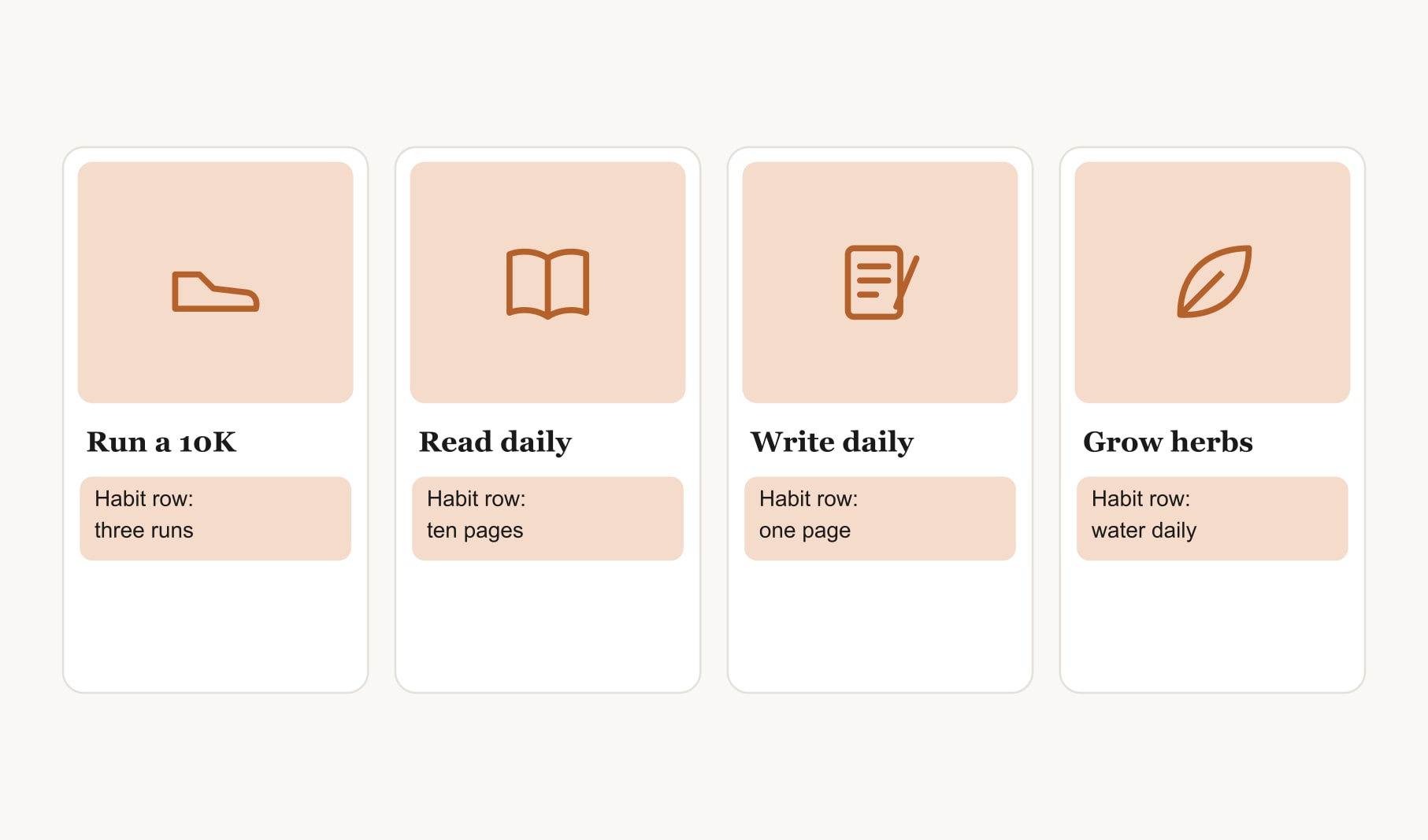
This is my favourite idea. Under each vision on your monthly page, draw one habit row: thirty little boxes for the small daily action behind it. A picture of a finish line sits above “three runs a week”. If you also like digital tracking, a habit tracker for your vision board mirrors the same rows in your browser.
4. Progress bars for big goals
For goals with a number, like saving for a trip or reading twelve books, draw a simple bar and fill a section each time you move forward. Bars are deeply satisfying to colour in.
5. A future log with dated visions
Most bullet journals have a future log for the months ahead. Add your visions to it, each with its target month. Now your visions sit beside birthdays and appointments, which makes them feel like real plans rather than wishes.
6. An icon key for your visions
Give each vision a tiny icon: a wave for swimming, a book for reading, a house for home. Add the icons to your key. Then use them in daily logs when you take a step, so you can see at a glance which visions are getting attention.
7. A collage spread
Once or twice a year, give yourself a full spread for a proper collage. Printed photos, washi tape, small stickers and a few words. It is the most decorative page in the journal and a lovely afternoon project. A sheet of vision board stickers adds colour without any drawing.
8. A gratitude log beside the visions
Next to your monthly vision page, keep a column for one line of gratitude a day. Noticing what is already good balances the reaching that a vision board invites. A gratitude tracker for your vision board is a digital version if your journal pages fill up.
9. A one-word page
Choose one word for the year and give it a full page: lettered large, with a few lines on what it means to you and how it shows up in each vision. Steady. Open. Brave. Return to it when you need a reminder of why the visions matter.
10. A quarterly review spread
Every three months, write a short review for each vision: what moved, what stalled and the next step. Move dates honestly. Celebrate anything finished. Then plan the next quarter’s monthly mini boards. This rhythm keeps the journal from becoming a beautiful record of plans you never touched.
How do you choose which spreads to start with?
Start with three: the year-at-a-glance spread, a monthly mini board and the habit tracker under each vision. Those cover the big picture, the current focus and the daily action. Add others once those feel natural. A journal full of half-finished layouts is discouraging, and you want this one to feel like a friend.
What does a finished monthly vision spread look like?
The left page holds the month’s name in neat capitals and three small photos in a row: a running track, a stack of books and a pot of basil. Under each photo, a short caption and a habit row of thirty boxes, some already ticked. The right page holds a gratitude column down one edge and a weekly log down the other, with tiny icons marking which visions got attention each day. It takes about twenty minutes to set up and feels calm, useful and personal.
What supplies do bullet journal vision boards need?
A dotted notebook, a fine-liner pen, a glue stick and small printed photos, around five by five centimetres. Washi tape and a few coloured pens are nice extras. If you prefer a planner that is already set up, a digital planner vision board gives you the same spreads on a screen.
Where in the journal should the vision pages go?
Put the year-at-a-glance spread right after your index and future log, so it is easy to find. Monthly mini boards go on each month’s opening page. Add every vision spread to the index with its page number. That small habit means you can flip to any vision in seconds, even in a journal that is half full by summer.
How do you keep a bullet journal vision board going?
Tie it to the habits you already have. You open the journal to plan each day, so glance at your monthly mini board as you do. Tick the habit rows each evening. Review quarterly. Small, regular touches keep the visions alive between the big, decorative spreads.
Keep reading
Bullet journal vision board ideas: your questions
Good bullet journal vision board ideas include a year-at-a-glance vision spread, a mini board on each monthly opener, a habit tracker under each vision, progress bars, a future log with dated visions, an icon key, a collage spread, a gratitude log, a one-word page and a quarterly review.
Start with a year-at-a-glance spread holding one small photo per vision and its target month. Then add a mini vision board to each monthly opener and a habit row under each vision. These three spreads connect the big picture to your daily bullet journal logs.
Small prints around five by five centimetres suit a bullet journal vision board, because they fit neatly on a dotted page with room for words beside them. Print several to a sheet on matte paper, trim them and fix them with a glue stick or washi tape.
Update the mini vision board on each monthly opener at the start of every month, tick habit rows each evening and write a fuller quarterly review every three months. Regular small updates keep a bullet journal vision board current without turning it into a chore.
No artistic skill is needed for a bullet journal vision board. Neat boxes, simple lines, small printed photos and a few icons look clean and calm. Washi tape and stickers add colour without drawing. Clarity matters more than decoration on these pages.
Yes, and it should. Draw one habit row of daily boxes under each vision in your bullet journal, so the small action behind every goal sits right beside its picture. Ticking boxes each evening shows progress building long before the vision itself is reached.
Keep your vision board alive
A board built in your browser resets when you close the tab. Vision Boardly saves your boards, reminds you as each vision date arrives, and tracks the habits and moods moving you toward them.
Get Vision Boardly Free