Are Vision Boards New Age
Partly in their recent history, and not at all in what they are. Here is where the board came from and how it fits any belief, or none.
Vision boards have recent roots in New Thought and New Age ideas about creative visualisation, which helped make them popular. But the tool itself is simply a collage of goals, with much older relatives in scrapbooks, prayer lists and athletes picturing success. It carries no doctrine, so it fits any belief, or none.
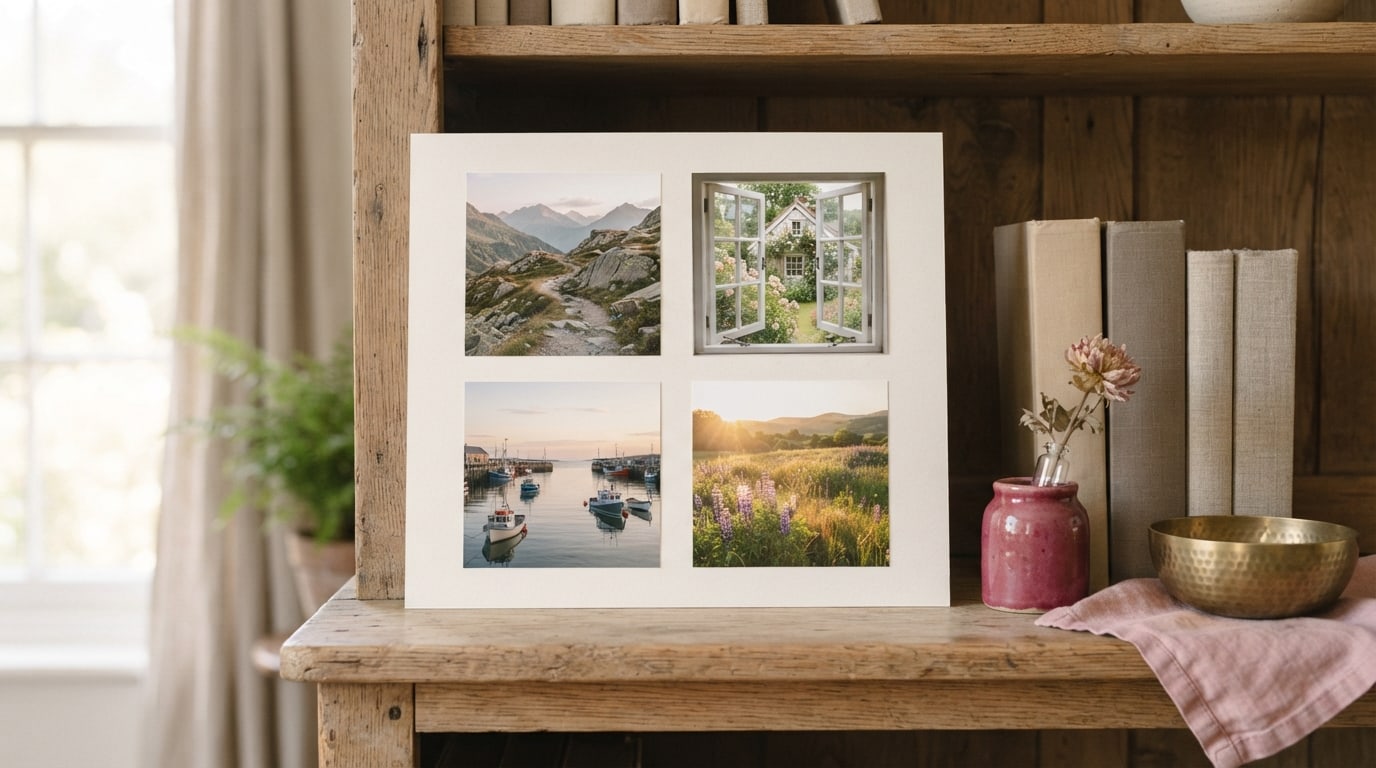
Are vision boards new age? Partly, in their recent history, and not at all in what they are. The modern board grew up alongside New Thought and New Age ideas about visualisation, and that history is worth knowing. Yet the habit underneath it, keeping pictures of what you hope for where you can see them, is far older and belongs to no single movement.
I want to walk you through where the board came from, so you can decide for yourself how it fits your own beliefs.
Where does the new age link come from?
The clearest thread runs back to New Thought, a spiritual movement that took shape in the United States in the nineteenth century. Its writers explored how thought and belief shape a person’s life, and those ideas fed into much of the self-help writing that followed.
In the late twentieth century, New Age and popular psychology writers developed creative visualisation, the practice of picturing yourself in the life you want. A popular book on the subject appeared in the late 1970s and helped spread the idea widely. Making a physical collage of those pictures was a natural next step.
Then self-help books and television brought the board into the mainstream in the early 2000s. Even today, Wikipedia’s dream board entry files the vision board under the New Age category. So the link is real, and there is no need to hide it.
Are vision boards new age, or older than that?
The tool is much older than its name. People have kept pictures of what they care about for as long as pictures have been easy to keep. Scrapbooks and keepsake albums held hopes as well as memories. Families have long pinned photos of people and places they love on a wall or a fridge. Many faith traditions keep written prayers, intentions or reminders where they will be seen each day.
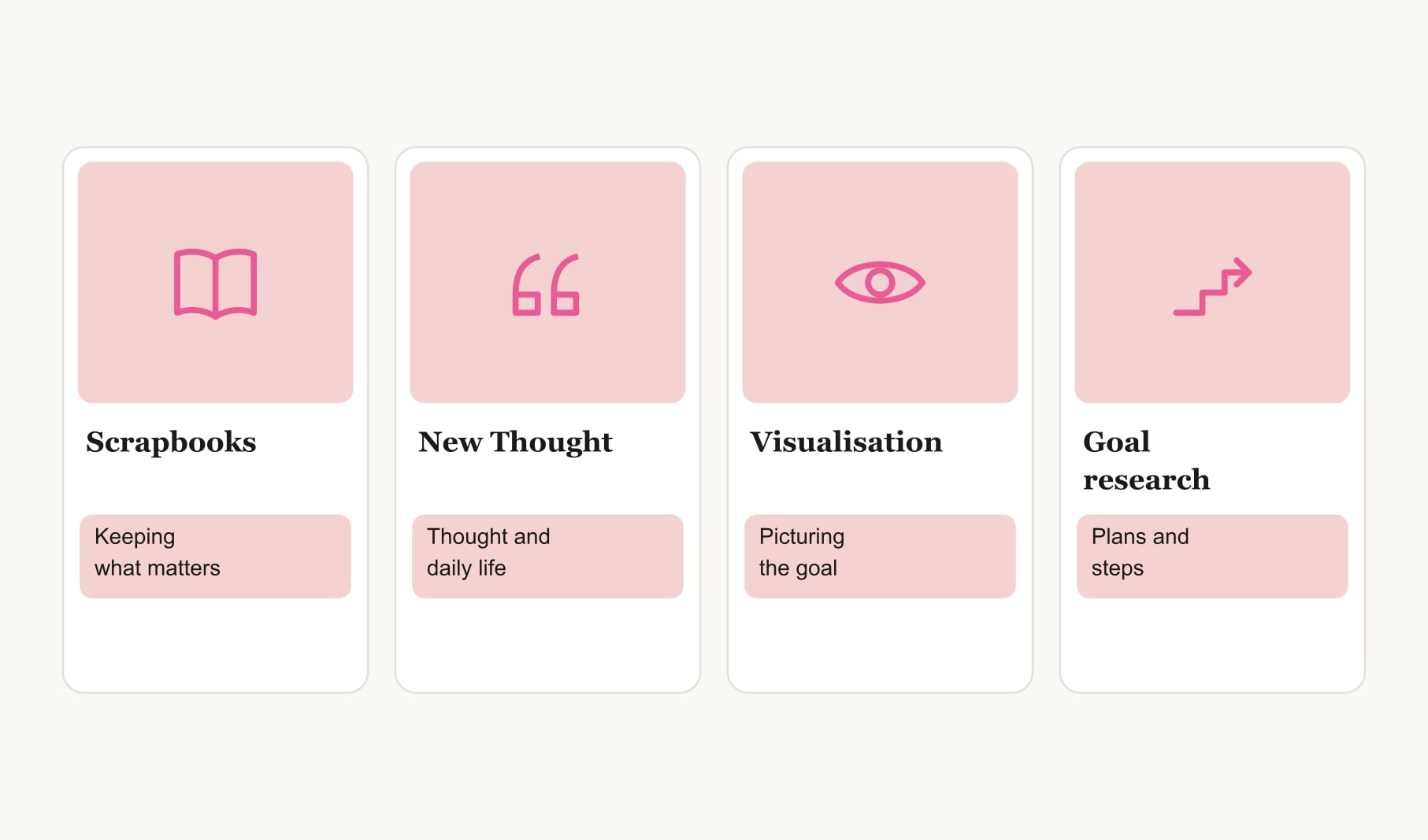
Outside spirituality altogether, athletes have used mental imagery to rehearse performances for decades. Designers make mood boards to hold a visual direction. Businesses write vision statements to describe where they are heading. And goal-setting research, which has nothing to do with the New Age, supports the habits a good board carries: specific goals, dates and plans. The vision board borrows from all of these.
Is it against my faith to make a vision board?
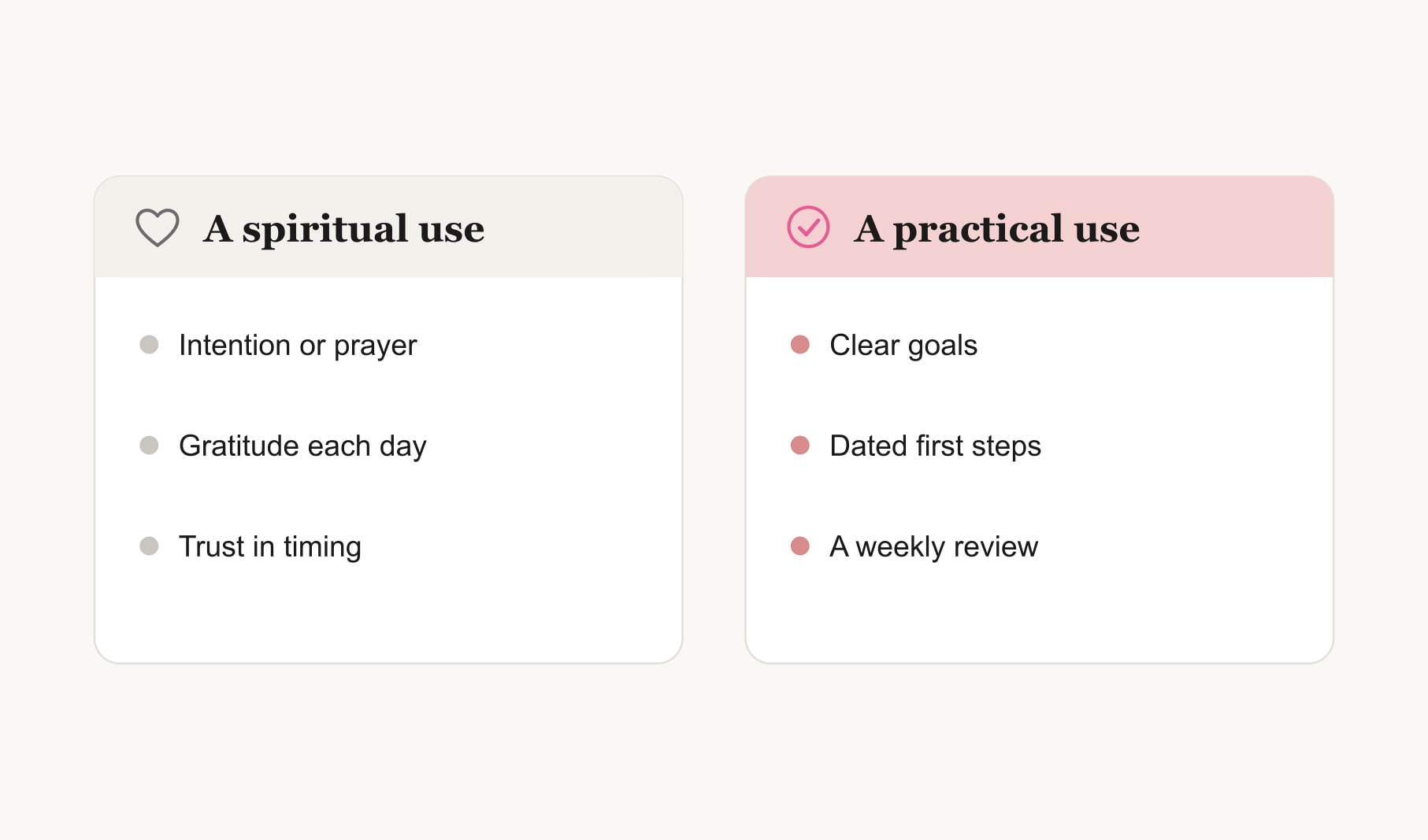
That is a question only you, and perhaps your own faith community, can answer. What I can tell you is that the board itself carries no doctrine. It is card, pins and pictures, or pixels on a screen. Many people of faith make what they call a prayer board, holding their hopes before God or the divine and returning to them in prayer each day. A prayer vision board works this way, with every image framed as something you are praying about.
Others in the same faith prefer to use the board purely for planning, and leave spiritual language out entirely. Both are respectful choices. If you are unsure, talk it over with someone you trust within your own tradition.
Can you use a vision board with no spiritual belief at all?
Absolutely. Plenty of people use vision boards as a practical planning tool, with no spiritual framing whatsoever. For them, the board is a visual goal list: a picture, a date and a first step for each thing they want. A goal setting vision board suits this approach, because every square is built around a specific target.
What did the New Age strand add to the practice?
Quite a lot, in fairness. It brought attention to feeling: the idea that you should not only list a goal but sense what it would be like to live it. It encouraged daily ritual, such as returning to your images each morning. And it framed the board as something personal and meaningful rather than a chore. Many people who would never call themselves New Age still use those ideas, often without knowing where they came from.
Why does the history matter at all?
Because it explains why you hear such different things about vision boards. Some writers describe them in the language of energy and attraction, which comes from the New Thought and New Age strand. Others describe them in the language of attention and planning, which comes from psychology and goal research. Neither is lying to you. They are describing the same object through different lenses. Knowing the history lets you pick the lens that fits you, without feeling that the other one owns the tool.
How do you make a board that fits your beliefs?
Start with your own language. If prayer is part of your life, write captions as short prayers and keep the board where you pray. A prayer tracker for your vision board can help you note what you are praying about and what you notice over time. If you set intentions, write intentions. If you prefer plain planning, write goals and dates.
Then choose images that feel right in your home and your heart. Leave off anything that sits uneasily with your beliefs, and add anything that expresses them, such as a photo of a place where you feel peace or a gathering of people you love.
So, are vision boards new age?
Their recent popularity owes a lot to New Thought and New Age writers, and that history deserves respect. The tool itself is older, simpler and open to everyone. Whatever you believe, or do not, you can make a board that speaks your own language and helps you keep sight of the life you are working toward.
Keep reading
Are vision boards new age: your questions
Vision boards became popular partly through New Thought and New Age writing on creative visualisation, so the link is real. But a vision board is simply a collage of goals with older relatives in scrapbooks and prayer lists, and it carries no doctrine, so anyone can use one.
Vision boards draw on several strands: New Thought ideas about thought shaping life, New Age creative visualisation, scrapbooks and photo walls, athletes picturing success and goal-setting research. Self-help books and television made the modern vision board widely popular in the early 2000s.
Many people of faith make a vision board, often as a prayer board that holds their hopes before God and returns to them in prayer. Others use it purely for planning. If you are unsure whether it fits your tradition, talk it over with someone you trust in your community.
A vision board is not a religious object in itself. It is card and pictures, or an image on a screen, and carries no doctrine. People can give their vision board a spiritual meaning through prayer or intention, or use it simply as a practical goal-setting tool.
Creative visualisation is the practice of picturing yourself in the life you want, developed in New Age and popular psychology writing. A vision board turns that inner picture into an outer one, which is why the two are closely linked in the history of the practice.
Yes. Many people use a vision board purely as a planning tool, with a picture, a date and a first step for each goal. The habits it supports, such as specific goals and regular review, come from goal-setting research and need no spiritual framing at all.
People describe vision boards through different lenses. Some use the language of energy and attraction from the New Thought and New Age strand, while others use the language of attention and planning from psychology. Both describe the same tool, so you can choose the lens that fits you.
Keep your vision board alive
A board built in your browser resets when you close the tab. Vision Boardly saves your boards, reminds you as each vision date arrives, and tracks the habits and moods moving you toward them.
Get Vision Boardly Free