Where Can I Buy Magazines for Vision Boards
The best magazines for a board are rarely the newest ones. Here is where to look, and how to choose an issue in thirty seconds.
You can buy magazines for vision boards at supermarkets, newsagents and bookshops, and find cheaper back issues at charity shops, second-hand bookshops, library sales and online marketplaces. Friends, neighbours, local swap groups and hair or beauty salons often pass on old issues too. Choose magazines that match your goals, then flip-test each one.
If you are asking “where can I buy magazines for vision boards?”, you are probably standing in front of a rack of glossy covers wondering which ones are worth it. Here is my practical take after many boards: the newest magazines are the most expensive and rarely the most useful. Back issues, bundles and passed-on copies are often better. This guide covers nine good places to look, which kinds of magazine suit which goals and a thirty second test for choosing any issue.
Where can I buy magazines for vision boards near me?
1. Supermarkets and newsagents
The quickest option, with current issues of the most popular titles. Good for a last-minute board, but choose carefully, because many are heavy on text and advertising. Look for magazines built around photography.
2. Bookshops
Bookshops usually carry a wider range, including independent magazines with large, beautiful photos. They suit specific goals, like travel, interiors or food, where image quality matters.
3. Charity and thrift shops
One of my favourite sources. Charity shops often sell magazines in bundles, and back issues are just as useful for a board as new ones. A seasonal issue from three years ago still has the same sea, the same kitchens and the same mountain paths.
4. Second-hand bookshops
Many second-hand bookshops keep a box of older magazines near the till. Ask if you cannot see one. Older travel and design titles are often full of large, clear photography.
5. Library sales
Libraries regularly withdraw older magazines and sell them for very little at book sales. Ask at your local branch when the next sale is. It is a lovely way to support the library while stocking up.
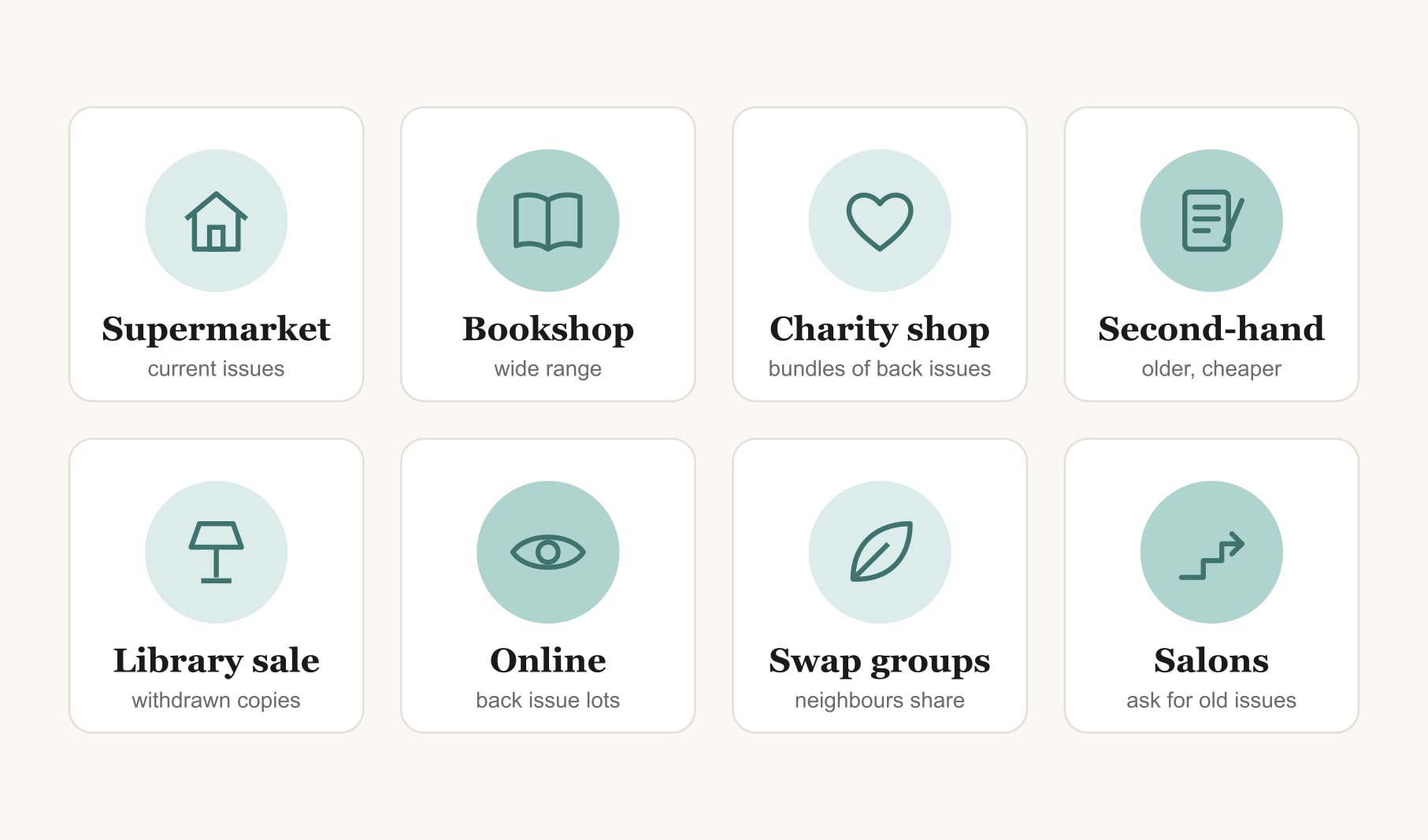
6. Online marketplaces
Search for “back issues” or “magazine bundle” with a topic, like interiors or travel. Bundles of ten or twenty issues are common and great for a vision board party.
7. Friends, neighbours and swap groups
Ask around. Plenty of people have a pile of magazines they would be glad to pass on. Local swap and giveaway groups are also full of them. A message saying “collecting old magazines for a vision board” usually gets replies within a day.
8. Hair and beauty salons
Salons and waiting rooms refresh their magazines regularly. Ask politely whether you can take the older issues next time they swap them out. Many are happy to clear space.
9. A magazine swap night
If you are making boards with friends, ask everyone to bring three magazines and leave with three different ones. It turns gathering supplies into part of the fun.
Which kinds of magazines suit which goals?
Match the magazine to the goal. Travel magazines for places and adventures. Interiors and home magazines for a dream home or a calmer room; a travel vision board and a home board both draw on them heavily. Food magazines for cooking and gathering. Outdoor and fitness titles for movement and nature. Garden magazines for growth and green space. Design and art titles for creative goals. Nature and science magazines for curiosity and learning.
How do you choose a good magazine issue quickly?
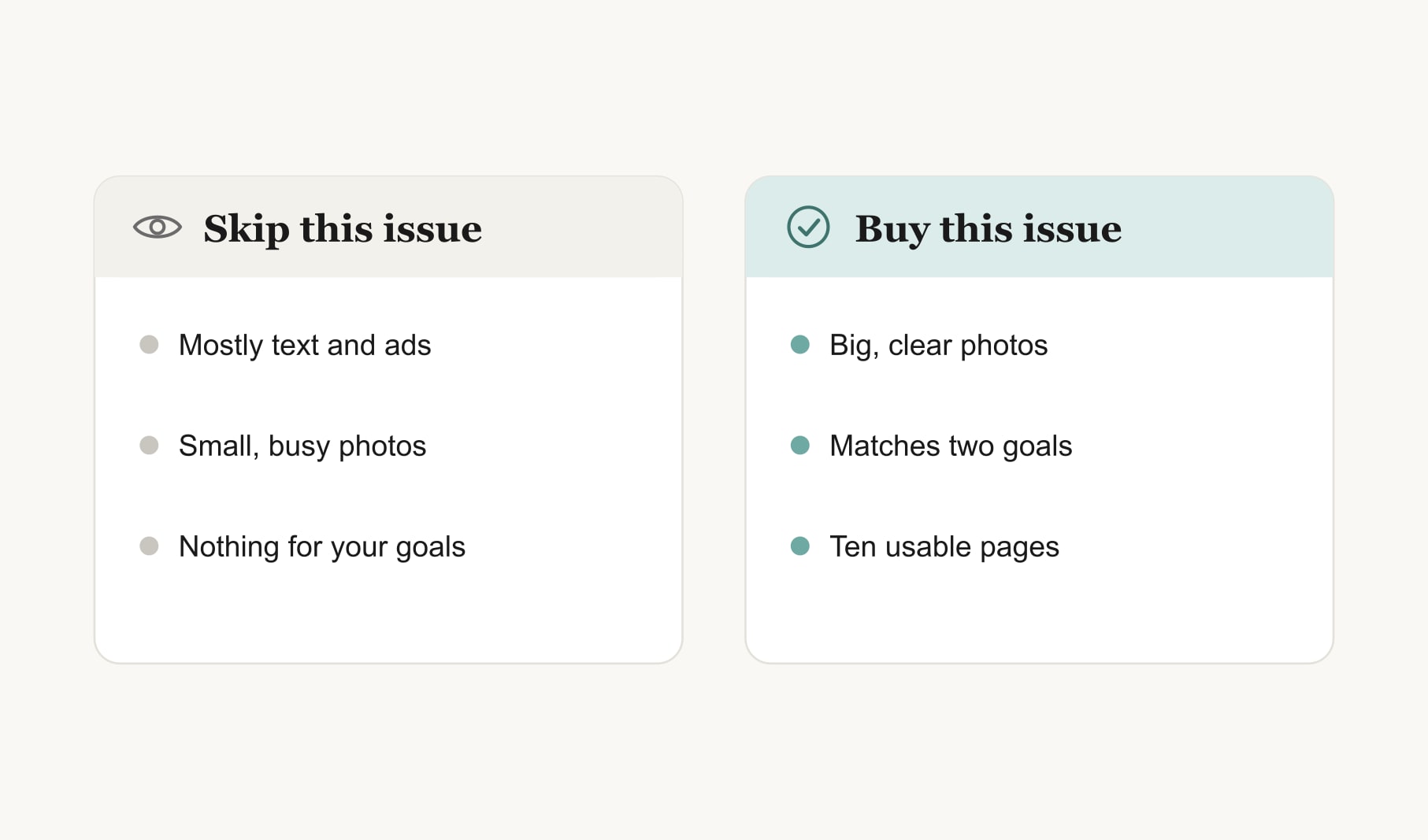
Use the flip test. Spend thirty seconds flipping through. Count the pages with a large, clear photo that matches at least one of your goals. Ten or more, buy it. Fewer than five, put it back. Skip issues that are mostly text, adverts or small busy photos, because they look like clutter once cut out.
How do you cut and use magazine images well?
Flip through every magazine once before cutting anything, folding the corner of each page you like. Then go back and cut only the best image per goal. Cut a little wider than you need, and trim to size once you have planned the layout. Cut around the subject rather than including the page’s text, which looks busy on a board. Keep the extra cut-outs in an envelope; they are perfect for the next board, or for a friend.
How do you store magazines between boards?
Keep a small box or folder for magazines and cut-outs, sorted loosely by theme: places, home, food, nature, people. It takes ten minutes to set up and means your next board starts with a ready stash. Pass on any magazine you have finished with to the next person who asks, which keeps the swap going.
Are magazines still worth buying for a vision board?
For a paper board, yes. Flipping pages surfaces images you would never think to search for, and cutting them out is part of what makes the making feel calm and hands-on. Many people mix magazine images with a few of their own printed photos, which gives the board both inspiration and real life.
How many magazines do you need for a vision board?
Five to ten varied issues is plenty for one board. More than that and you spend the evening flipping instead of choosing. If you are hosting a group, plan on three or four per person, plus a shared pile.
What if you cannot find the right images in magazines?
Fill the gaps with your own photos or printed images. A set of vision board pictures to print covers common goals, and a shop of vision board supplies has the scissors, glue and card to finish the job.
How do you keep a magazine board working once it is made?
Write a target month and a first step under every image, hang the board where you pass daily and review it weekly. A goal tracker for your vision board keeps the steps and progress in one place, so the collage can stay beautiful and uncluttered.
Keep reading
Where can i buy magazines for vision boards: your questions
You can buy magazines for a vision board at supermarkets, newsagents and bookshops, or find back issues at charity shops, second-hand bookshops, library sales and online marketplaces. Friends, neighbours, swap groups and salons often pass on old issues as well, which keeps your stack varied.
The best magazines for vision boards are built around large, clear photography that matches your goals. Travel, interiors, food, garden, outdoor, design and nature titles work well. Skip magazines that are mostly text or advertising, because their images look cluttered once cut out for a board.
Yes. Old magazines are just as useful for vision boards as new ones, and usually much cheaper. A beach, a kitchen or a mountain path from a back issue looks the same on your board. Charity shops, library sales and online bundles are great sources.
Five to ten varied magazines are plenty for one vision board. More than that and choosing takes longer than making. For a group session, plan on three or four magazines per person plus a shared pile, so everyone finds images for their own goals.
Use a thirty second flip test. Count the pages with a large, clear photo that matches at least one vision board goal. Ten or more means the issue is worth buying. Fewer than five means put it back and keep looking for a better match.
Yes. Mixing magazine cut-outs with your own printed photos makes a vision board feel both inspiring and personal. Use magazines for places and moods you have not reached yet, and your own photos for things already in your life that you want to grow.
Keep your vision board alive
A board built in your browser resets when you close the tab. Vision Boardly saves your boards, reminds you as each vision date arrives, and tracks the habits and moods moving you toward them.
Get Vision Boardly Free