Example of a Vision Board in Life
One whole-life board, eight areas, twelve months. Watching a board change over a year tells you more than any single snapshot.
A good example of a vision board in life covers your whole life, not one goal: one image each for areas such as work, health, home, people, money, learning, adventure and rest, with a caption, date and first step under each. Over a year, finished visions come down and new ones take their place.
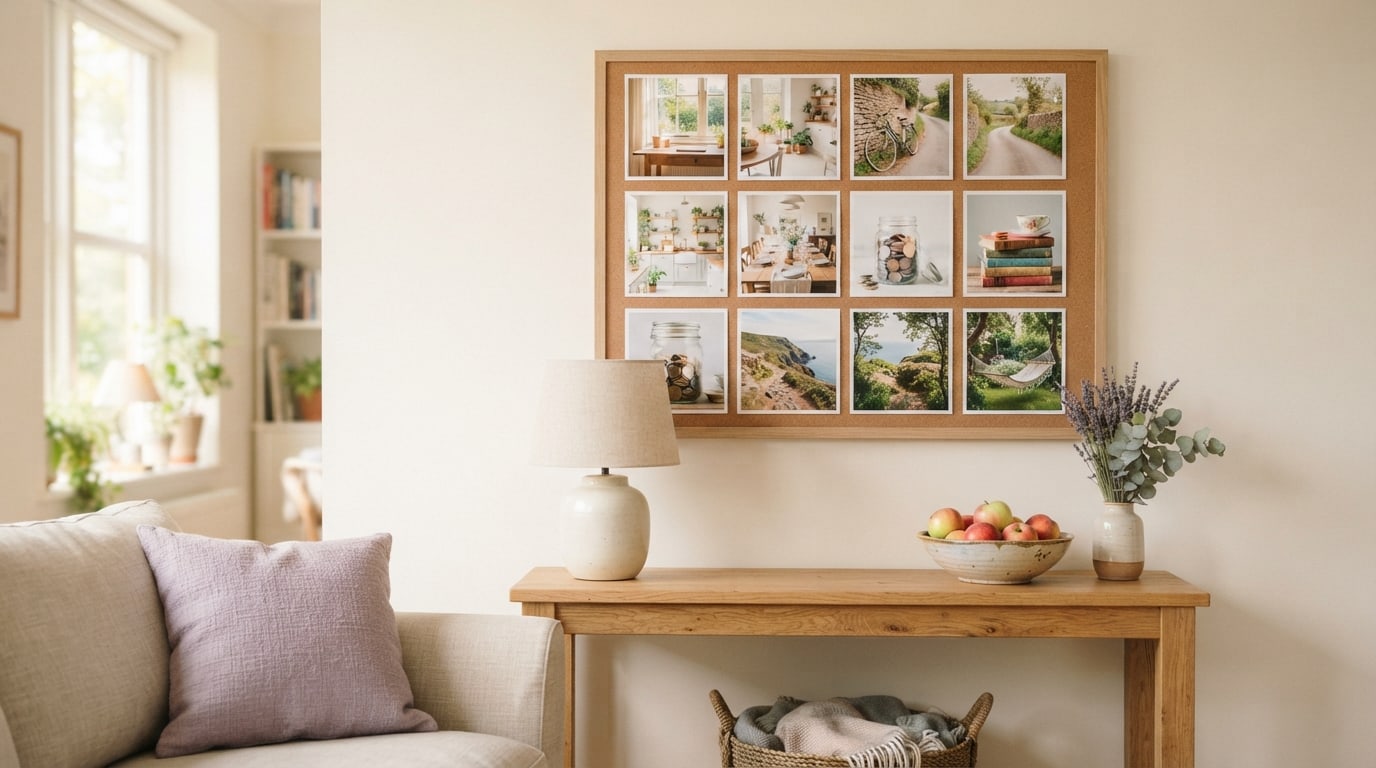
Looking for an example of a vision board in life, the whole of it rather than one goal? Here is one I would build, covering eight areas of life, and what happens to it across a full year. Most examples show you a board on the day it was made. I think a board is better understood the way you understand a garden: by watching it change through the seasons.
What does an example of a vision board in life look like?
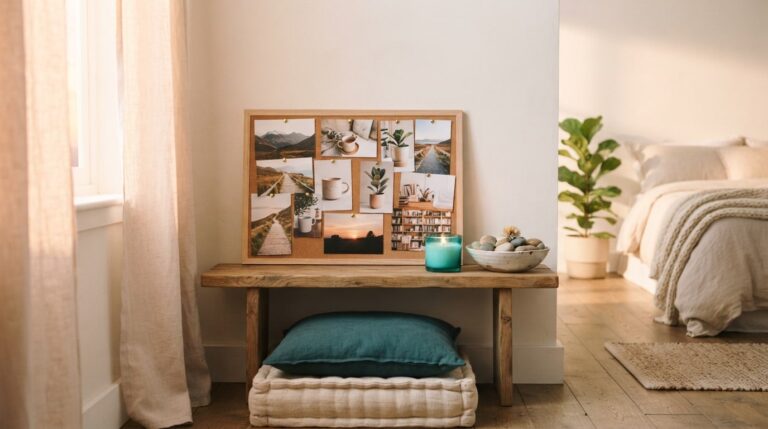
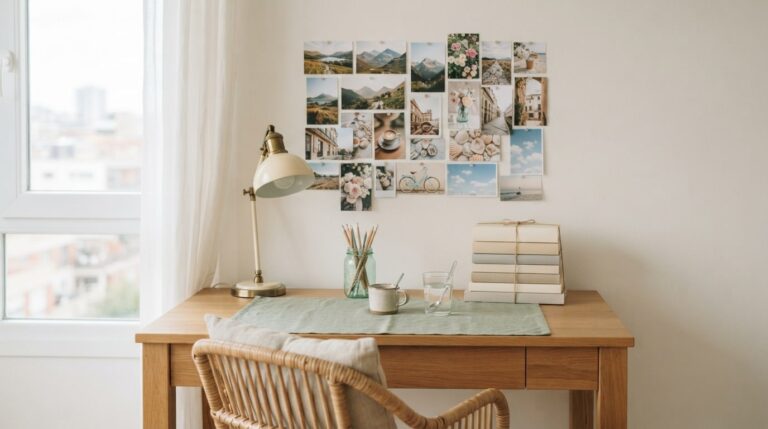
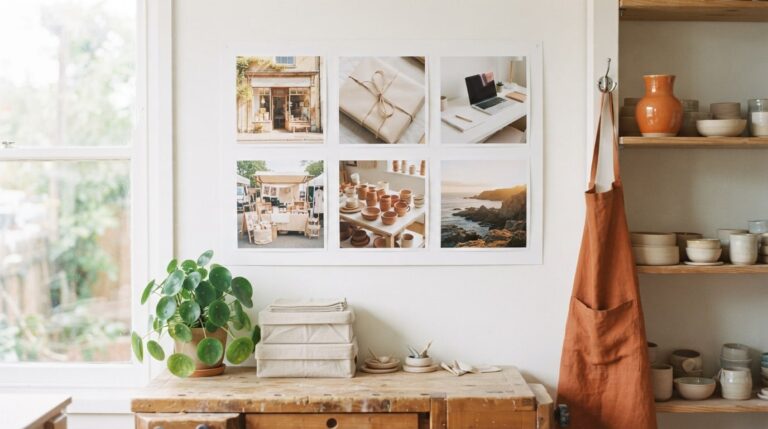
This one is a simple grid of eight photographs, one per area of life, each with a short caption, a date and a first step beneath it.
- Work: a desk by a window. “A role with more creative scope within the year. First step: list three people to talk to.”
- Health: a bicycle on a country lane. “Cycle to work twice a week by summer. First step: check the tyres on Sunday.”
- Home: a sunny, uncluttered kitchen. “A kitchen I love cooking in within three months. First step: clear one cupboard.”
- People: a table of friends. “Host a meal once a month. First step: send the first invitation.”
- Money: a jar of coins. “A calm weekly money check-in. First step: book Friday mornings.”
- Learning: a stack of books. “Read one book a month. First step: choose the first one tonight.”
- Adventure: a coastal path. “Walk a stretch of coast path this year. First step: pick a weekend.”
- Rest: a hammock between trees. “One slow, unplanned day each month. First step: mark it on the calendar.”
How does a life board stay balanced?
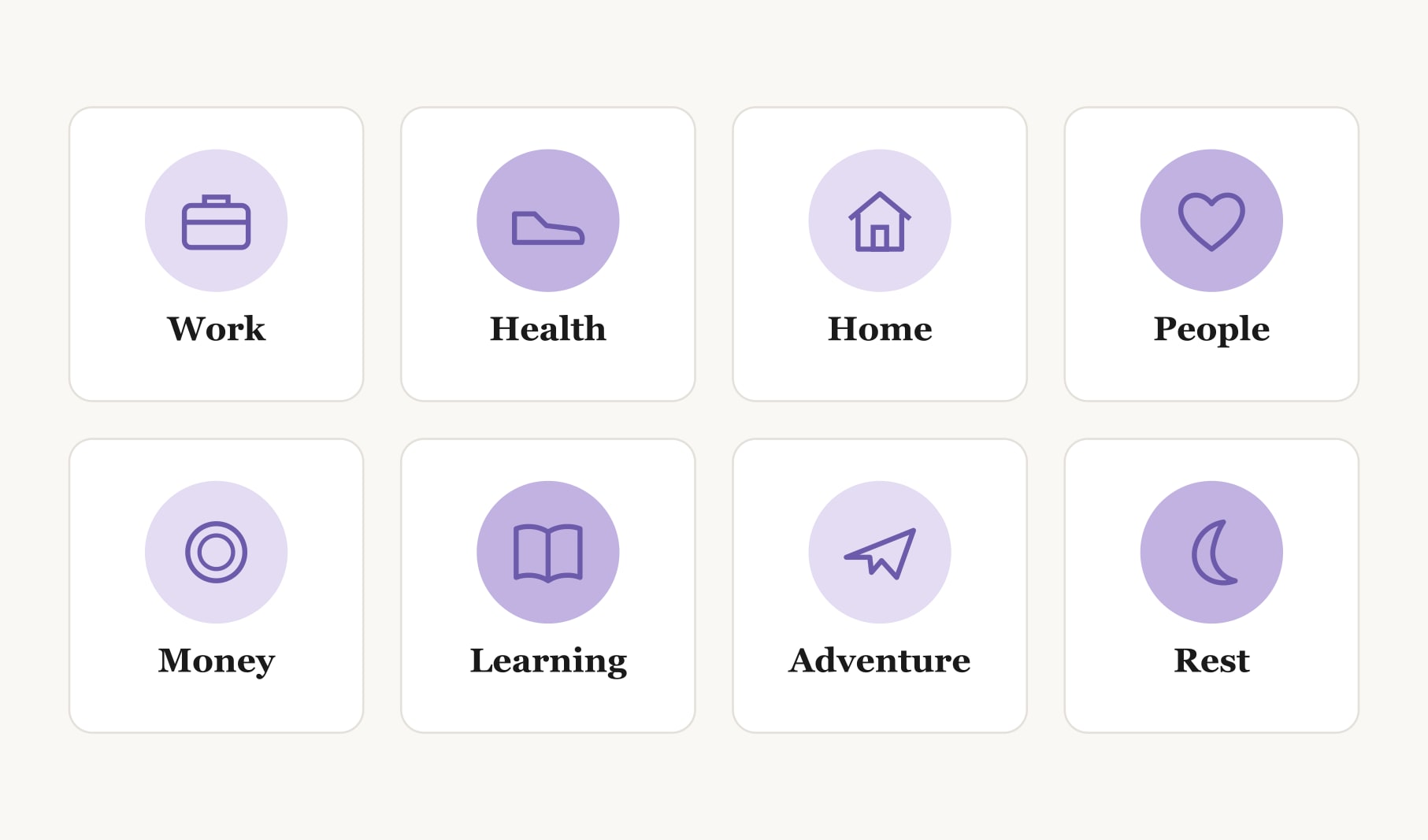
By giving every area one square, and only one. It is tempting to give work three images and rest none, especially in a busy season. A life board resists that. One square per area means every part of your life gets a little attention every time you look, which gently pulls you back toward balance. If you want help deciding which areas to include, these vision board categories cover the usual options and a few less obvious ones.
Eight areas is a lot for some people. If it feels crowded, combine two, such as health and rest, or leave one out for a season.
What changes in the first three months?
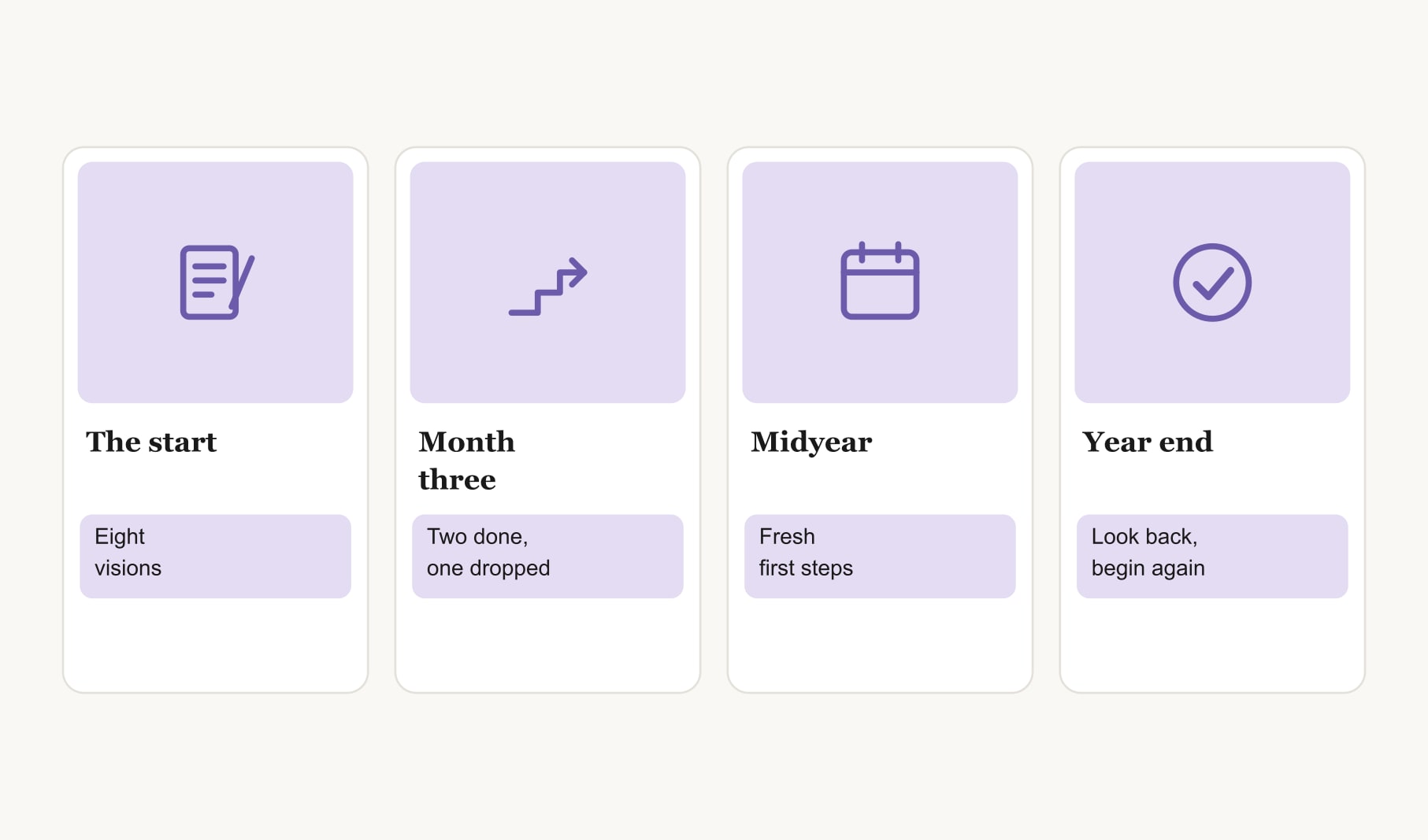
Two visions finish early. The kitchen is cleared and reorganised, and the first monthly meal happens and becomes a habit. Both come down from the board, after a small celebration, and two new visions go up: repainting the hall, and a weekly phone call with a family member.
One vision is also dropped. Cycling to work turns out to be impractical on a new route, so it changes to a weekend ride instead. That is not failure. A board that adjusts to real life is a board that is working.
What does the board look like by midyear?
By midyear, the work vision has moved: three conversations have happened, and one has turned into an interview. The reading habit is steady. The coast walk has a date. Rest, honestly, has slipped, as rest often does when work gets busy.
So midyear is the moment to write fresh first steps for every square and to give the neglected area some care. A self-care tracker for your vision board is useful here, because it makes rest visible in the same way the other goals already are.
What does the board look like at year end?
At the end of the year, the board looks quite different from the one made at the start. Five of the original eight visions are done or have changed into something better. Three new ones have joined. The new role arrived in the autumn. The coast walk happened on a windy weekend and became a favourite memory.
The final step is the most rewarding: sit with the board, look back and write a few lines about what the year held. Then begin a fresh one, carrying forward anything still in progress.
What does the weekly routine look like with a life board?
Short and steady. On Sunday evening, five minutes with the board: tick the first steps that happened, write the next step for each area and move any date that needs moving. On weekday mornings, a glance on the way past, nothing more. Once a month, a slightly longer look to ask which area has gone quiet. Most weeks, only two or three areas actually move, and that is fine. The board is not asking you to advance eight goals at once. It is making sure none of the eight is forgotten.
Why is a year-long example more useful than a snapshot?
Because it shows the parts a snapshot hides: the early wins that come down, the goals that change shape, the area that slips, the midyear refresh. Real boards are untidy and alive. If your board has changed a lot since you made it, that is usually a sign it is doing its job.
How do you build your own life board?
Choose six to eight areas, one image each, ideally your own photos. Write a caption, a date and a first step under every image. A life vision board builder gives you a ready grid with room for all of it. If you would like a board that leans more toward the big picture of your future, a dream life vision board is a lovely companion. Then look at your board most days, update it weekly and give it a proper review every three months.
Keep reading
Example of a vision board in life: your questions
A whole-life vision board gives one image each to areas such as work, health, home, people, money, learning, adventure and rest, with a caption, a date and a first step under each. It keeps every part of your life in view, rather than focusing on a single goal.
Six to eight life areas suit most whole-life vision boards. Fewer can leave important parts of life out, while more becomes hard to read at a glance. If eight feels crowded, combine two related areas, such as health and rest, or rotate one out for a season.
A life vision board changes steadily. Early wins come down and new visions replace them, some goals change shape to fit real life, a neglected area may need attention at midyear, and by year end the board often looks quite different. That change is a sign the board is working.
Giving every life area one square stops a busy area, such as work, from crowding out others, such as rest or friendships. Each time you look at the vision board, every part of your life gets a little attention, which gently pulls you back toward balance.
Celebrate it, then take it down and put a new vision in its place. Keeping finished goals up makes a vision board feel stale. Some people keep a small corner or a notebook page of completed visions, which becomes a lovely record to look back on.
No. Most weeks, only two or three areas of a life vision board actually move, and that is normal. The point of one square per area is that none is forgotten. A monthly look at which area has gone quiet helps you give it some care next.
Look at a whole-life vision board most days, update first steps weekly and give it a proper review every three months. The quarterly review is when you notice neglected areas, retire finished visions and write fresh first steps for everything still in progress.
Keep your vision board alive
A board built in your browser resets when you close the tab. Vision Boardly saves your boards, reminds you as each vision date arrives, and tracks the habits and moods moving you toward them.
Get Vision Boardly Free