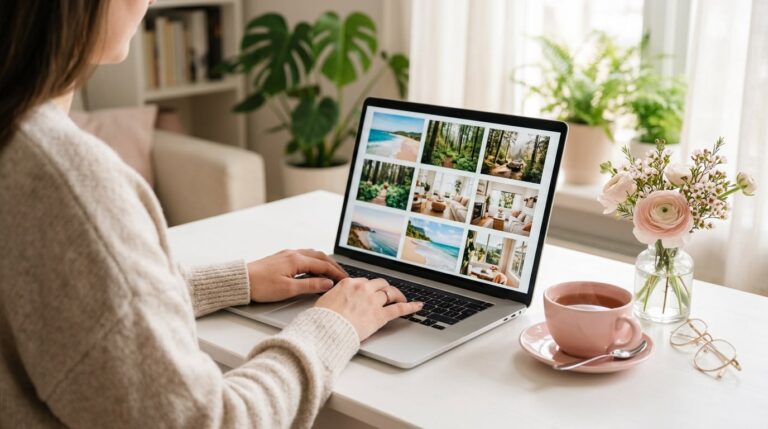
Things to Make a Vision Board
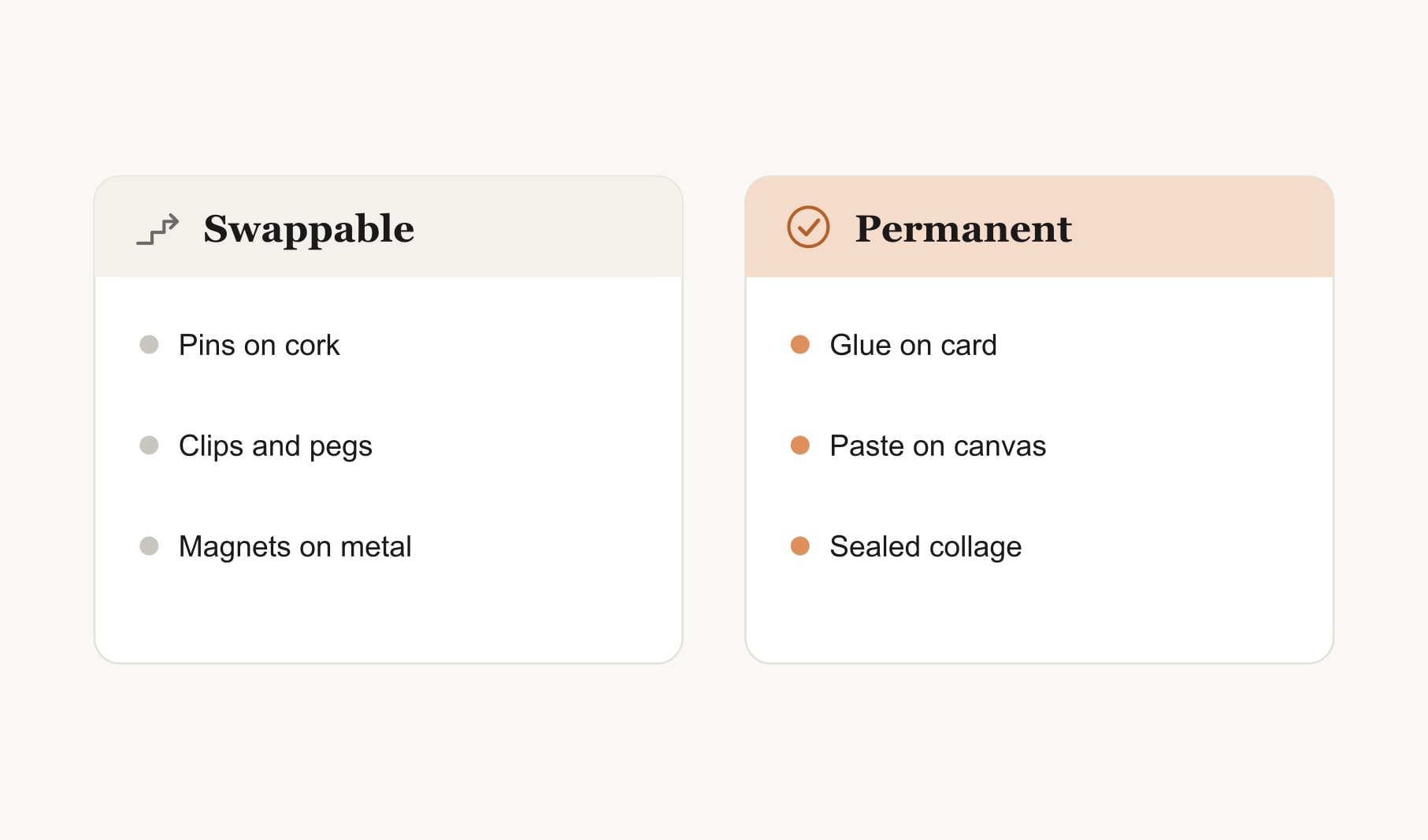
Some materials let you swap images in seconds. Others hold forever. Choose by how often your board will change.
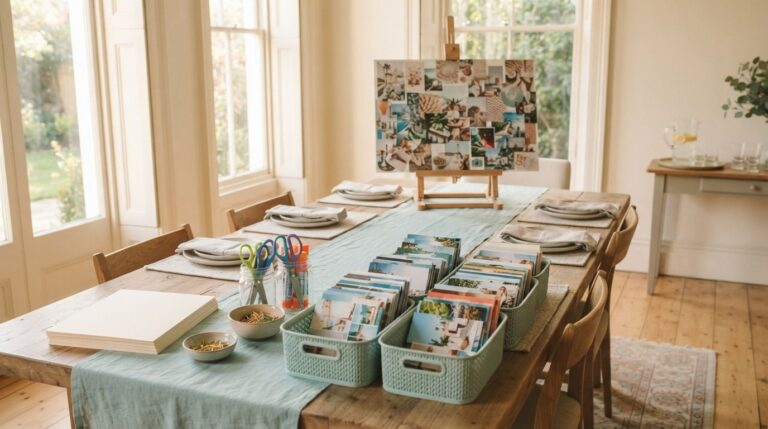
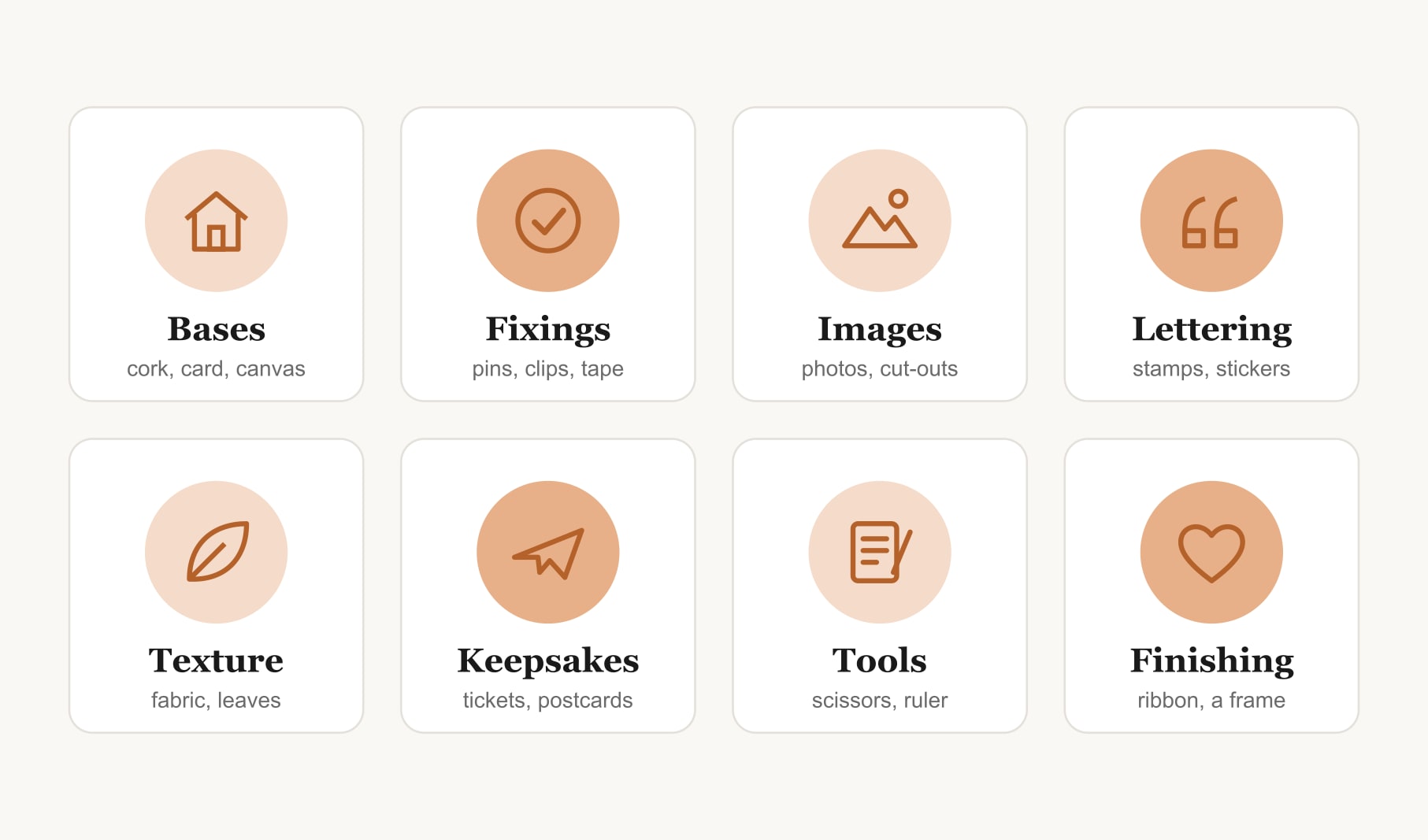
Things to make a vision board include a base such as cork, foam board, card or canvas, fixings like pins, clips, magnets, washi tape or glue, images, lettering from stamps, stickers or your own handwriting, and texture such as fabric, ribbon, pressed leaves and tickets. Choose swappable fixings if your goals change often.
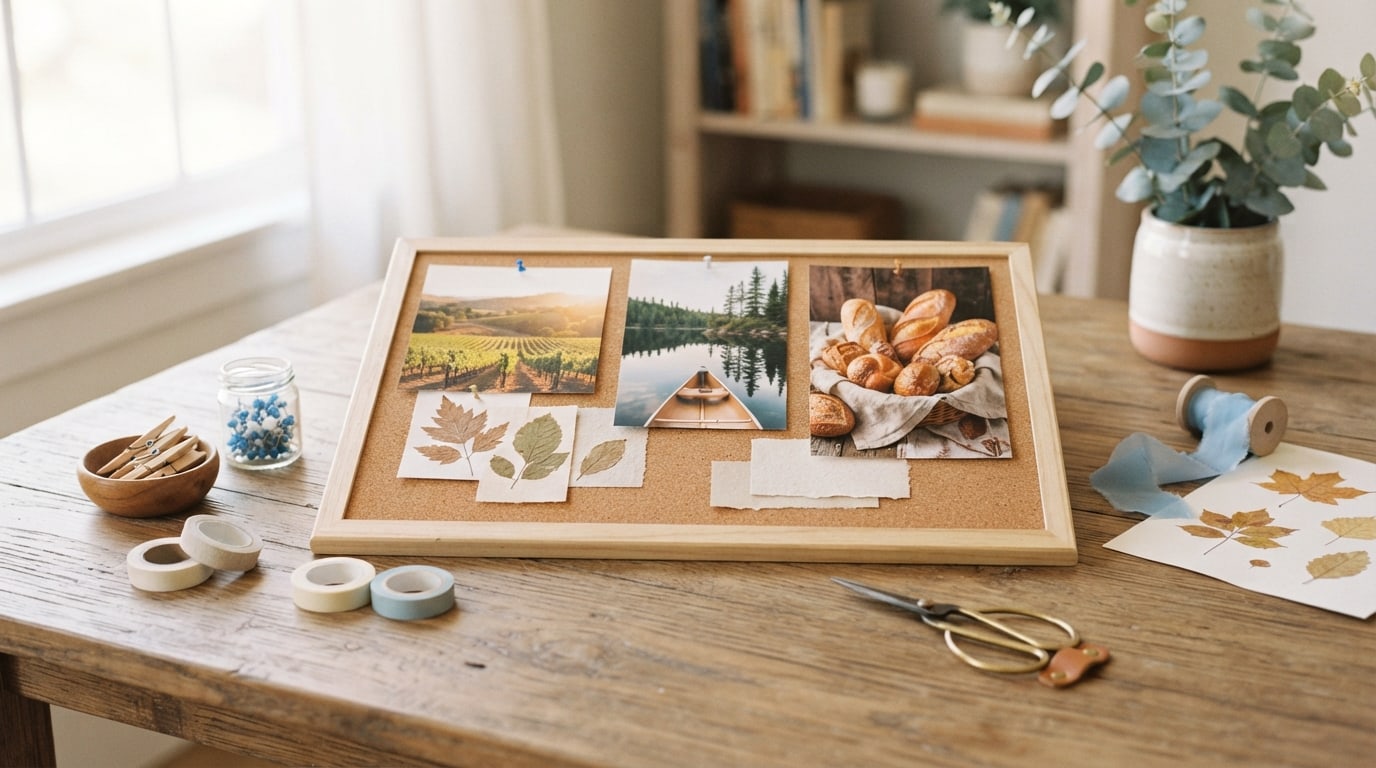
Walk into any craft shop and the choice of things to make a vision board with is endless. Here is the question I use to narrow it down: how often will this board change? A board you update every month needs materials that let you swap an image in seconds. A board made as a keepsake for a big year can use glue, paint and sealant. Choose by that, and the rest of the materials menu falls into place.
Below is the full menu, grouped by the job each material does.
Which bases can you use for things to make a vision board?
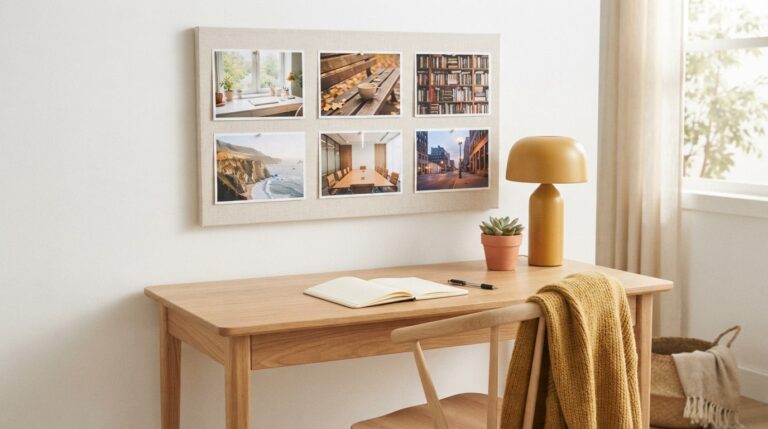
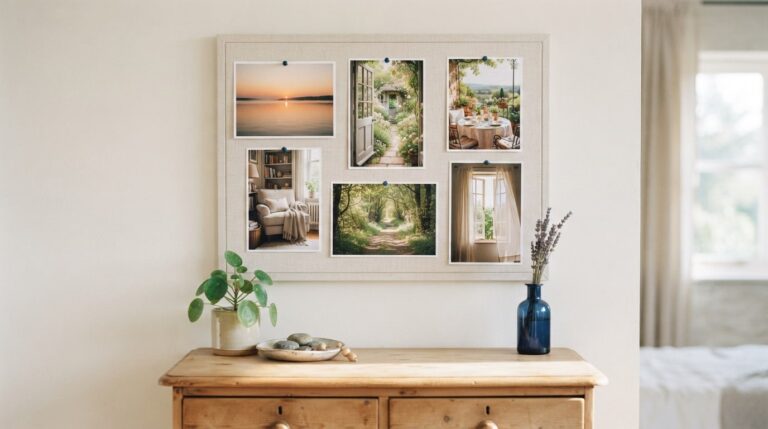
Cork board
The classic for a reason. Pins go in and out cleanly, so swapping a finished goal takes seconds. Choose one larger than you think you need, so images have room.
Foam board
Light, smooth and easy to cut. Good for glue and for pins if they are short. Easy to hang with removable strips.
Card or poster board
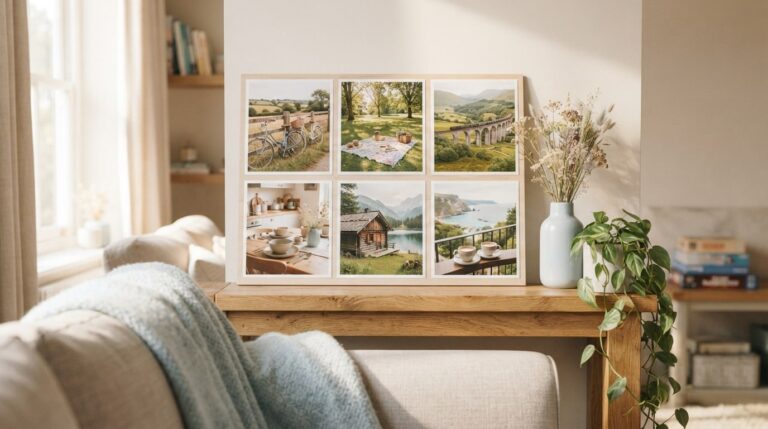
The simplest base, ideal for glued boards. Thick card stays flat on the wall; thin card curls. A printed blank vision board template on card gives you a ready grid to fill.
Canvas
A canvas makes a board feel like art. It suits glued or painted boards meant to last a year or more.
Metal or magnetic boards
Wonderful for frequent changes: magnets hold photos firmly and move instantly. A fridge door counts.
Which fixings should you choose?
Pins for cork. Clips and pegs for string or a wire grid. Magnets for metal. Washi tape for walls, mirrors and notebook pages, because it peels off cleanly. Glue stick or glue dots for card and canvas when you want things to stay put. If you are unsure, use a removable fixing first. You can always glue later.
What images and lettering work best?
Your own printed photos first, then magazine cut-outs and printed pictures for goals you have not photographed. Keep them roughly the same size for a calm look. For words, use your own handwriting, letter stamps, printed word strips or sticker letters. Vision board clipart adds small icons, and printable vision board stickers give you words and shapes you can peel and place.
What adds texture and personality?
Small pieces of fabric, ribbon, pressed leaves and flowers, coloured tissue paper and paint swatches. Use one or two textures rather than all of them, or the board starts to feel busy. Texture works best behind or around images, not on top of them.
Which keepsakes belong on a vision board?
Tickets, postcards, a pressed flower from a walk, a fortune from a cookie, a business card for a course you plan to take. Keepsakes connect the board to real life. They also make lovely evidence of progress: tuck the ticket from the trip next to the photo that inspired it.
What tools make the job easier?
Sharp scissors, a craft knife and cutting mat for magazines, a ruler for straight edges and a pencil for marking positions before you fix anything. Lay everything out before you start so the making flows.
What finishing touches are worth adding?
A ribbon border, a simple frame, a strip of washi tape around the edge or a single string of small lights above the board. Finishing touches make a board feel complete, but add them last, once every goal has its image and date.
How do you match materials to how often your board changes?
Monthly changes: cork with pins, or a magnetic board. Seasonal changes: card with washi tape, so you can peel and replace. A keepsake for a big year: canvas or card with glue, perhaps sealed. Many people combine them: a glued main image that sums up the year, with pinned photos around it that change as goals move.
Which materials suit a rented home or a shared wall?
Choose things that leave no mark. Removable adhesive strips for hanging, washi tape instead of glue on walls and mirrors, and a cork or foam board that leans on a shelf rather than hanging from a nail. A string with pegs between two removable hooks is another easy option. Everything comes down cleanly when you move or want a fresh start.
Which materials last the longest?
Thick card or canvas, photos printed on matte paper and a good glue or matte medium will last years without curling or fading badly. Keep the board out of strong direct sunlight, which fades prints over time. If the board is a keepsake for a big year, a thin coat of matte sealant protects it. For a board that changes often, longevity matters less than easy swaps, so cork and pins win.
What does a well-chosen set of materials look like?
A cork board, a jar of pins, six of your own photos at the same size, one strip of washi tape, a few word stickers and a pen. Two keepsakes from the past month. That is plenty. The restraint is the point: when every material has a job, the goals stay the stars of the board.
How do you keep a materials-rich board useful?
Write a month and a first step under each image, even on the most decorative board. Review it weekly. Track the small daily actions separately, so the board stays readable; a habit tracker for your vision board keeps them in one place.
Keep reading
Things to make a vision board: your questions
Things to make a vision board include a base such as cork, foam board, card or canvas, fixings like pins, clips, magnets, washi tape or glue, your own photos and cut-outs, lettering from stamps or stickers, and texture such as fabric, ribbon and pressed leaves. Choose a few from each group.
The best base for a vision board depends on how often it will change. Cork or a magnetic board suits monthly swaps. Card with washi tape suits seasonal changes. Canvas or thick card with glue suits a keepsake board you plan to keep for a whole year.
Pin images on your vision board if your goals change often, because pins and clips let you swap a picture in seconds. Glue them if the board is a keepsake for a big year. Many people glue one central image and pin the rest around it.
Fabric scraps, ribbon, pressed leaves and flowers, tissue paper and paint swatches all add texture to a vision board. Choose one or two, and place them behind or around images rather than on top, so each goal on the board stays easy to see.
Yes. Tickets, postcards, pressed flowers and small notes make a vision board personal and connect it to real life. They also mark progress: tuck a ticket from a trip beside the image that inspired it, so the board shows where you are heading and where you have been.
Limit materials to one or two from each group, keep images roughly the same size and leave space between them. Add finishing touches last. Write a short date and step under each image, so every goal on the vision board stays clear and readable at a glance.
Keep your vision board alive
A board built in your browser resets when you close the tab. Vision Boardly saves your boards, reminds you as each vision date arrives, and tracks the habits and moods moving you toward them.
Get Vision Boardly Free