Vision Board Images Ideas
Most boards use one kind of image again and again. Mixing nine kinds makes a board richer, clearer and easier to keep looking at.
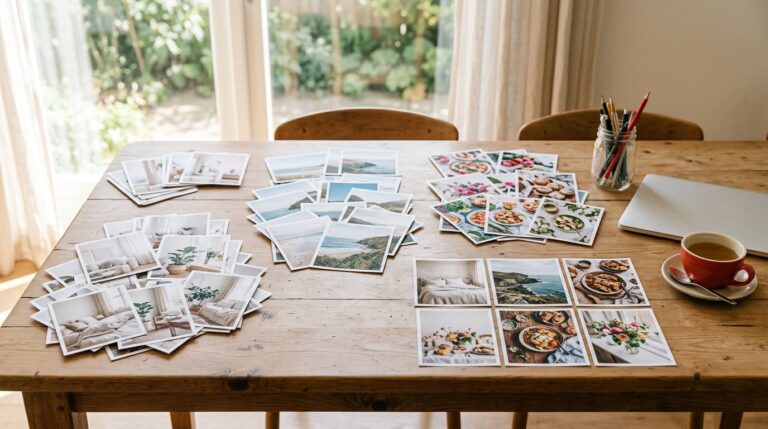
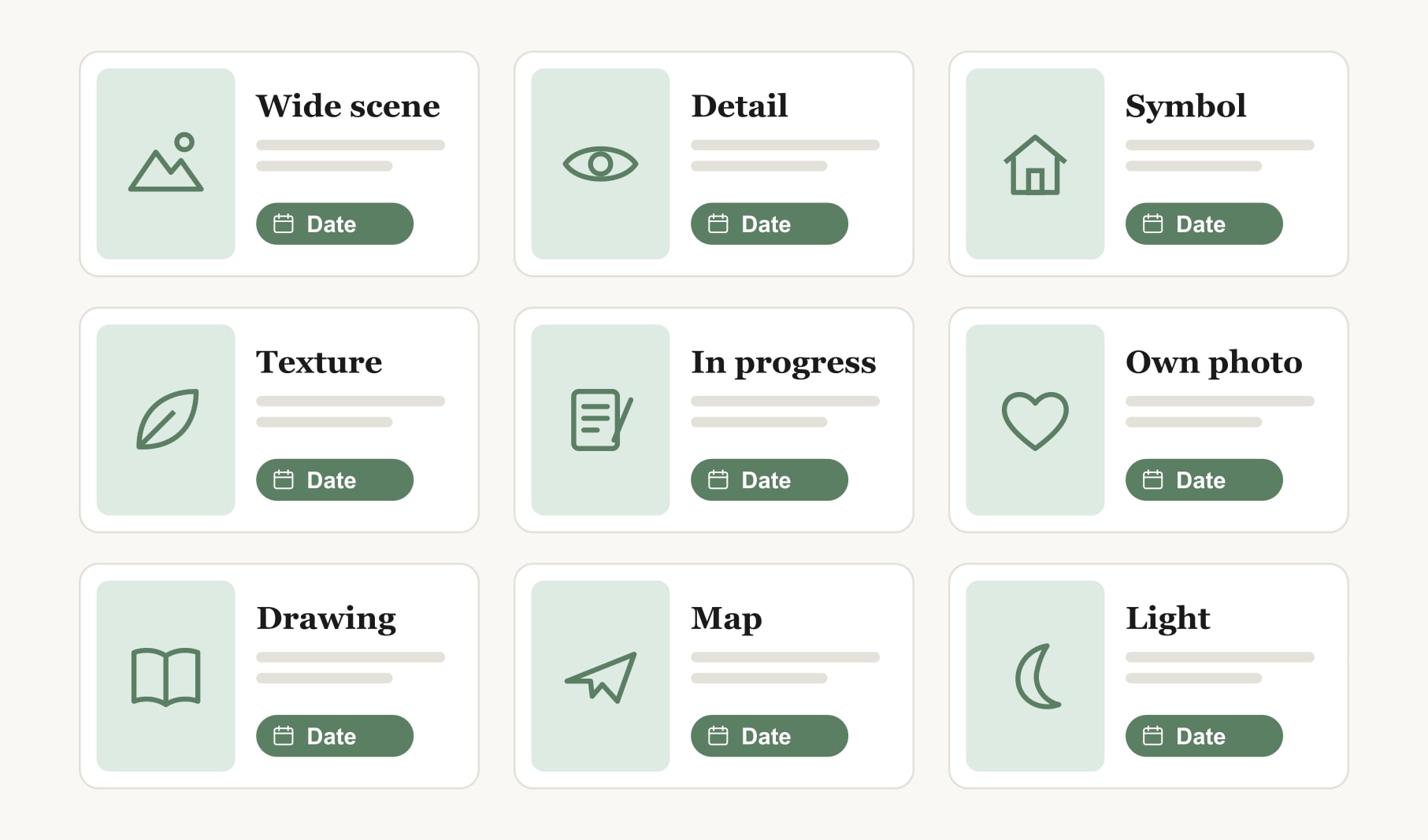
The best vision board images ideas mix nine kinds of image: wide scenes, close details, symbols, colour and texture, work in progress, your own photos, drawings, maps or plans and images of light. Match the kind to the goal: wide scenes for places, close details for daily habits and symbols or light for feelings.
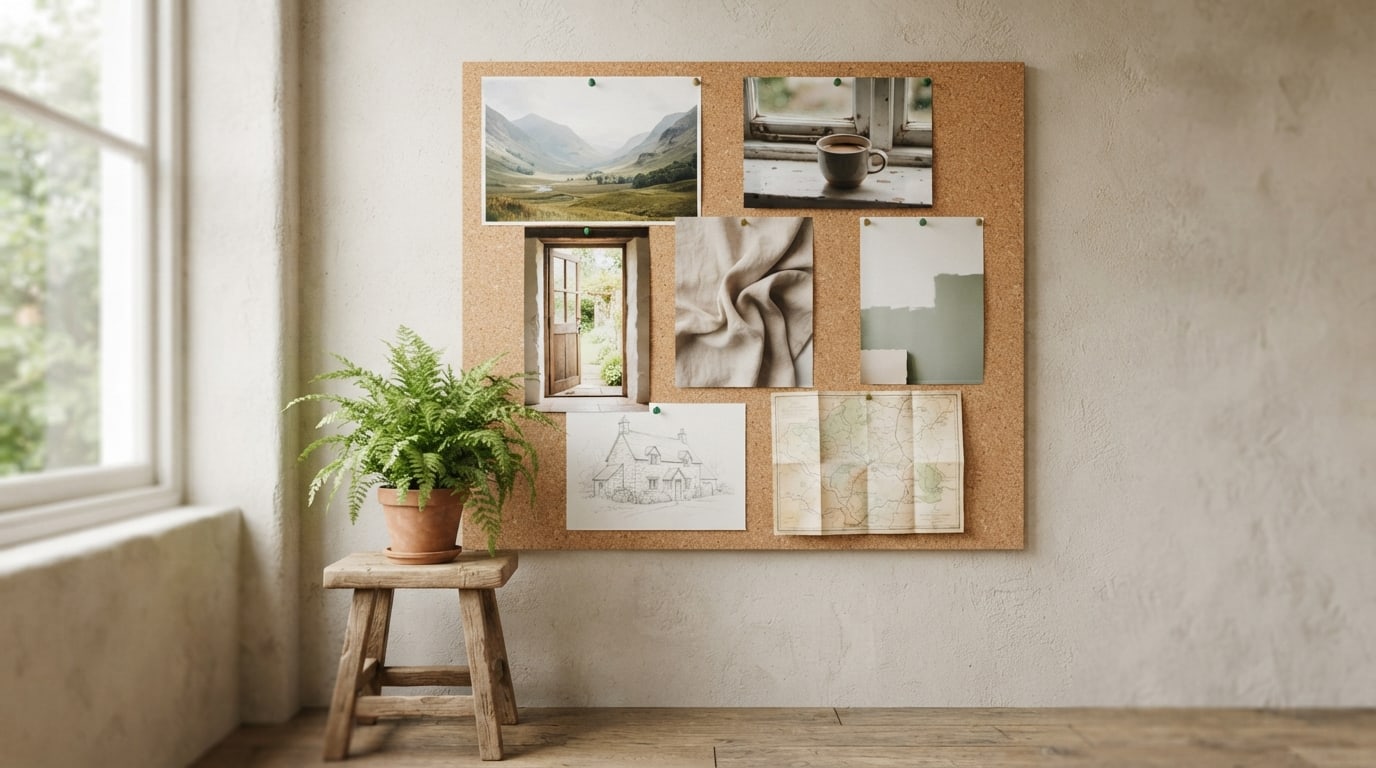
Here is something I noticed after looking at hundreds of boards: most use one kind of image again and again. Usually it is the wide, glossy scene, a beach, a city skyline, a big kitchen. These vision board images ideas are about mixing kinds instead. When a board holds wide scenes, close details, symbols and a sketch or two, your eye has somewhere new to land every day, and each goal gets the picture that suits it best.
If you want ideas for what the pictures should show, start with my guide to vision board picture ideas. This page is about how they show it: the framing, the distance and the style.
What are the best vision board images ideas to mix?
I sort images into nine kinds. You will not use all of them on one board, but knowing the options helps you pick the right one for each goal. Two or three kinds on a single board gives variety without chaos.
What is a wide scene image for?
Wide scenes show a whole place at once: a valley, a coastline, a street, a room from the doorway. They suit goals about where you want to be, like a trip or a move. Use them sparingly, one or two per board, because too many wide scenes start to look like a travel brochure. Give your main wide scene the biggest spot so it sets the mood.
Why use close details?
Close details show one small thing up close: a coffee cup on a sill, running laces, a page of handwriting, a key in a lock. They suit daily habits and small rituals, because habits live in details. A close-up feels intimate and achievable, which is exactly how a habit should feel. I put at least one detail image on every board.
When does a symbol work best?
A symbol stands in for something hard to photograph. An open door for a new chapter. A seedling for growth. A lighthouse for direction. A pair of hands around a mug for comfort. Symbols suit feelings and big, slow goals. Pick symbols that mean something to you, not just ones you have seen elsewhere.
How do texture and colour images help?
A texture or colour image is almost abstract: folded linen, sea glass, a wall of green leaves, a swatch of a colour you want more of. These are wonderful for mood. Placed between busier photos, they act as calm spaces that tie the board together. They also suit a word or a value, such as a soft blue texture behind the word “calm”.
Why add an image of work in progress?
A half-painted wall. A shelf with two books on it. Scaffolding on a building. Images of work in progress feel honest, and they remind you that most goals are built gradually. They suit renovation, learning and creative goals especially well. I also like them because they lower the bar: you do not need to picture the finished masterpiece, only the next stage. When the real project reaches that stage, take your own photo and swap it in.
Where do your own photos fit?
Everywhere. A photo you took carries a memory, which makes it more powerful than any stock image. Use your own photos for people, places you have been and things you already do and want more of. If you need extra images to fill gaps, browse these vision board images and replace them with your own over time.
Can you draw your own images?
Yes, and you do not need to be good at drawing. A quick sketch of your dream garden, a doodle of a bicycle or a floor plan of the room you want to change is personal in a way no photo can match. Drawings suit goals that do not exist yet, like a business or a home you are still imagining.
How do maps, plans and light images work?
A map or plan is a practical image: a trail map, a route between cities, a garden layout. It suits goals with stages, because you can mark progress along it. Images of light, like sunrise through a window or lamplight on a table, suit feelings such as hope, rest and warmth. Both kinds sit beautifully beside more literal photos.
How do you match image kinds to goals?
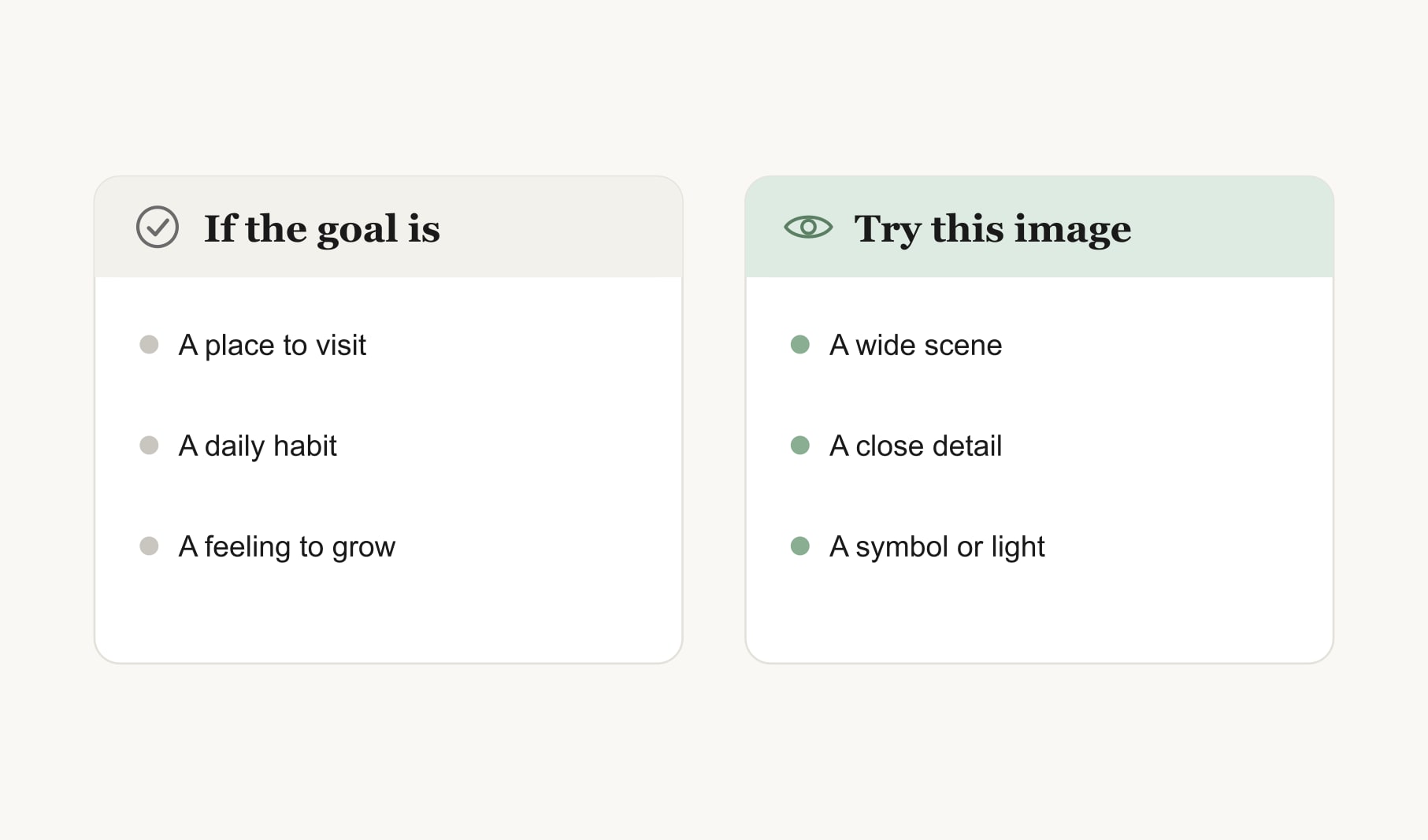
Ask what kind of goal it is. A place to reach: a wide scene or a map. A daily habit: a close detail. A feeling: a symbol, a texture or light. A project: work in progress or a drawing. A person: your own photo. This simple match makes every image feel right, and it naturally gives your board variety.
How many kinds of image should one board mix?
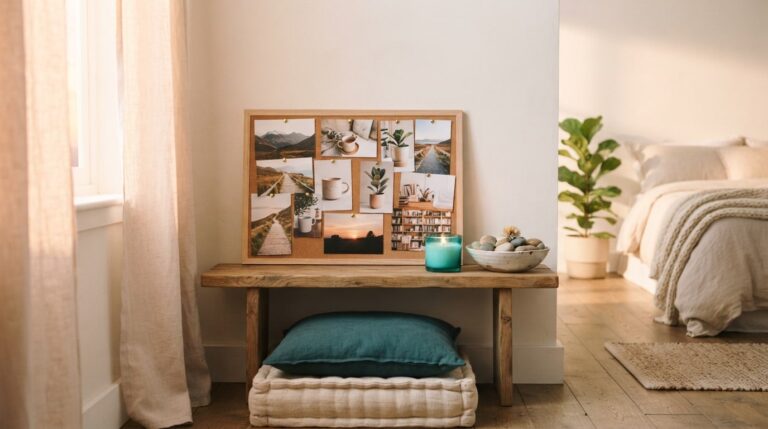
Two or three kinds work for most boards. A wide scene for your big goal, close details for your habits and one symbol for a feeling is a lovely combination. More kinds can work on a large board, but keep a common thread, such as the same colour tone or the same border, so it still reads as one board. The aesthetic vision board is a good place to try a matched set, and a gallery of vision board inspo shows how different boards mix their images.
Finally, let the images earn their place. Each week, notice which ones still catch your eye. Log what you did toward each goal in a manifestation tracker, and when an image stops pulling you in, swap it for a different kind. A board that changes keeps working.
Keep reading
Vision board images ideas: your questions
Nine kinds of image work well on a vision board: wide scenes, close details, symbols, colour and texture, work in progress, your own photos, drawings, maps or plans and images of light. Two or three kinds on one board give variety without making it feel chaotic or hard to read.
Use a close detail image for a habit on a vision board, such as running laces, a coffee cup on a sill or a page of handwriting. Habits live in small details, so a close-up feels intimate and achievable, which is exactly how a daily habit should feel.
Show a feeling on a vision board with a symbol, a texture or an image of light. An open door suits a new chapter, a seedling suits growth and sunrise through a window suits hope. Choose symbols that mean something personal to you rather than familiar ones.
Yes, drawings work beautifully on a vision board, and skill does not matter. A quick sketch of a garden, a doodle of a bicycle or a simple floor plan feels personal in a way photos cannot. Drawings especially suit goals that do not exist yet, like a future home.
One or two wide scene images are enough for most vision boards. Give your main wide scene the biggest spot, so it sets the mood, and surround it with close details and symbols. Too many wide scenes make a board look like a brochure rather than your own life.
Give mixed vision board images a common thread, such as the same colour tone, the same border or the same paper finish. A shared treatment ties wide scenes, close details and sketches together, so the board reads as one calm design rather than a pile of pictures.
Keep your vision board alive
A board built in your browser resets when you close the tab. Vision Boardly saves your boards, reminds you as each vision date arrives, and tracks the habits and moods moving you toward them.
Get Vision Boardly Free