Creating a Vision Board
Creating a Vision Board
The steps are easy. The thinking is where a board is really made, so here is how I do that part.
Creating a vision board starts with reflection, not supplies. Ask what you want more of, what you want less of and why each goal matters, then choose only the images that answer those questions. Set aside quiet time, make it a small ritual, and let the board show decisions you have already made.
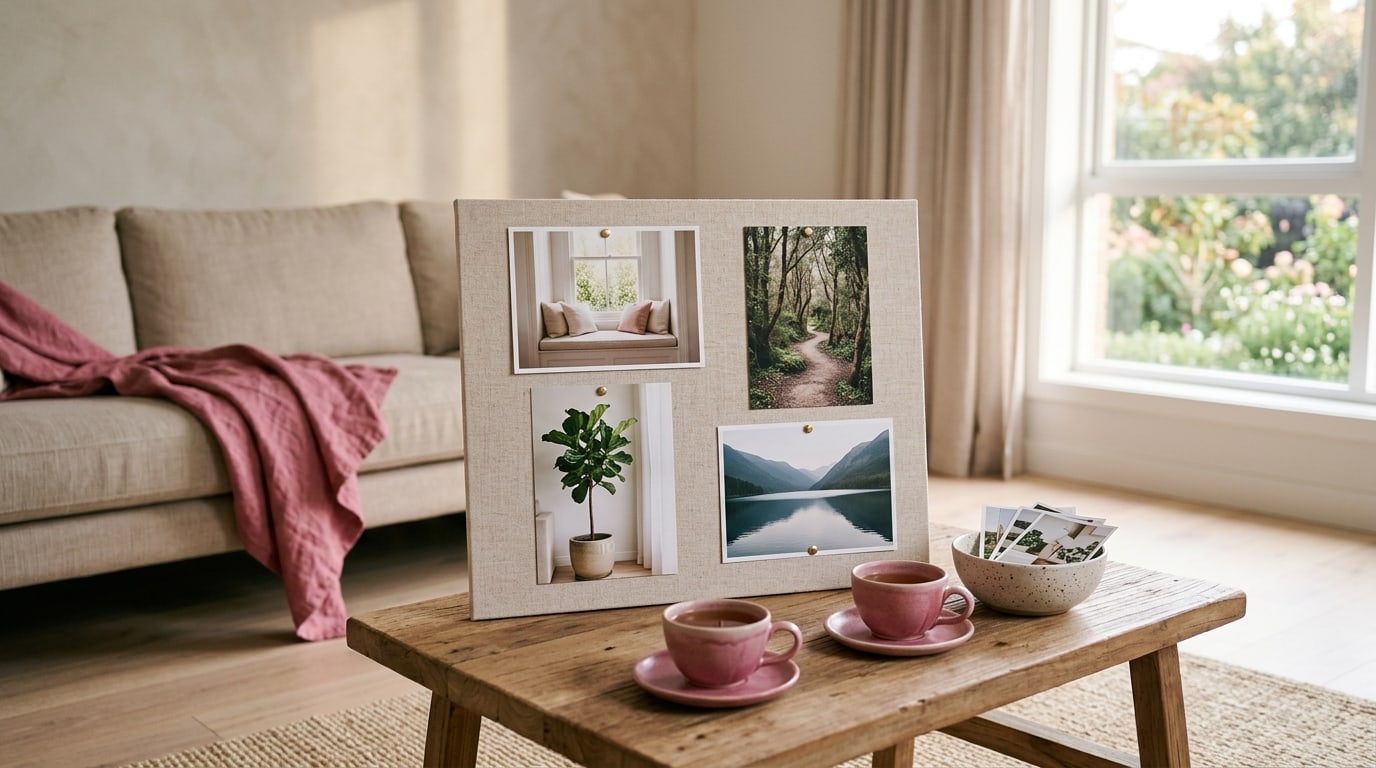
I get asked for the steps a lot, and I have written them out in my guide on how to make a vision board. But the steps are the easy bit. Creating a vision board that actually means something happens earlier, in the quiet part where you decide what you want. That is what this piece is about.
What should you think about before creating a vision board?
Give yourself an honest hour with a notebook. I use four questions, and I answer each one in writing before I look at a single image:
- What do I want more of in my life right now?
- What do I want less of, and what would I put in its place?
- If the next year went brilliantly, what would I be proud of?
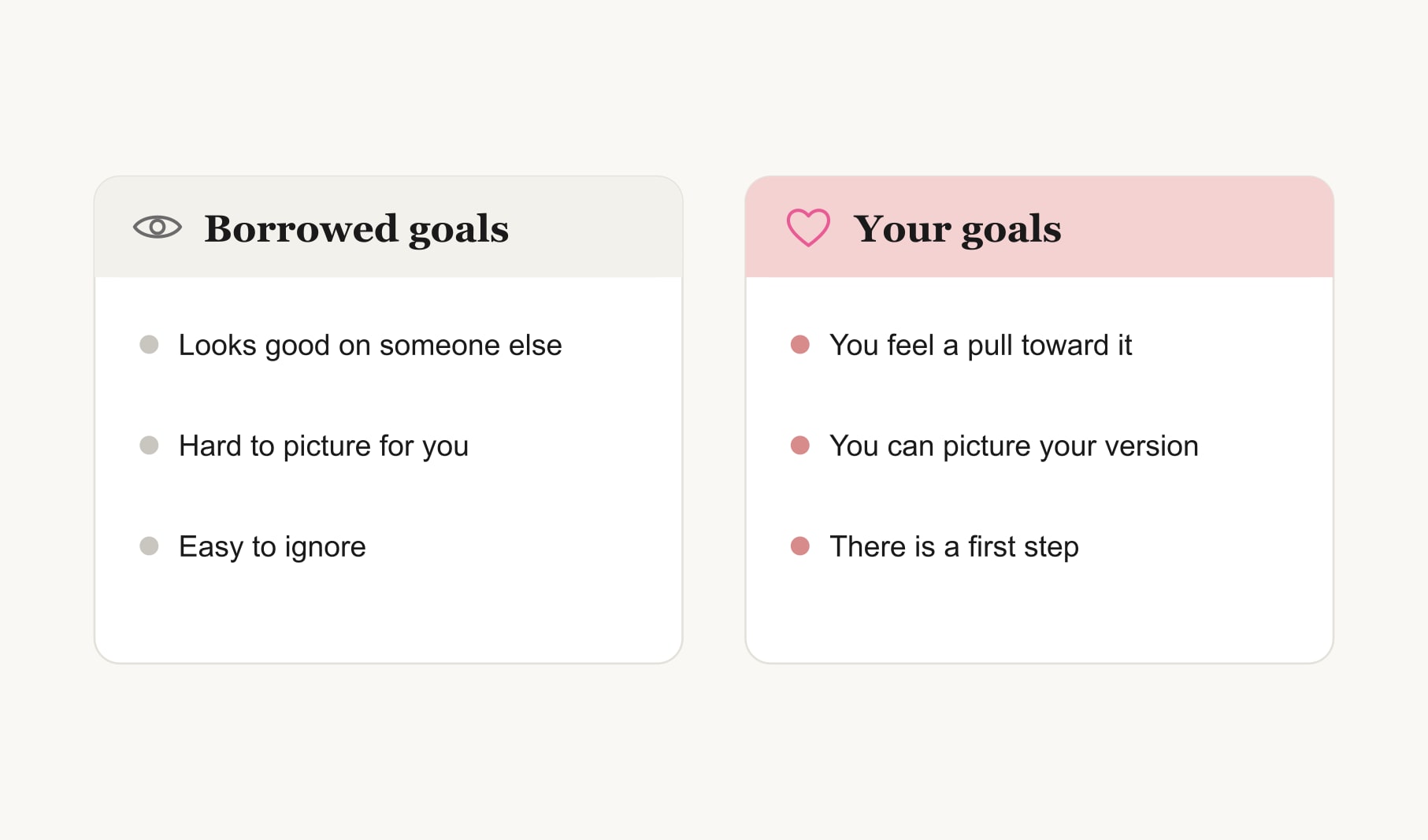
- Which of these do I want for me, and which do I think I should want?
That last question is the one that changes boards. Plenty of goals are borrowed from other people’s lives, from social feeds, from family expectations. Cross those out. What is left is yours.
How do you turn reflection into images?
Take each answer and ask: what would it look like on an ordinary day when it is true? Not the grand version, the Tuesday version. More calm might look like a tidy desk and a cup of tea by a window. More adventure might look like a train platform early in the morning. Those everyday pictures are the ones you believe, and belief is what keeps you looking.
I like to find three candidate images for every goal, lay them side by side and then choose one. Comparing makes the choice obvious: one will feel like a picture of your life and the other two will feel like pictures of someone else’s. Keep the winner and let the others go. It is a small step, but it is where most of the honesty in creating a vision board comes from.
Your own photos count. So do words, if a feeling is hard to picture. A short phrase or a single vision board word can hold what an image cannot.
Should creating a vision board feel like a ritual?
For me, yes, and it does not need to be elaborate. I clear the table, put on music, make a pot of tea and put my phone in another room. Some people light a candle, say a prayer or set an intention before they begin. Others treat it as a planning session with coffee. Whatever marks the time as yours helps you take the choices seriously.
It is also, quite simply, making a collage, an art form with a long and playful history, so let yourself enjoy the craft. Doing it with others works too. An evening with friends makes the reflection easier to start and more fun to finish, and these vision board party ideas will help you host one.

How do you stay honest while creating a vision board?
Put the phone away while you choose. Scrolling other people’s boards halfway through is the fastest way to end up with someone else’s life on your wall. If an image makes you feel behind rather than hopeful, leave it out, even if it is beautiful. And say your goals out loud to yourself before you commit them to the board. The ones that feel awkward to say are often the ones you do not really want.
It also helps to limit the board on purpose. Three to five goals forces the real choices. When everything fits, nothing has been decided.
What if you do not know what you want yet?
Then make a smaller board. Pick one area you are curious about and create a board just for that. Or make a feelings board: images of how you want to feel, with no goals attached yet. Clarity usually shows up once something is on the wall, and you can add goals and dates later. Not knowing yet is a starting point, not a failure.
How do you know your vision board is finished?
When you look at it and feel a quiet yes rather than a to-do list. Every image should earn its place. If one makes you feel guilty or bored, take it off. Then add the practical layer: a target date and one first step under each image, and a spot where you will see it every day.
From there, a simple mood tracker for your vision board is a gentle way to notice how the board is changing your days. Creating a vision board is really creating a decision and making it visible. Take your time with the thinking, and the board almost makes itself.
Keep reading
Creating a vision board: your questions
Before creating a vision board, you need clarity more than supplies. Spend an hour answering a few questions in writing: what you want more of, what you want less of and why each goal matters. Then gather images, a surface and something to stick them down with.
Creating a vision board usually takes two to three hours in total: about an hour of reflection, an hour finding images and half an hour arranging and adding dates. Splitting the reflection and the making across two days often gives clearer, more honest choices.
Useful questions when creating a vision board include: what do I want more of, what do I want less of, what would make me proud this year, and which goals are truly mine rather than borrowed. Write the answers down before choosing any images.
Yes. Start with a smaller vision board focused on one area, or make a board of images that show how you want to feel. Clarity often grows once something is in front of you, and you can add specific goals and dates as they become clear to you.
Creating a vision board can be spiritual or entirely practical. Some people pair it with prayer, meditation or intention setting, while others treat it as a visual planning session. The board works the same way either way, by keeping your chosen goals in front of you.
Both work. Creating a vision board alone gives you quiet to reflect honestly, while making one with friends or family adds energy and gentle accountability. Many people do the reflection alone first, then enjoy the making part together at a relaxed vision board evening.
When creating a vision board, avoid borrowed goals, too many images and pictures that make you feel guilty rather than hopeful. Skip anything you cannot picture in your own life. A smaller board built on honest choices will serve you far better than a crowded one.
Keep your vision board alive
A board built in your browser resets when you close the tab. Vision Boardly saves your boards, reminds you as each vision date arrives, and tracks the habits and moods moving you toward them.
Get Vision Boardly Free