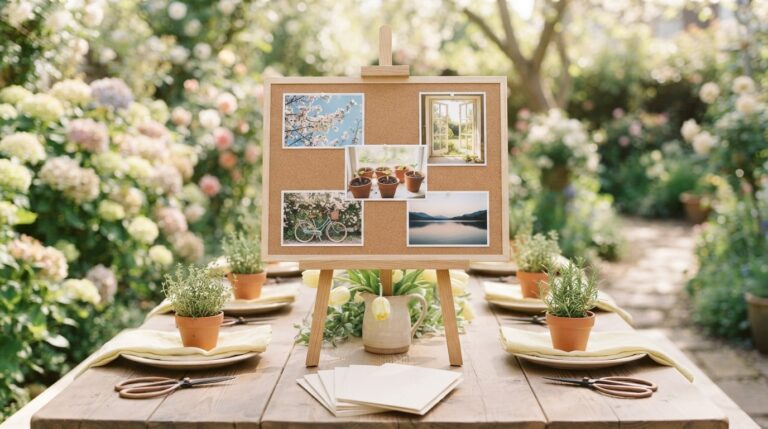
5 Year Plan Vision Board
Start at the far end with a picture of life five years from now, then work back to what this year, and this week, need to hold.
A 5 year plan vision board starts at the far end. Picture your life five years from now, set one milestone for each year leading there, then choose this year’s goals and this week’s first step. Lay it out as a timeline of five columns, and review it yearly so it bends with your life.
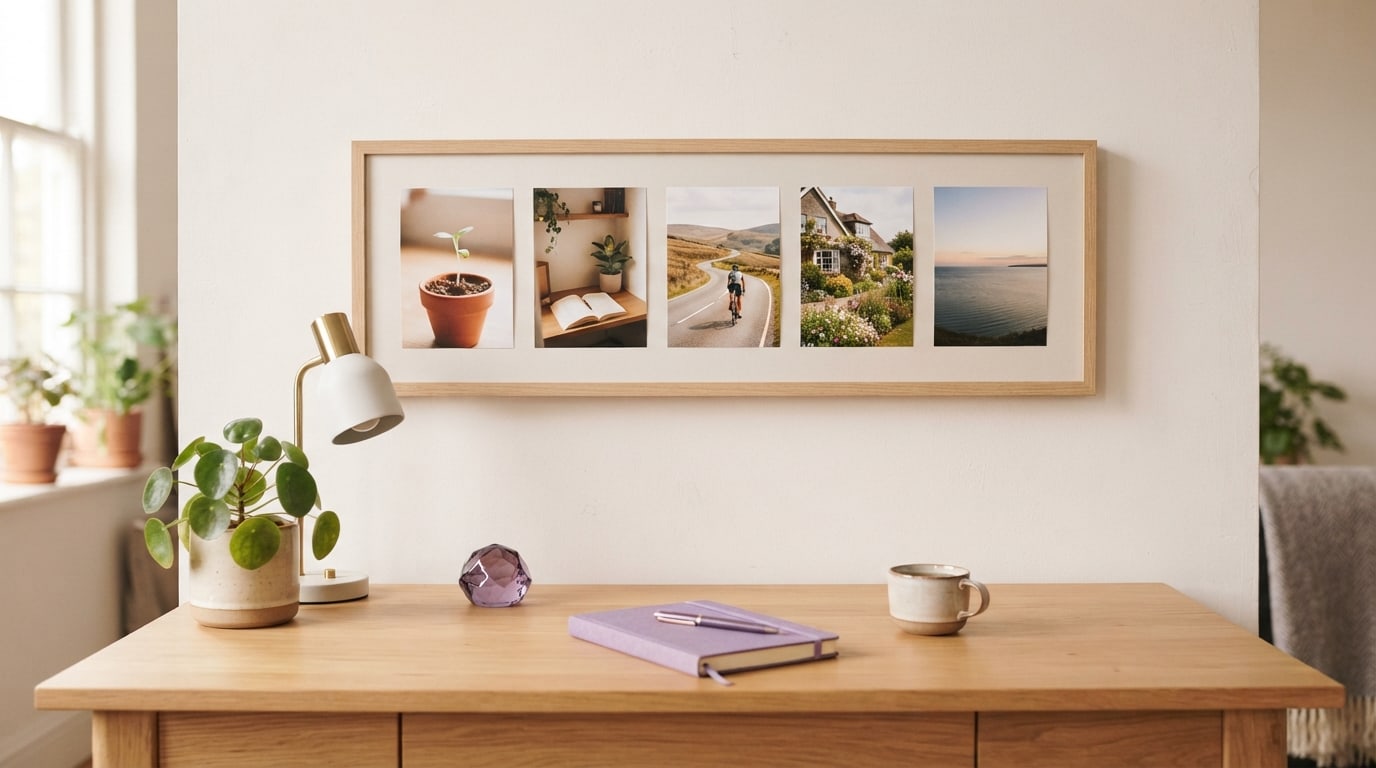
A 5 year plan vision board stretches your board from one year to five, and that changes how you build it. You start at the far end, with a picture of your life five years from now, then work backwards to what this year and this month need to hold. Planners call this approach backcasting: define the future you want, then trace the path back to today. It suits a vision board beautifully.
Why make a 5 year plan vision board?
Because some goals simply do not fit in a year. A career change, a home of your own, a degree studied alongside work, a business that supports you or a move abroad all take longer. A one-year board can only show a piece of them, and it is easy to lose sight of the whole. A five year board shows the whole, and it shows how this year’s small steps connect to it.
Five years is also short enough to feel real. Ten years can feel like fantasy. Five is close enough that you can picture yourself there.
How do you picture year five?
Sit somewhere quiet and imagine an ordinary day five years from now, in the life you would love. Where do you wake up? What work fills your morning? Who do you eat with? What do you do on a weekend with nothing planned? Write it as a short paragraph, in the present tense. Then pick out the three or four details that matter most. These become the images in your far right column.
Focus on how life looks and feels, not on titles or sums. “Working from a bright studio three days a week” is more useful than a job title, because it tells you what to aim for even if the route changes.
How does backcasting work on a vision board?
Once year five is clear, ask one question for each year, working backwards. What would need to be true by the end of year four for year five to happen? Then year three, then year two, then year one. Each answer becomes a milestone, and each milestone gets an image in its column.
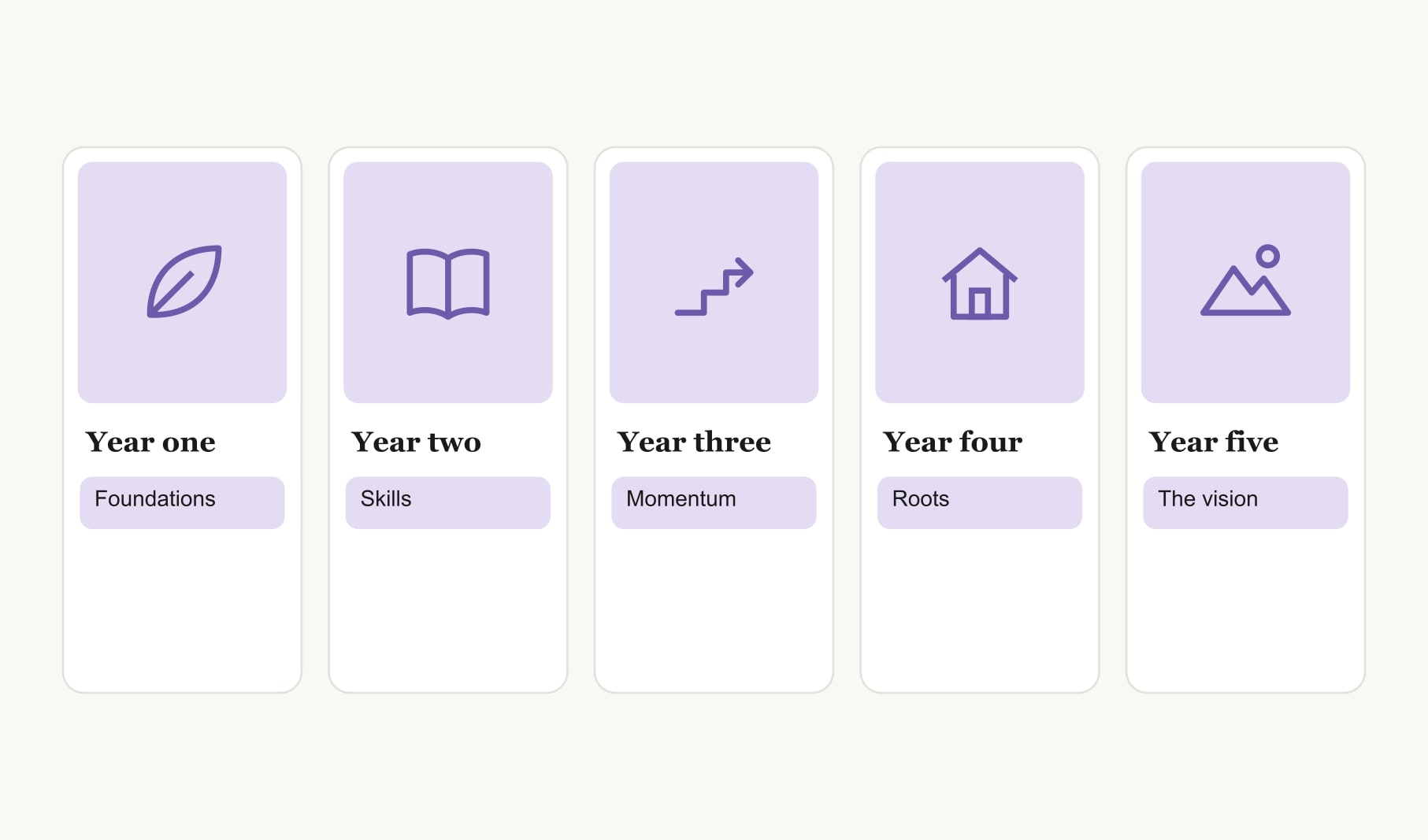
For example, if year five is “running my own small garden design business,” year four might be “a steady list of regular clients,” year three “my first ten client projects,” year two “a finished qualification and a portfolio,” and year one “enrolled, studying and designing my own garden.” Suddenly year five is not a leap. It is a staircase.
What goes in each column?
One or two images per year, each with a short caption naming the milestone. Year five holds the vision itself. Years two to four hold milestones. Year one is the busiest column, because it is the only one you can act on now: give it two or three images, each with a specific goal, a date and a first step. A 5 year vision board template gives you a ready five column layout if you would rather not draw it yourself.
If your five year plan is mainly about work, a vision board and career timeline builder lays out the stages of a career move along the same left to right line.
What does a 5 year plan vision board look like?
Picture a long, landscape board. On the far right, a sunny garden studio and a sea view: the life in year five. Moving left: a busy client calendar for year four, a finished garden project for year three, a qualification certificate and a portfolio for year two. In the year one column, three images: a course enrolment, a sketchbook of garden designs and a small home garden in progress, each captioned with a date and a first step. “Enrol by next month. First step: request the course outline this week.”
From across the room, you can read the whole story left to right: where you are, where you are going and how the years connect.
How do you keep a five year board flexible?
By rewriting it every year. Life will change in five years, and so will you. A five year board is a direction, not a contract. Each year, look at the far right column and ask whether it still feels like the life you want. Adjust it if not. Then rebuild the milestones backwards from the updated vision. The plan bends; the habit of planning stays.
How often should you review a 5 year plan vision board?
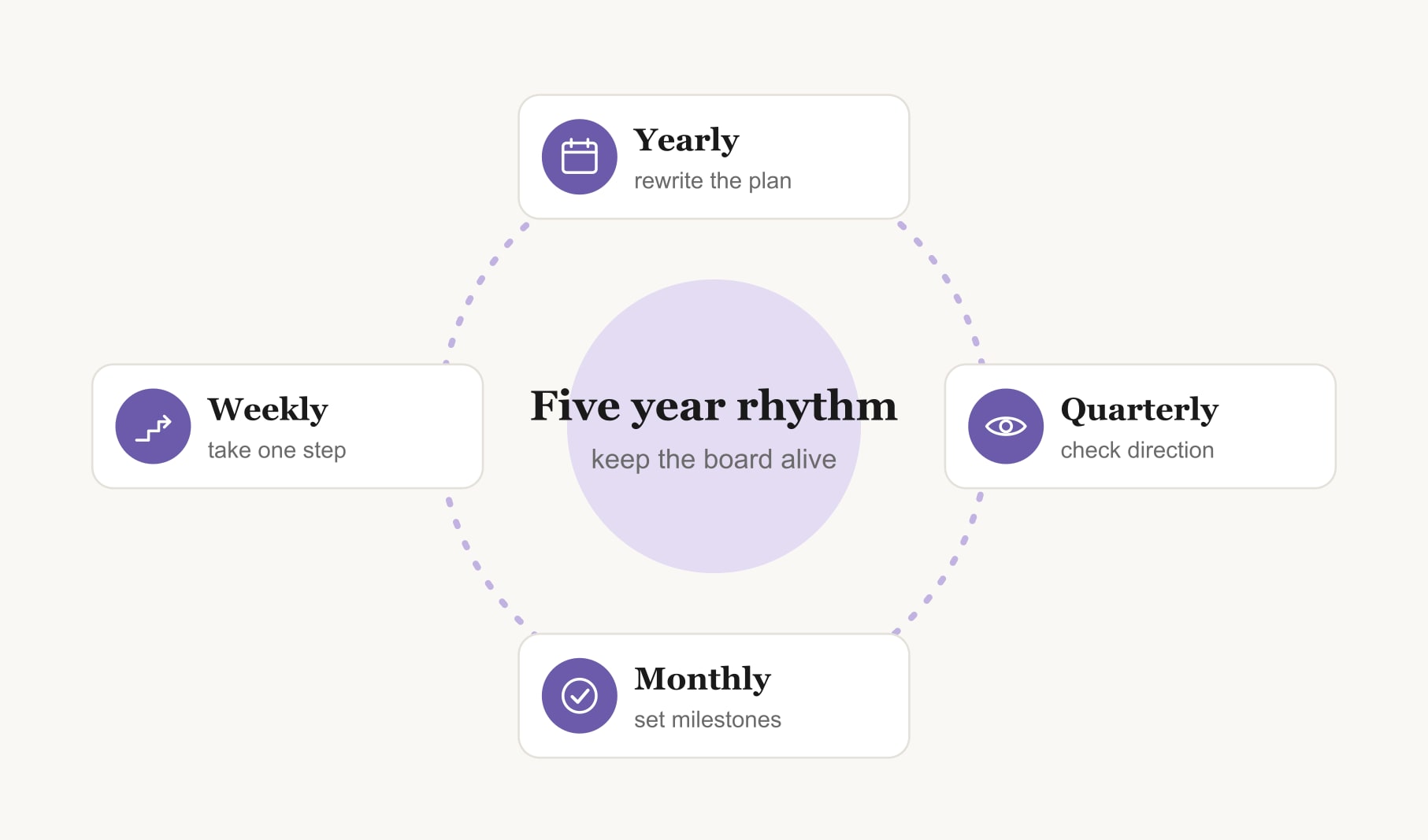
On four rhythms. Yearly, rewrite the plan from year five backwards. Quarterly, check that this year’s goals still point the right way. Monthly, set small milestones within this year’s goals. Weekly, take one step. A goal tracker for your vision board makes the weekly and monthly rhythms quick, and it builds a record you can look back on at each yearly rewrite.
What are the common mistakes with five year boards?
The first is filling every column with equal detail. Years three to five should stay light, because they will change; only year one needs dates and first steps. The second is a year five picture built on titles or sums rather than how life feels, which leaves you with nothing to adjust when the route shifts. The third is never rewriting the plan, so the board slowly describes a life you no longer want.
How does a five year board fit with your life goals?
Think of three horizons. Life goals are the biggest, sometimes without a date at all. A five year board sits in the middle, turning some of those life goals into a dated path. A one-year board sits closest, holding this year’s steps. My guide to vision board life goals explains how the horizons connect, and a five year board is often the missing middle that links a lifelong dream to a Tuesday afternoon.
Keep reading
5 year plan vision board: your questions
A 5 year plan vision board shows your life five years from now and the path that leads there. It is usually laid out as a timeline of five columns, with the vision in year five and one milestone for each year before it, plus specific goals and first steps for this year.
Picture an ordinary day five years from now and choose three or four details for the far right column. Then work backwards, setting a milestone for years four, three, two and one. Give year one specific goals, dates and first steps, and lay the vision board out as a timeline.
Backcasting means defining the future you want and then working backwards to today. On a five year vision board, you picture year five first, then ask what must be true by the end of each earlier year, turning a distant dream into a staircase of milestones.
Five years is long enough for big goals like a career change, a home or a business, yet close enough to picture yourself there. Ten years can feel like fantasy, while one year shows only a piece of a big goal. Five years gives a vision board real perspective.
Rewrite a five year vision board every year, starting from year five and working backwards again. Check this year’s goals each quarter, set small milestones monthly and take one step each week. Yearly rewrites keep the plan flexible as your life and priorities change.
Avoid filling every column with equal detail, since later years will change and only year one needs dates and steps. Picture year five by how life feels rather than titles or sums, and rewrite the vision board every year so it never describes a life you have outgrown.
The year one column should be the busiest on a five year vision board, because it is the only one you can act on now. Give it two or three images, each with a specific goal, a date and a first step you could take this week.
Keep your vision board alive
A board built in your browser resets when you close the tab. Vision Boardly saves your boards, reminds you as each vision date arrives, and tracks the habits and moods moving you toward them.
Get Vision Boardly Free