How Does a Vision Board Work
A vision board works as a reminder system: it brings a plan back to mind at the right moment, so the next small step gets taken.
A vision board works as a visual reminder for intentions you have already set. Each time the board catches your eye, it brings a goal and its first step back to mind, so you choose the small action while the plan is fresh. The board prompts the action; you take it.
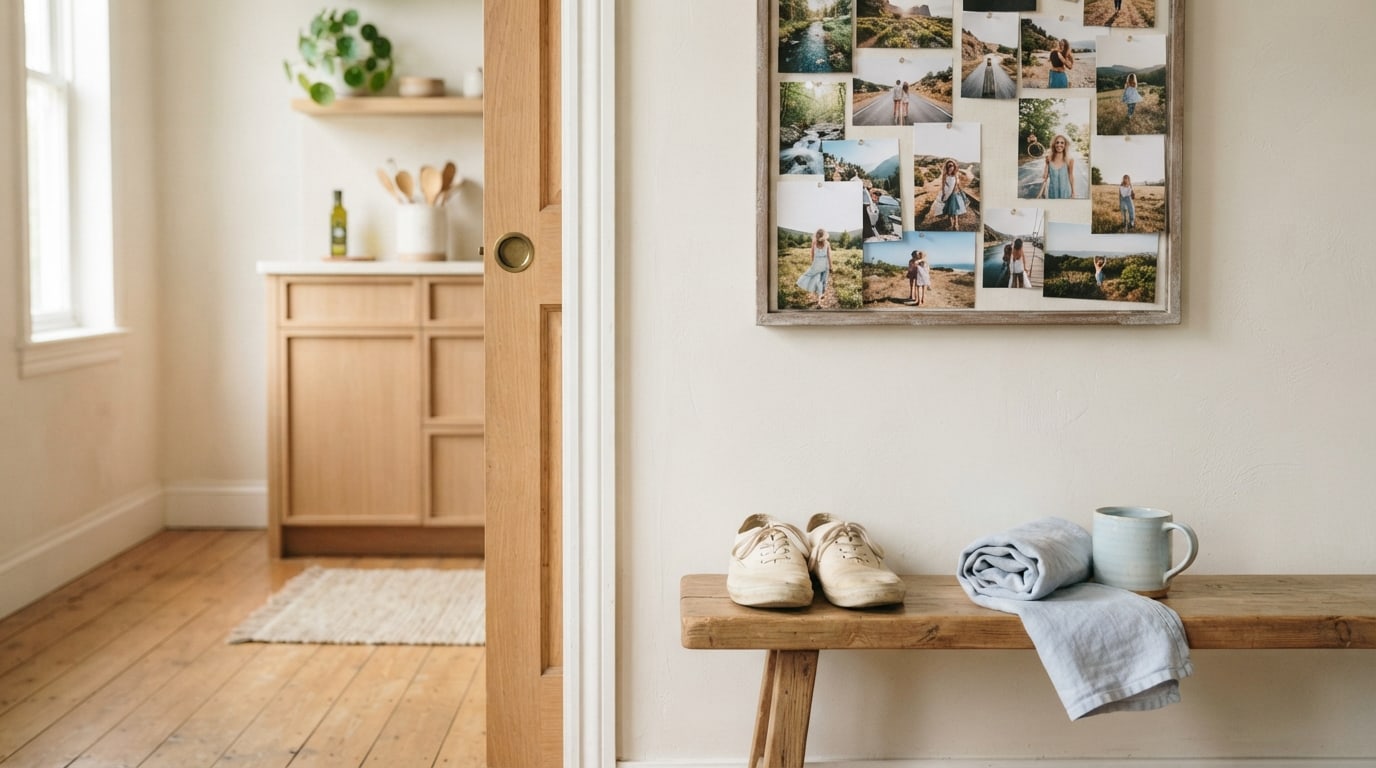
How does a vision board work in an ordinary week, away from the theory? I find the clearest answer comes from following one picture on one board, from the moment you pin it up to the moment you act on it. So that is what we will do here, one link at a time.
The short version first. A vision board works as a reminder system for intentions you have already set. It catches your eye at useful moments, brings a plan back to mind and makes the next small step easier to choose. It never acts for you. It helps you remember to act, which is a bigger deal than it sounds.
What happens when you first pin an image up?
The work starts before the board ever reaches the wall. Say one of your visions is to swim a full length of front crawl. You pick a photo of a quiet outdoor pool in early light, and under it you write: “Swim a full length of front crawl within three months. First step: book one lesson.”
That small act does two things. It turns a vague wish into a decision with a finish line. And it packs that decision into a picture you will recognise in a split second. From now on, the photo is a container. Every glance unpacks the goal, the deadline and the step, without you having to rebuild them from memory.
How does a vision board work as a reminder?
Psychologists have a name for remembering to do something later: prospective memory. Research in this area separates intentions that something in your surroundings triggers from intentions you have to recall at a set time, unprompted. Daily life is full of both, and the unprompted kind is the one that slips on a busy day.
A vision board turns more of your goals into the triggered kind. The picture is the trigger. You do not need to remember to think about swimming; you walk past the pool photo on the way to the kettle, and the plan comes back by itself.
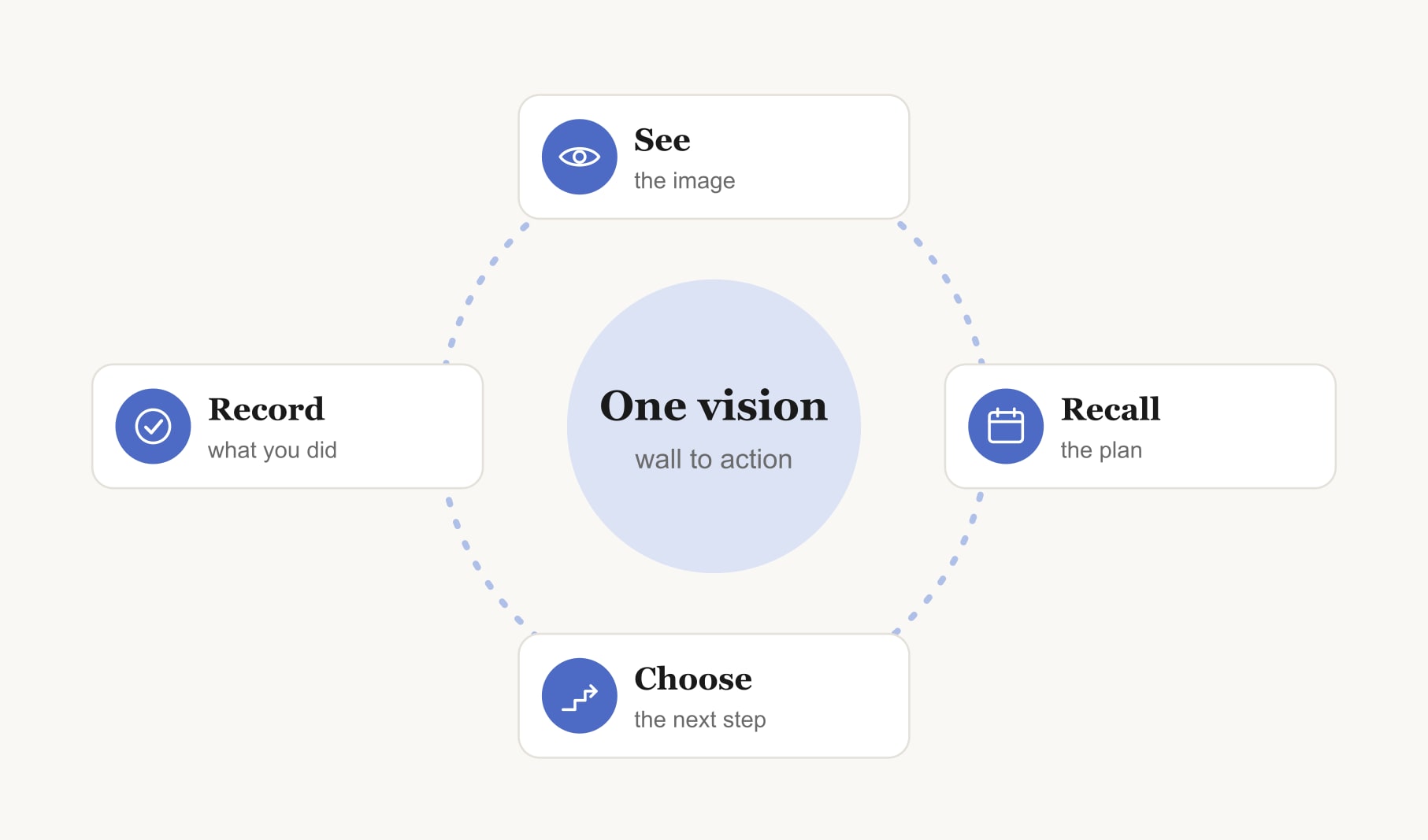
What does the board do on a busy weekday?
Here is the chain in real time. At seven in the morning you fill the kettle and glance at the board. Two seconds. The pool photo brings back “book one lesson.” Nothing happens yet, but the plan is now near the surface of your mind.
At lunch you have ten spare minutes. Because the plan is still warm, you open the pool’s booking page instead of scrolling. You book the lesson. That evening you tick it off. See, recall, choose, record: four small links, and the board touched only the first one. That is honestly how most progress happens. Not in a dramatic moment, but in a lunch break that went one way instead of another.
Why do the date and first step matter so much?
Without them, the reminder brings back a feeling and nothing else. You see the pool, you feel a little tug of “one day”, and then the day carries on. You get a pang, not a plan. The date tells you whether this vision is due now or later. The first step tells you exactly what to do with a spare ten minutes. Together they turn a glance into a decision you can act on before the moment passes.
How does the board keep working after the first week?
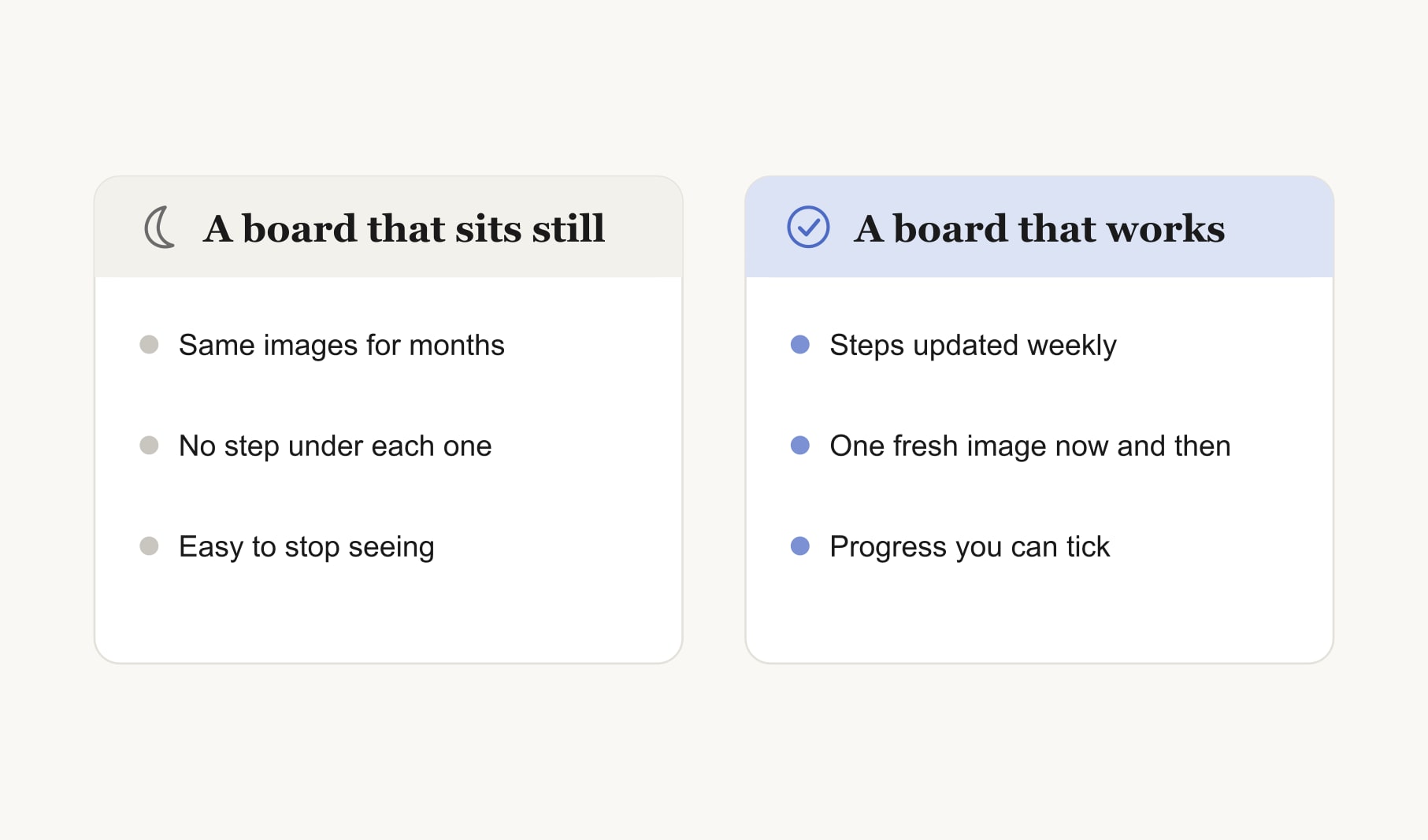
Here is the catch. Your brain is very good at ignoring things that never change. A board that looks identical for months slowly fades into the wallpaper, and the reminder chain breaks at its first link because you stop seeing the image at all.
The fix is to let the board move with you. When a first step is done, write the next one in its place: “Booked” becomes “Two lessons this month.” Swap one image every few weeks. Move the board if it has become invisible. A quick weekly tick in a goal tracker for your vision board helps too, because it gives you a reason to look closely rather than glance past.
What can a vision board not do on its own?
It cannot swim the length for you, and I would be wary of anyone who says otherwise. Every result in the example above came from booking, turning up and practising. The board’s job was smaller and quieter: making sure the plan came back to mind at moments when acting was possible. If you want the wider picture of attention, clarity and rehearsal, I have set out the five mechanisms behind vision boards in a separate guide.
How do you set up a board that works this way?
Keep it to three to five visions, because a reminder only helps if you can take it in at a glance. Give each one a picture, a short caption, a date and a first step. If you want to see how that reads in practice, here are vision board goals written out in full, with the step under each one.
Then put the board where your day already has a pause: the kettle, the mirror, the front door or your phone’s lock screen. A pause is where a reminder has room to land. If you would rather build it on screen, you can make a vision board in your browser and save it as an image for your phone.
Finally, give it five minutes a week. Update the steps, move any dates that need moving and notice what changed. That weekly look keeps every link in the chain intact.
So, how does a vision board work in one sentence?
It puts your plans where your eyes already go, so the next step comes to mind while you still have time to take it. That is the whole mechanism, and it is enough. Pick one vision tonight, write its first step and see what your board brings back to you tomorrow morning.
Keep reading
How does a vision board work: your questions
Day to day, a vision board works as a visual reminder. Each glance brings a goal and its first step back to mind, so when a spare moment comes you are more likely to use it for that step. The board prompts the action, and you still take the action yourself.
A vision board is a reminder, but a rich one. A single picture can carry a goal, a feeling, a deadline and a next step all at once, which a sticky note rarely does. That combination is why a well-made vision board can prompt action more readily than a plain list.
People tend to stop noticing things that never change, so a vision board that stays identical for months fades into the background. Update the first steps weekly, swap an image every few weeks and move the board if it has become invisible, and it catches your eye again.
A vision board without first steps tends to bring back a feeling but no instruction, so the moment often passes without action. Writing one small, specific step under each image gives every glance something concrete to do, which is where the reminder turns into progress.
A quick look once or twice a day is plenty for a vision board to work as a reminder, ideally at a moment when you naturally pause, such as making a drink. Add a five minute weekly review to update steps and dates, so the board stays current and useful.
Three to five visions suit most vision boards, because a reminder only helps if you can take it in at a glance. With twenty images, no single goal comes back clearly. Keep the rest on a later list and promote one whenever a current vision is done.
Prospective memory is remembering to do something in the future, such as booking a lesson. Intentions with nothing to trigger them are easy to forget on busy days. A vision board gives your goals a visible trigger, so the picture itself brings the plan back to mind.
Keep your vision board alive
A board built in your browser resets when you close the tab. Vision Boardly saves your boards, reminds you as each vision date arrives, and tracks the habits and moods moving you toward them.
Get Vision Boardly Free