Why Do Vision Boards Work
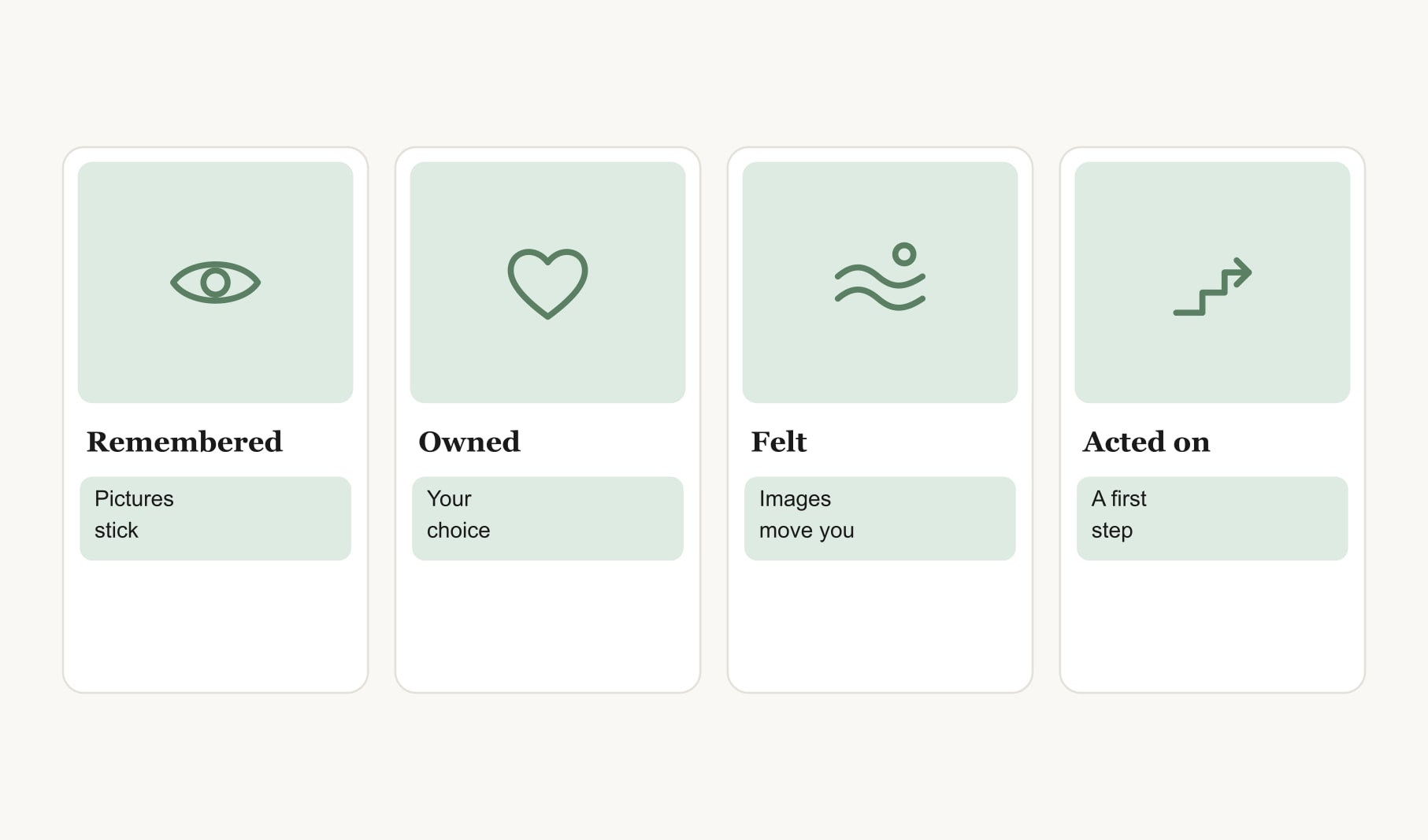
A board speaks to the parts of us a list leaves out: memory for pictures, ownership of our choices and feeling.
Vision boards work for many people because pictures are easier to remember than words, self-chosen goals feel more motivating than imposed ones, and images carry feeling that a list does not. Together these keep a goal alive in your mind. Paired with a first step, that steady presence makes action more likely.
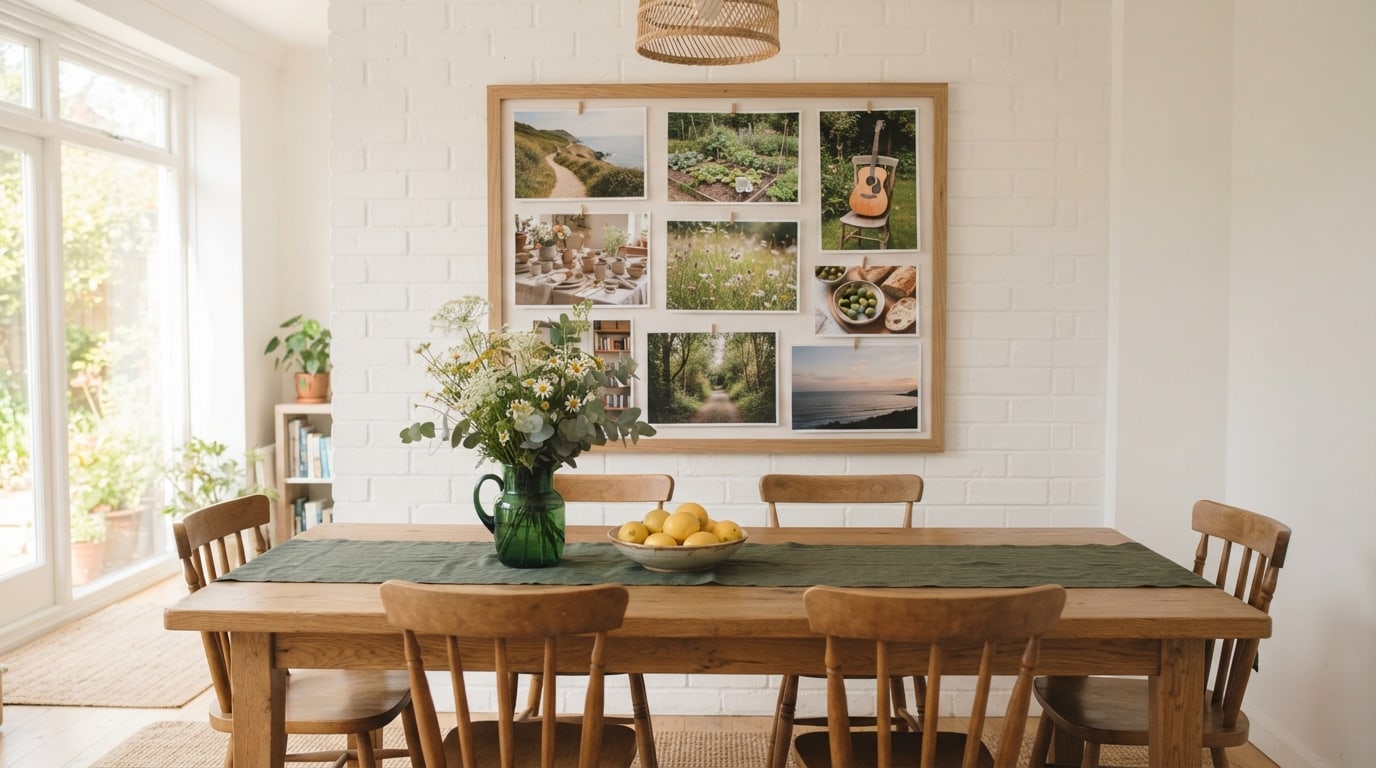
Why do vision boards work for so many people, when a written goal list sits ignored in a drawer? My answer is that a board speaks to the parts of us a list leaves out: our memory for pictures, our need to own our choices and our feelings. Here is the why, as plainly as I can put it, plus one popular explanation I would happily retire.
Why do vision boards work better than lists for some people?
Partly because of how memory works. Psychologists have long observed the picture superiority effect: people tend to remember pictures better than words. A line in a notebook saying “learn to sail” fades quickly. A photo of a small white boat on blue water is far more likely to come back to you, unprompted, on an ordinary afternoon.
That matters because a goal you keep remembering is a goal you keep choosing. Every time it surfaces, you get another chance to take a small step. A board gives your goals a form your memory holds onto.
Why does choosing your own images matter?
Because ownership fuels motivation. Self-determination theory, a well-studied framework in motivation research, holds that we keep going more readily when a goal feels like our own choice rather than something imposed on us. It names three needs: autonomy, competence and relatedness.
Making a vision board is an exercise in autonomy. You choose every goal and every image. Nobody hands you the board. That sense of “this is mine” is part of why a board you made yourself feels different from a plan someone else wrote for you, and why it tends to hold your attention longer.
Why does feeling matter so much?
A list speaks to your reasoning. A picture speaks to your heart. When you see the garden you want to grow, you feel a little of what it would be like to stand in it, and that feeling is a reason to keep going on days when the work is dull. Most goals have long, unglamorous middles. The feeling an image carries is often what gets you through them.
Why does seeing the board every day matter?
Each reason above needs repetition to do its work. A picture can only be remembered if you see it, a goal only feels owned if you keep returning to it, and a feeling only carries you if it is renewed. A board seen once a month gives you three good reasons once a month. A board beside the kettle gives you them every morning. That is why placement matters as much as any image you choose.
What about the reticular activating system?
You will often read that vision boards work by training a part of the brain called the reticular activating system to notice opportunities. I would leave this one behind. The network is real, but it is mainly involved in wakefulness and arousal, and the popular version stretches it well beyond what it does. The everyday experience people describe, suddenly noticing things related to your goal, is better explained by ordinary selective attention: when something matters to you, you notice it more. No brain jargon needed.
When do these reasons stop working?
When the goals are not yours. Every reason above depends on genuine ownership. A board built from images saved off a social feed, or from goals you feel you should want, gives you pictures without pull. You remember them, perhaps, but you feel nothing, and nothing moves.
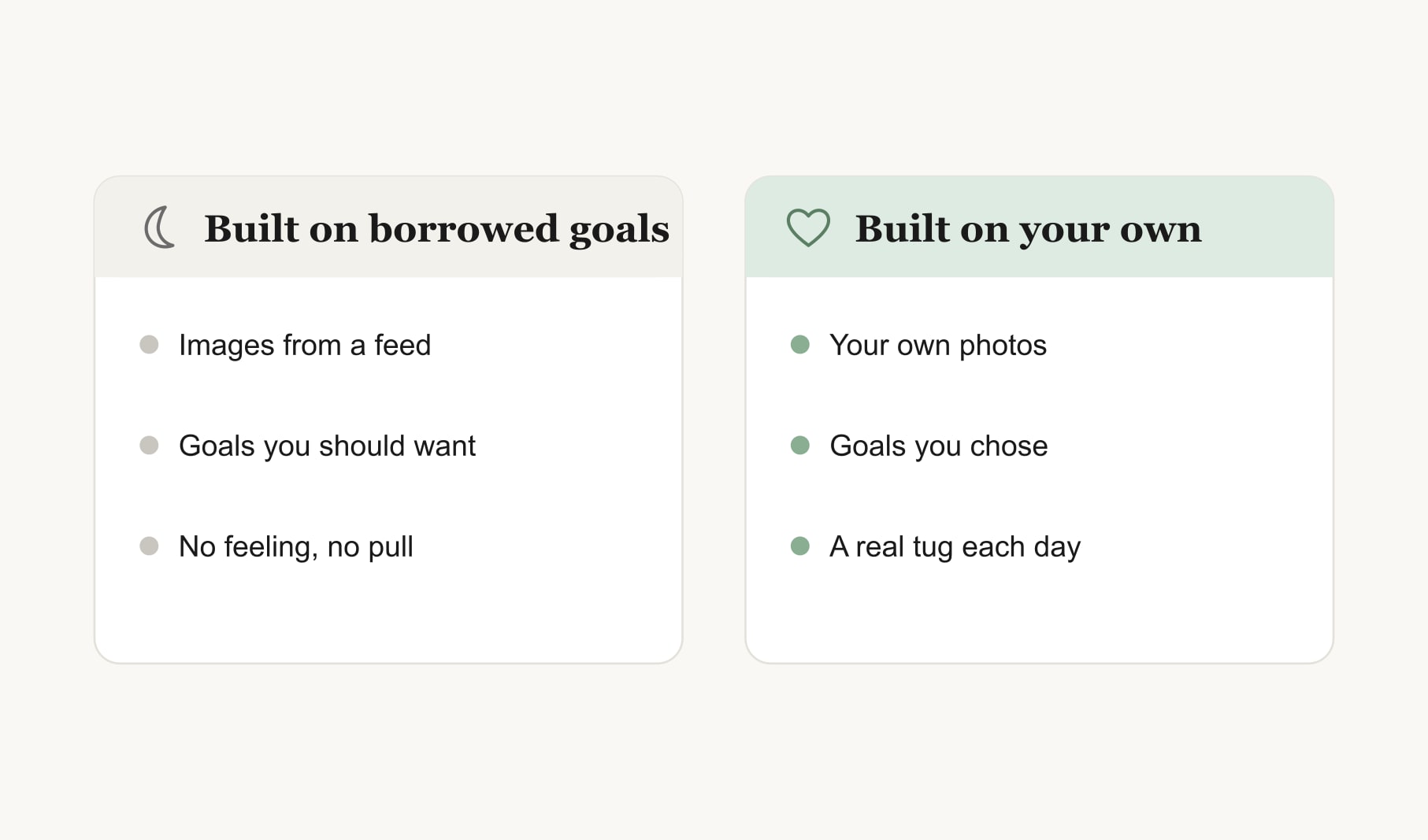
They also stop working when there is no route to action. Memory, ownership and feeling make a goal present in your mind. They do not take the step. A board with no first step under each image keeps the dream close but leaves the doing to chance.
How do you build a board around the reasons it works?
Start with your own photos wherever you can. A picture from your own life carries more memory and more feeling than any stock image. These ideas for using your own photos on a vision board help if your camera roll feels thin.
Next, check every goal for ownership. Ask: would I still want this if nobody ever saw my board? If not, take it down. A personal goal vision board is a good place to build a set of goals that are clearly yours, one square at a time.
Then pay attention to how the board makes you feel. If an image leaves you flat, or worse, comparing yourself unkindly with others, swap it. A quick daily note in a mood tracker for your vision board shows you which visions lift you and which weigh on you.
Finally, add a first step under each image, so memory, ownership and feeling have somewhere to go.
Why do vision boards work across so many beliefs?
Because the reasons above are human, not tied to any one worldview. Someone who prays over their board, someone who sets intentions, someone who practises manifestation and someone who simply likes a visual plan all benefit from the same memory for pictures, the same ownership and the same feeling. They describe the experience in different words, and that is exactly as it should be. The board meets each person where they are, which is one reason it has spread so widely.
So, why do vision boards work?
Because they give your goals a form you remember, a sense that they belong to you and a feeling worth returning to. None of that is mysterious, and none of it replaces action. It simply keeps the life you want close enough that, day by day, you keep choosing it.
Keep reading
Why do vision boards work: your questions
Vision boards often work better than lists because pictures tend to be remembered more easily than words and carry more feeling. A goal you remember and feel something about keeps resurfacing in your mind, which gives you more chances each day to take a small step toward it.
The popular claim that vision boards train the reticular activating system stretches the science. That brain network is mainly involved in wakefulness and arousal. The noticing people describe is better explained by selective attention: when a goal matters to you, related things catch your eye.
Your own photos carry personal memories and feelings that stock images cannot, so they hold your attention longer. A picture from your own life also reinforces that the goal is genuinely yours, and that sense of ownership is one of the main reasons a vision board works.
Vision boards tend to work when the goals are genuinely chosen, the images carry real feeling and each vision has a first step. They tend to fail when goals are borrowed from a feed or from expectations, or when the board offers no route from picture to action.
Yes, feeling is one of the main reasons a vision board works. An image that stirs something in you gives you a reason to keep going through the long, dull middle of a goal. If an image leaves you flat or uneasy, swap it for one that lifts you.
The picture superiority effect is the finding that people tend to remember pictures better than words. On a vision board, it means a photo of your goal is more likely to come back to mind than a written line, keeping the goal present in your everyday thinking.
A vision board built on goals chosen to please others usually lacks pull, because motivation is stronger when a goal feels like your own choice. Ask whether you would still want each goal if nobody ever saw the board, and replace any that fail that test.
Keep your vision board alive
A board built in your browser resets when you close the tab. Vision Boardly saves your boards, reminds you as each vision date arrives, and tracks the habits and moods moving you toward them.
Get Vision Boardly Free