What Is a Vision Board Examples
A one-line definition, then five very different boards that all count, from a photo grid to a phone lock screen.
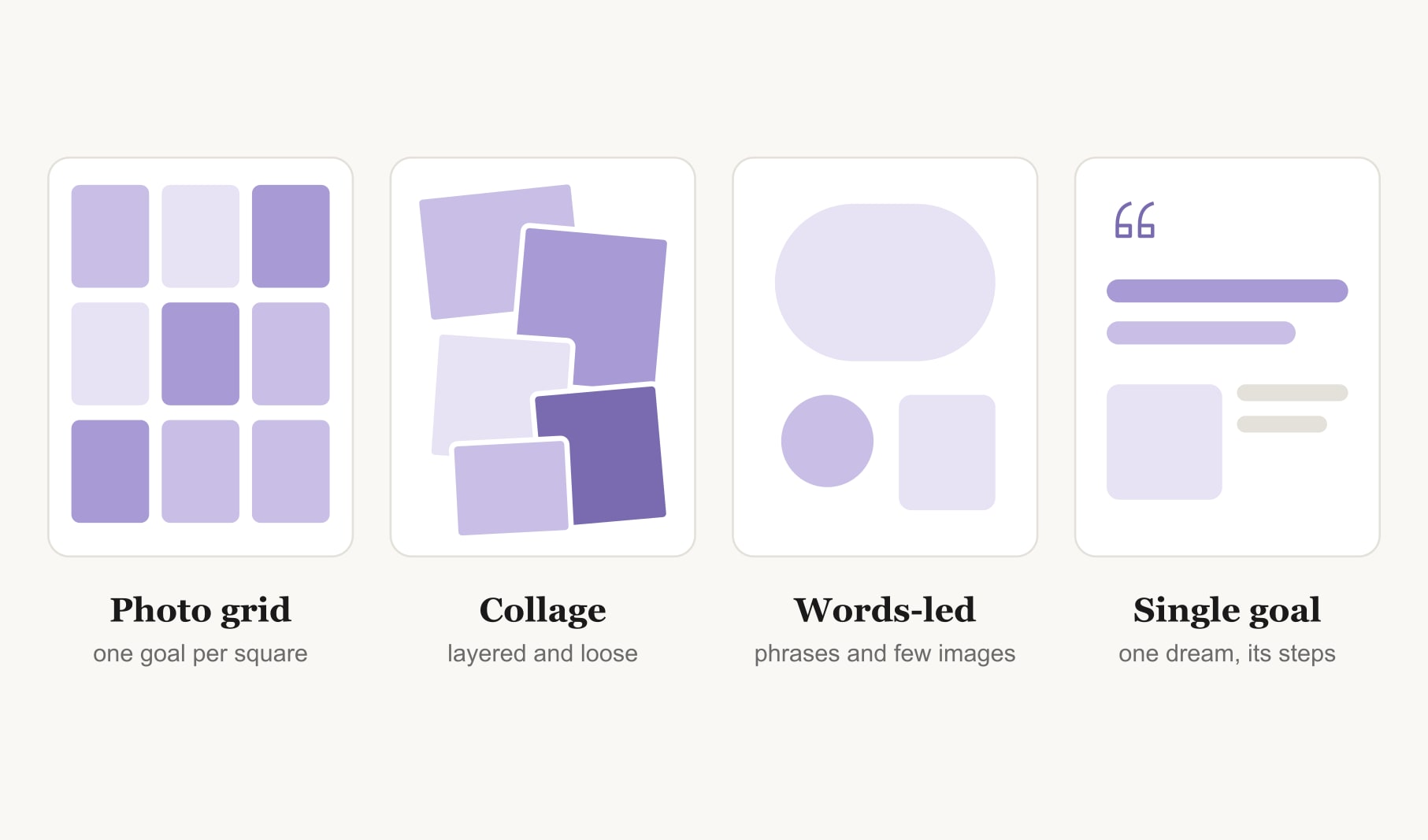
A vision board is a collection of images and words that represent your goals, kept where you see it often. Examples include a photo grid with one goal per square, a layered collage, a words-led board, a single-goal board and a phone lock screen board. Each shows your goals visually and keeps them in view.
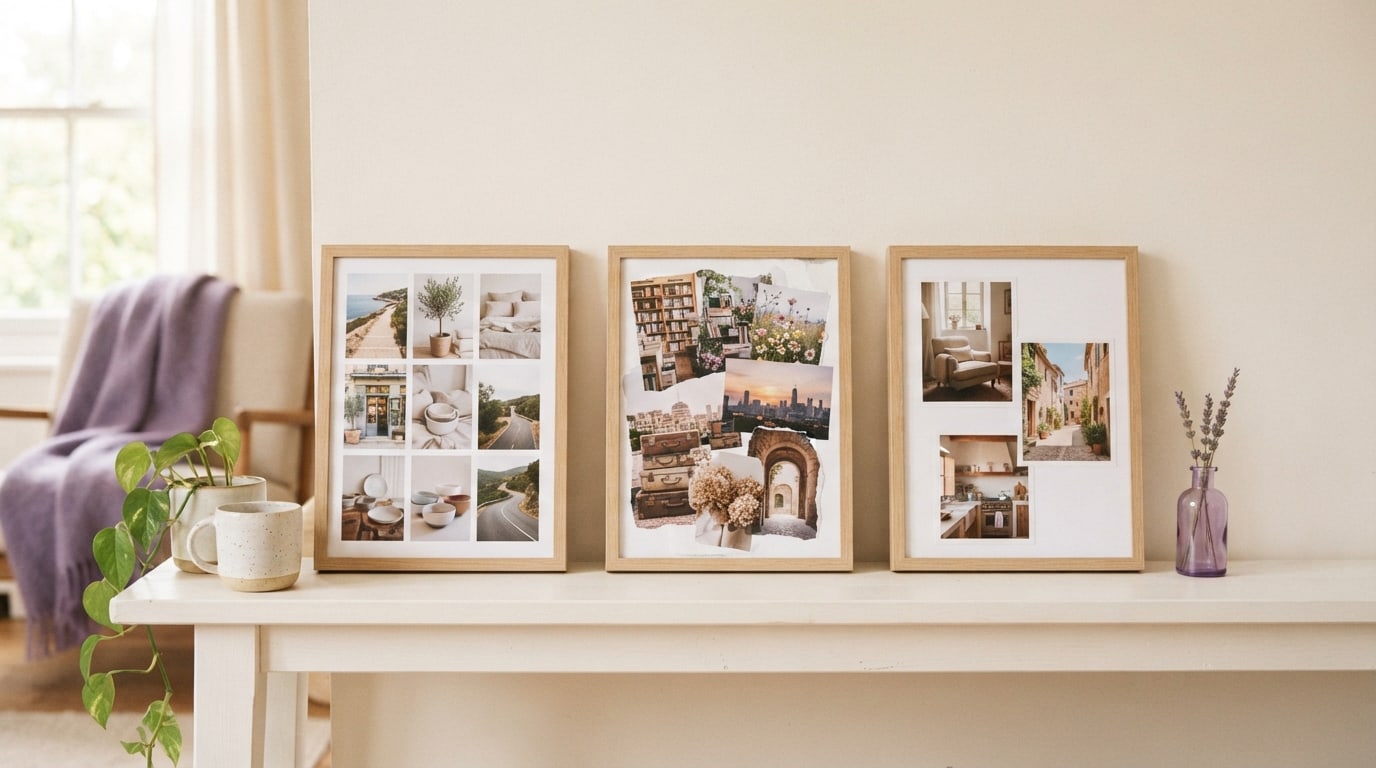
What is a vision board? Examples explain it faster than definitions ever can. If you searched “what is a vision board examples”, you probably want to see one before deciding whether to make your own. So here is a one-line definition, then five very different boards that all count, and a few things that look similar but are not quite the same.
What is a vision board, in one line?
A vision board is a collection of images and words that represent your goals, kept somewhere you will see it often. That is all. It can be paper or digital, large or tiny, busy or minimal. What makes it a vision board is the job it does: showing you what you want, so you keep it in mind.
Example 1: What does a photo grid vision board look like?
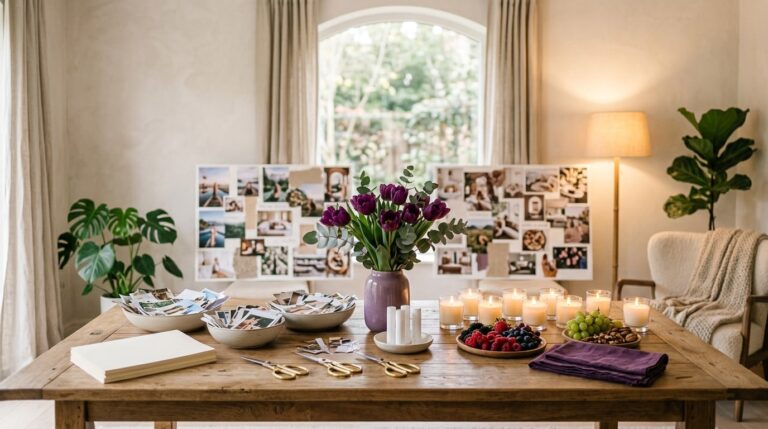
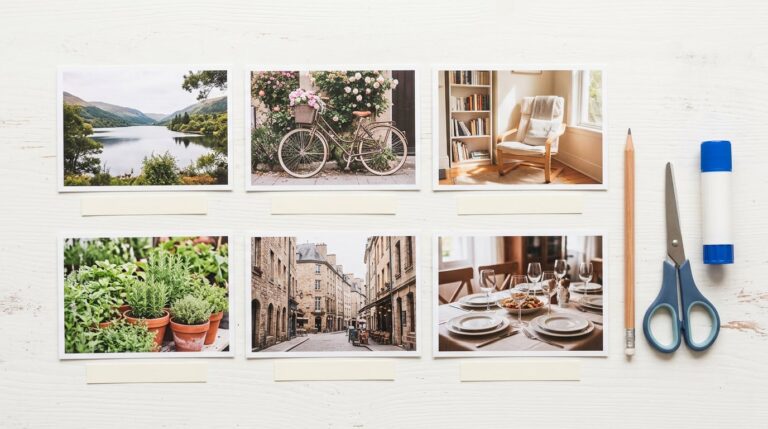
A sheet of card with six or nine photographs in neat rows, one goal per square. Under each, a short caption and a date: a running track with “a 10K by autumn”, a desk with “finish the course this year”, a beach with “a week by the sea in spring.” It is tidy, easy to read at a glance and easy to update. If you are unsure where to begin, this is the style I would suggest.
Example 2: The collage
Overlapping images, torn edges, words cut from magazines and perhaps a few pressed flowers or tickets. A collage is more artistic and more personal in its look. It suits people who love the making as much as the result. Its one risk is clutter, so give each goal at least one image that stands clear of the others.
Example 3: The words-led board
Mostly phrases, with only a handful of images. A word for the year across the top, then short lines such as “slow mornings”, “say yes to adventure” and “finish what I start.” Words-led boards suit people who think in language more than pictures. For a balance of the two, see these ideas for a vision board with words and pictures.
Example 4: The single-goal board
One dream, broken into its stages. A big image of the finish line in the centre, perhaps a finished marathon or an opened café, with smaller images of the milestones around it. This style suits a goal big enough to deserve a board of its own.
Example 5: The phone lock screen board
Three or four images arranged in a simple grid and set as your phone’s lock screen, with the top third left clear for the clock. It is small, but you see it dozens of times a day, which makes it one of the most effective boards of all. You can create a vision board wallpaper sized for your screen in a few minutes.
What is not quite a vision board?
A few things look similar but do a different job. A mood board, used by designers, captures a look or a feeling for a project, with no personal goals attached. A to-do list holds goals but no images and no feeling. A collection of saved pictures in an app holds images, but if you never look at it, it is a scrapbook rather than a vision board.
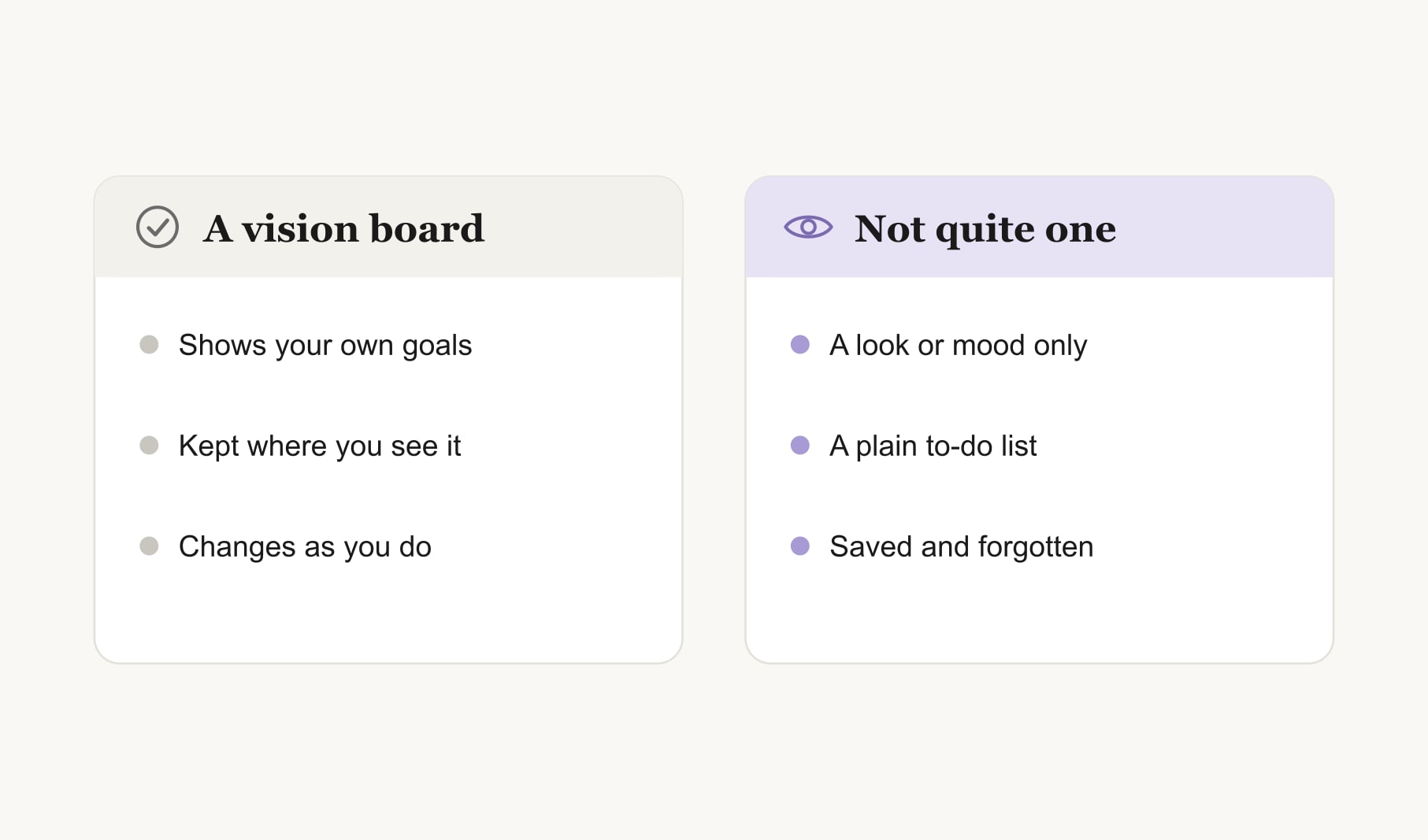
None of these are bad. They just lack one of the three ingredients: your own goals, made visual, kept in view.
What do these vision board examples have in common?
Every example above shows the maker’s own goals, uses images or words to make them vivid and lives somewhere it will be seen. The best ones add a date and a first step under each goal, which turns a picture of what you want into a plan you can act on. A quick weekly tick in a goal tracker for your vision board keeps that plan moving, whichever style you choose.
Which example should you start with?
If you are new to vision boards, start with the photo grid or the lock screen board. Both are quick to make and easy to keep current. If you love crafting, try a collage. If one big goal dominates your thoughts, give it a single-goal board. And if you want to see many more finished boards side by side before you decide, browse these vision board examples and notice which ones you would happily look at every day.
Whichever you pick, keep it to a handful of goals, put it where you will see it and update it as your life moves. That is what a vision board is, whatever it looks like.
Can one person have more than one vision board?
Yes, and many people do. A common pattern is one main board at home, covering several areas of life, plus a lock screen version with the two or three goals that need the most attention right now. Some people add a single-goal board for one big project, or a shared board with a partner or family. The examples above combine well. Just keep each board small enough to read at a glance, and make sure every board earns its place by being seen.
How big should your first vision board be?
Smaller than you think. A single sheet of card, a notebook page or a phone screen is plenty for a first board. Large boards are tempting, but they invite more goals than you can act on and take longer to make. Start small, see how it feels to live with a board for a month and grow from there.
Keep reading
What is a vision board examples: your questions
A vision board is a collection of images and words that represent your goals, kept where you see it often. A simple example is a sheet of card with six photographs, one goal per square, such as a running track captioned a 10K by autumn, with a date under each.
The main types of vision board are a photo grid with one goal per square, a layered collage, a words-led board built on phrases, a single-goal board showing one dream and its stages, and a phone lock screen board. Each shows your goals visually and keeps them in view.
A mood board captures a look or feeling for a project, often in design, with no personal goals attached. A vision board represents your own goals and is kept in view to keep them in mind. The two can look similar, but they do different jobs.
A photo grid or a phone lock screen vision board suits beginners best. Both are quick to make, easy to read at a glance and simple to update. Once you have lived with a board for a month, you can try a collage or a single-goal board.
Yes. A words-led vision board uses short phrases, such as a word for the year or slow mornings, with only a few images. It suits people who think in language more than pictures. Keep the phrases short so the board stays readable in a quick glance.
Yes. A phone lock screen with three or four goal images is a real vision board, and often one of the most effective, because you see it dozens of times a day. Leave the top third clear for the clock and keep the images simple and personal.
A first vision board can be small: a sheet of card, a notebook page or a phone screen is plenty. Large boards invite more goals than you can act on and take longer to make. Start small, live with it for a month and grow from there.
Keep your vision board alive
A board built in your browser resets when you close the tab. Vision Boardly saves your boards, reminds you as each vision date arrives, and tracks the habits and moods moving you toward them.
Get Vision Boardly Free