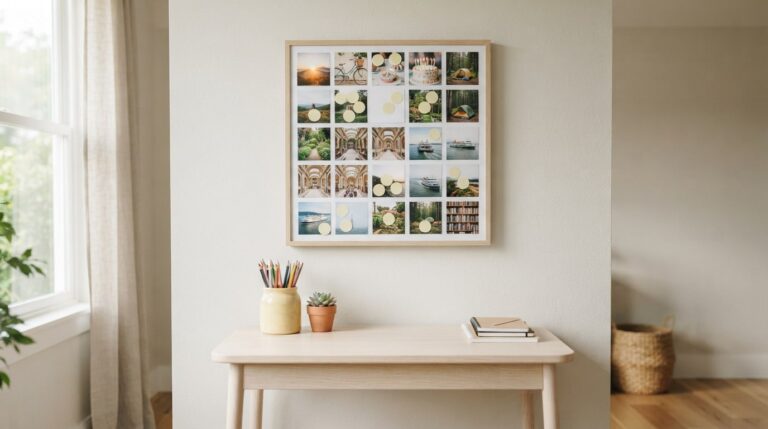
Best Way to Do a Vision Board
The best way is the one you will keep looking at. Four choices decide that, and each has a right answer for your life.
The best way to do a vision board is the way you will keep looking at. Choose paper or digital by where your eyes go, a grid or collage by how you read, a seasonal or yearly board by your pace, and solo or shared by your goals. Then add dates and first steps.
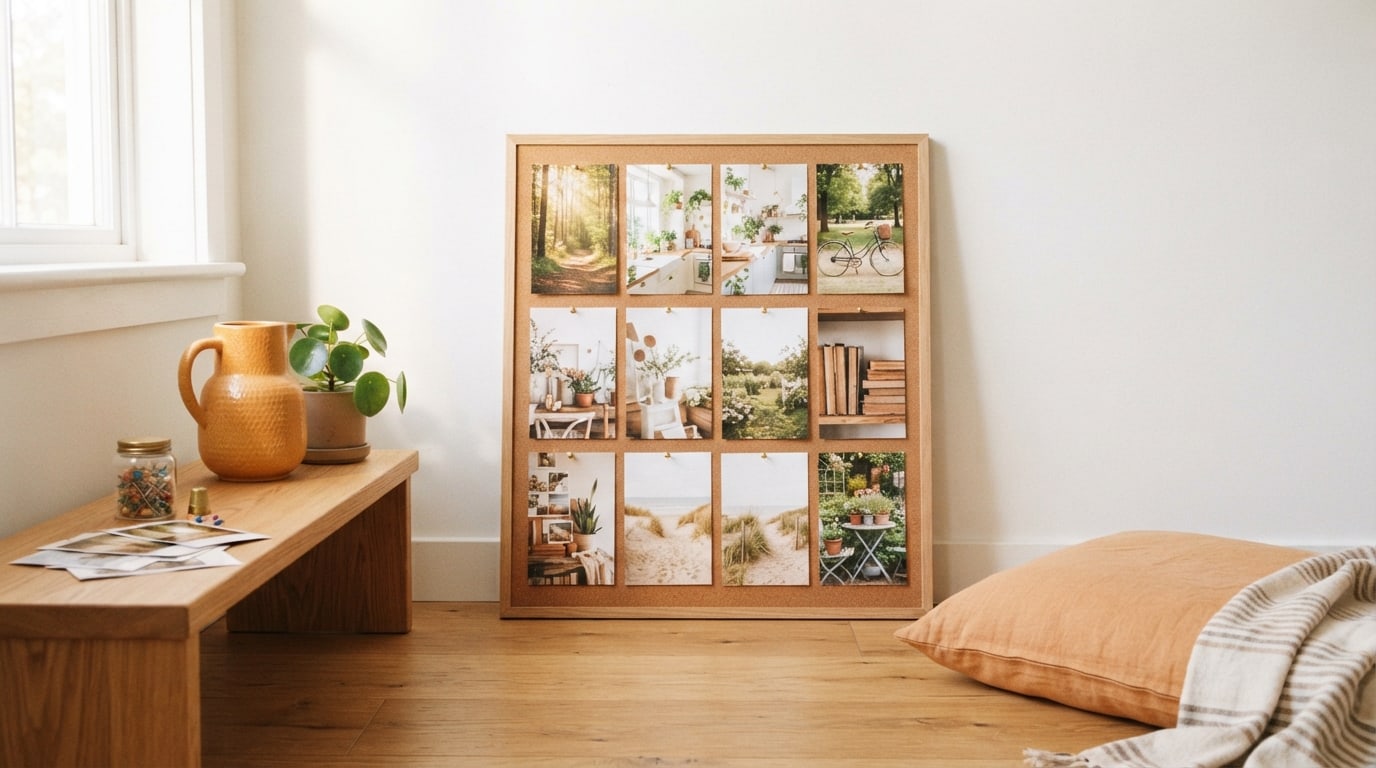
The best way to do a vision board is the way you will keep looking at. That sounds like a dodge, so let me make it practical. Four choices decide whether a board gets used: paper or digital, grid or collage, big or small, and alone or together. Each has a best answer for your life. Below, I will help you find yours, and then show you the four habits every board needs whichever way you choose.
What is the best way to do a vision board: paper or digital?
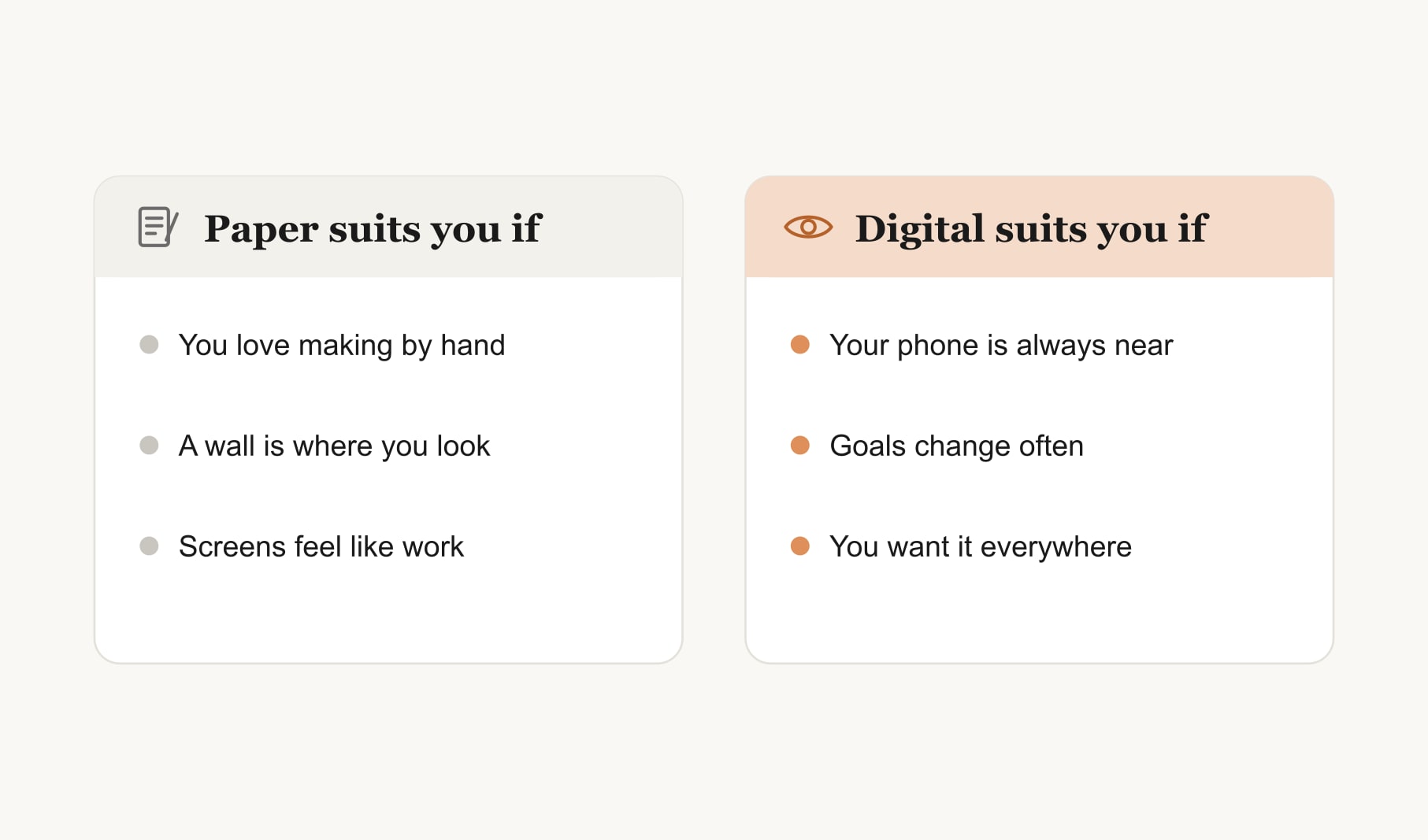
Go where your eyes already go. If you spend your day at home and love making things by hand, paper wins: a board on the wall is present all day, and the making itself is a pleasure. If your phone is always in your hand, your goals change often or you want your board with you everywhere, digital wins, because you will see it dozens of times a day.
For digital, you can make a digital vision board in your browser and set it as your lock screen. For paper, a printable vision board template gives you a tidy layout to fill in. Many people keep both, with a paper board on the wall and a photo of it on their phone.
Should you make a grid or a collage?
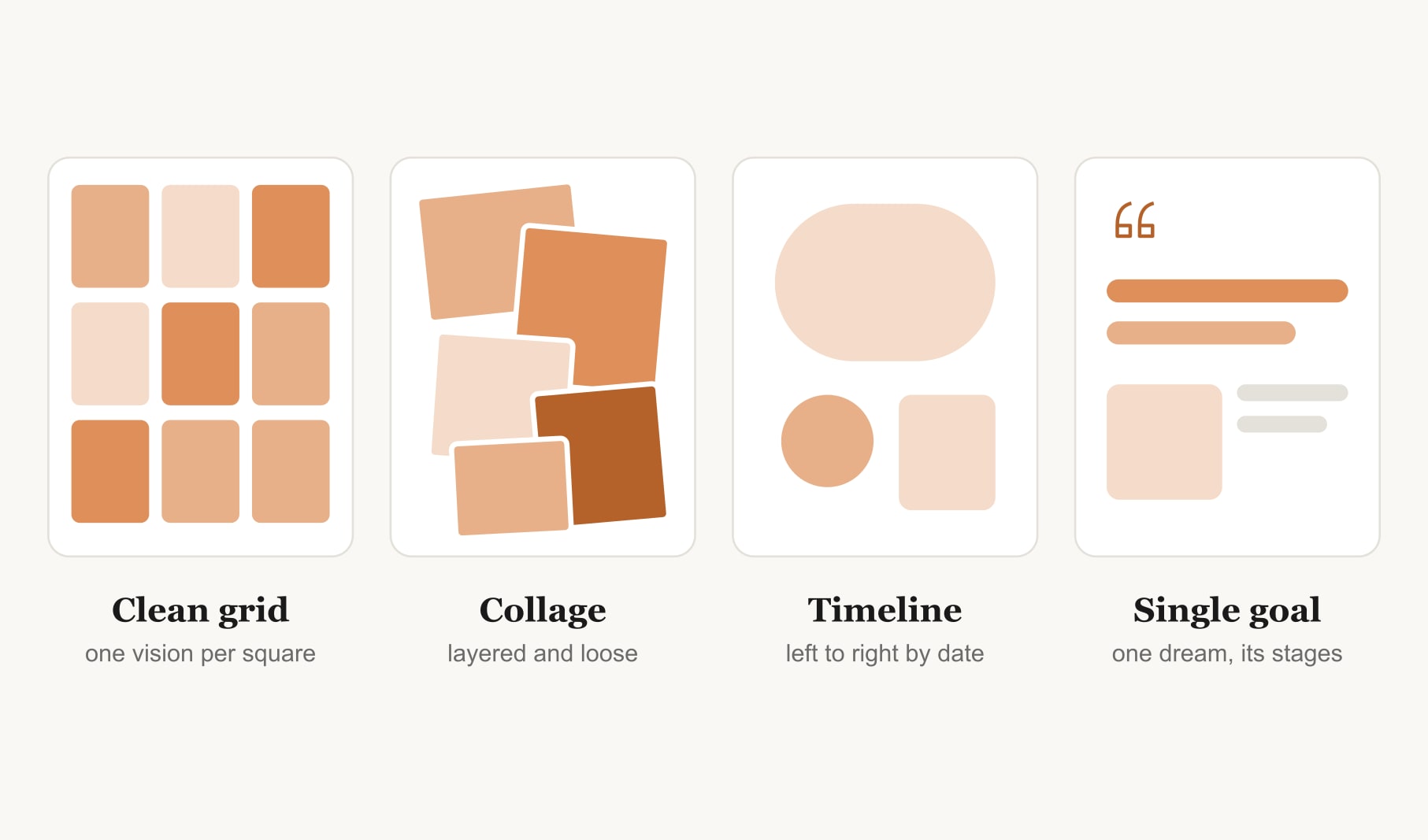
Choose by how you like to read. A clean grid, one vision per square, is my own favourite, because you can take in every goal in a couple of seconds and see at once what is missing. A collage is more artistic, layered and personal, and suits people who love the creative process. These vision board collage ideas show how to keep a collage beautiful without letting goals get buried.
Two other layouts are worth knowing. A timeline runs left to right by date, which suits plans that unfold over months or years. A single-goal board gives one big dream the whole space, with its milestones around it.
Is one big board better than a small seasonal one?
It depends on your pace. A big yearly board, often made at New Year or on a birthday, suits people who like one major ritual and steady goals. A small seasonal board, remade every three months, suits people whose lives move quickly, or who lose interest in a board that never changes. If you have tried yearly boards and found them stale by spring, try seasonal ones. Fewer goals, more often, tends to work better for busy lives.
Should you make a vision board alone or with others?
Choose by your goals. Personal goals, such as a career move, a fitness habit or a creative project, usually belong on a board you make alone, where you can be completely honest. Shared goals, such as a home, a trip or family time, belong on a shared board. A couples vision board is a lovely way to plan a shared life, and the conversation while you make it is often as valuable as the board itself.
Making personal boards side by side with friends is a third option. Everyone works on their own board, but the company keeps it fun and the shared evening makes it more likely to happen at all.
What are the four habits every vision board needs?
Whatever you choose above, four habits make the difference. Keep three to five visions, so the board stays readable. Give each a date, so it becomes due. Write one first step under each, so every glance comes with an action. And look at it weekly, ticking off steps and writing new ones. A habit tracker for your vision board makes that weekly look quick and satisfying.
What is the best way to do a vision board if you are new?
Start small and simple. A grid of three to five photos, on paper or your phone, made alone in about an hour, with a date and first step under each. Live with it for a month. Then decide whether to try a collage, a seasonal rhythm or a shared board. The best way reveals itself through use, not through planning.
What if your first way does not work?
Change one choice at a time. If you stopped noticing a paper board, try digital. If a collage felt cluttered, try a grid. If a yearly board went stale, go seasonal. One change, one month, then judge again. Most people find their best way within two or three tries, and once they do, the board becomes a habit they keep for years.
How much do supplies matter?
Very little. The best boards I have seen were made with a sheet of card, a glue stick and printed photos, or with a phone and a camera roll. Special kits and fancy frames are lovely if you enjoy them, but they are not what makes a board work. If shopping for supplies is delaying your start, skip it and use what you already have tonight.
How long should the whole process take?
About an hour for a small board and two for a larger one, whichever way you choose. Most of that time goes on choosing goals and images; the making itself is quick. If you want a timed plan for a single session, my step-by-step guide breaks it into ten blocks so nothing gets rushed and nothing gets skipped.
Does the best way change over time?
Often, yes. A busy season might call for a small lock screen board, while a quieter one invites a big paper collage. A new relationship might bring a shared board, and a career move a timeline. Your best way should fit your life now. Revisit the four choices whenever your life changes shape, and let the board change with it.
Keep reading
Best way to do a vision board: your questions
The best way to do a vision board is the way you will keep looking at. Choose paper or digital by where your eyes go, a grid or collage by how you like to read, a seasonal or yearly board by your pace, and solo or shared by your goals.
Neither is better for everyone. A paper vision board suits people who love making by hand and spend time at home, while a digital board suits people whose phone is always near or whose goals change often. Many people make a paper board and keep a photo on their phone.
A grid vision board, with one vision per square, is easiest to read at a glance and shows quickly what is missing. A collage is more artistic and suits people who love the making. Choose the layout you will enjoy looking at every day, and keep each goal clearly visible.
A yearly vision board suits people who like one big ritual and steady goals, while a seasonal board, remade every three months, suits fast-moving lives. If yearly boards have gone stale for you by spring, try seasonal ones with fewer goals each time.
Make a vision board alone for personal goals, where you can be completely honest, and make a shared board with a partner or family for shared goals like a home or a trip. Making personal boards side by side with friends is another enjoyable option.
No. A sheet of card, a glue stick and printed photos, or a phone and your camera roll, are enough to make a vision board that works. Kits and frames are lovely if you enjoy them, but clear goals with dates and first steps matter far more.
Every vision board needs four habits, whatever its style: three to five visions so it stays readable, a date for each, one first step under each and a weekly look to tick off steps and write new ones. These habits matter more than format or layout.
Keep your vision board alive
A board built in your browser resets when you close the tab. Vision Boardly saves your boards, reminds you as each vision date arrives, and tracks the habits and moods moving you toward them.
Get Vision Boardly Free