Vision Board Layout Ideas
The grid is a great default. These ten layouts are for when your goals connect in a different shape.
Fresh vision board layout ideas include a stepping stone path toward one big goal, rings from now to someday, a split board for now and next, four season quarters, a tree with roots and branches, a triptych, a film strip and a string line with clips. Choose the shape that matches how your goals connect.
A three by three grid is my default, and for good reason: it is clear, calm and easy to change. But sometimes your goals connect in a different shape. Maybe they are steps toward one dream, or they belong to different seasons, or to different people. These vision board layout ideas are for those boards. I have left out the classic arrangements, the grid, zones, centre focus, timeline and collage, which my vision board layout guide already covers.
Which vision board layout ideas go beyond the grid?
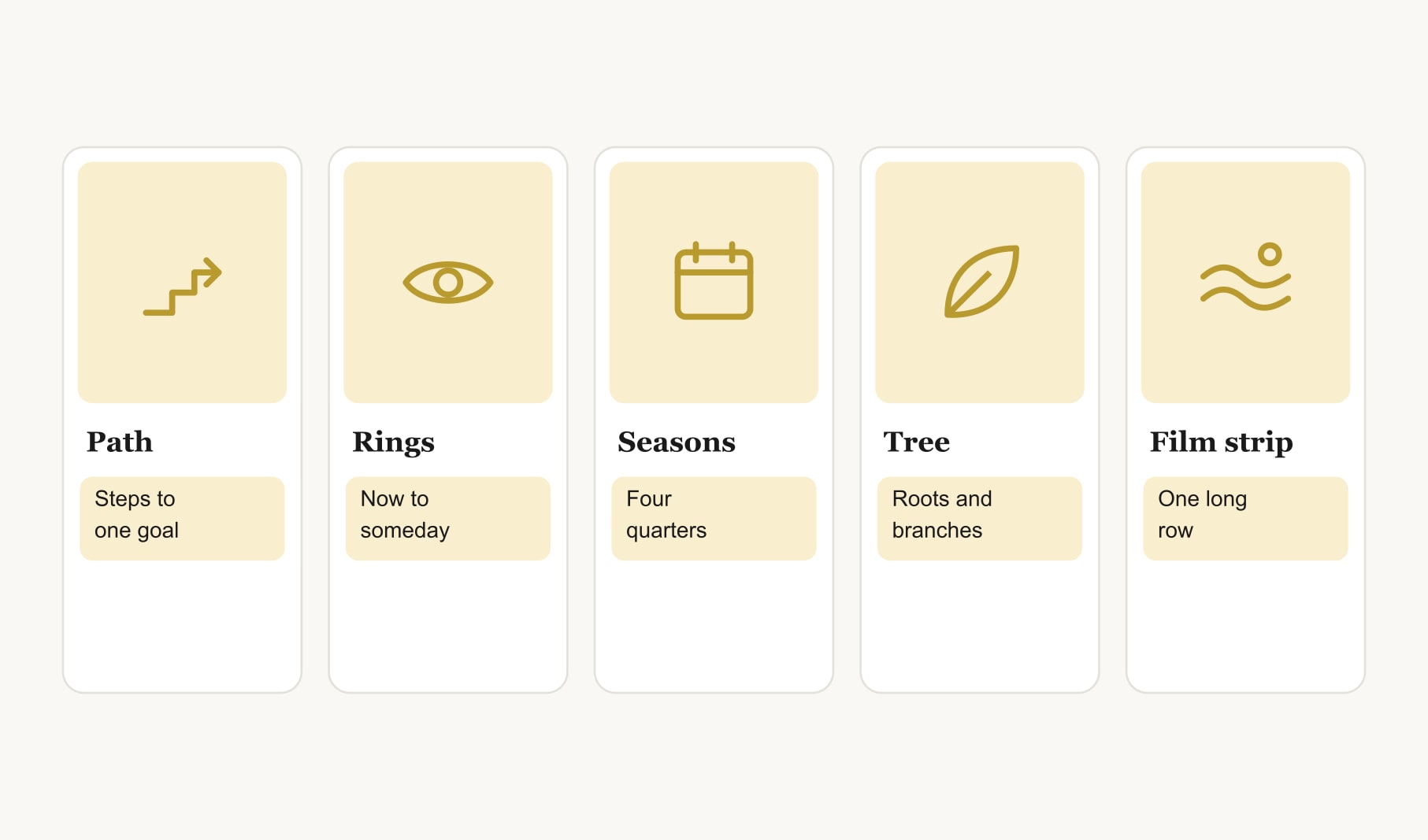
Ten that I come back to: a stepping stone path, rings, a split board, season quarters, a tree, a triptych, a film strip, a string line, a frame around a mirror and a column per person. Each one tells a small story about how your goals fit together, which can make the board easier to understand at a glance.
1. How does a stepping stone path work?
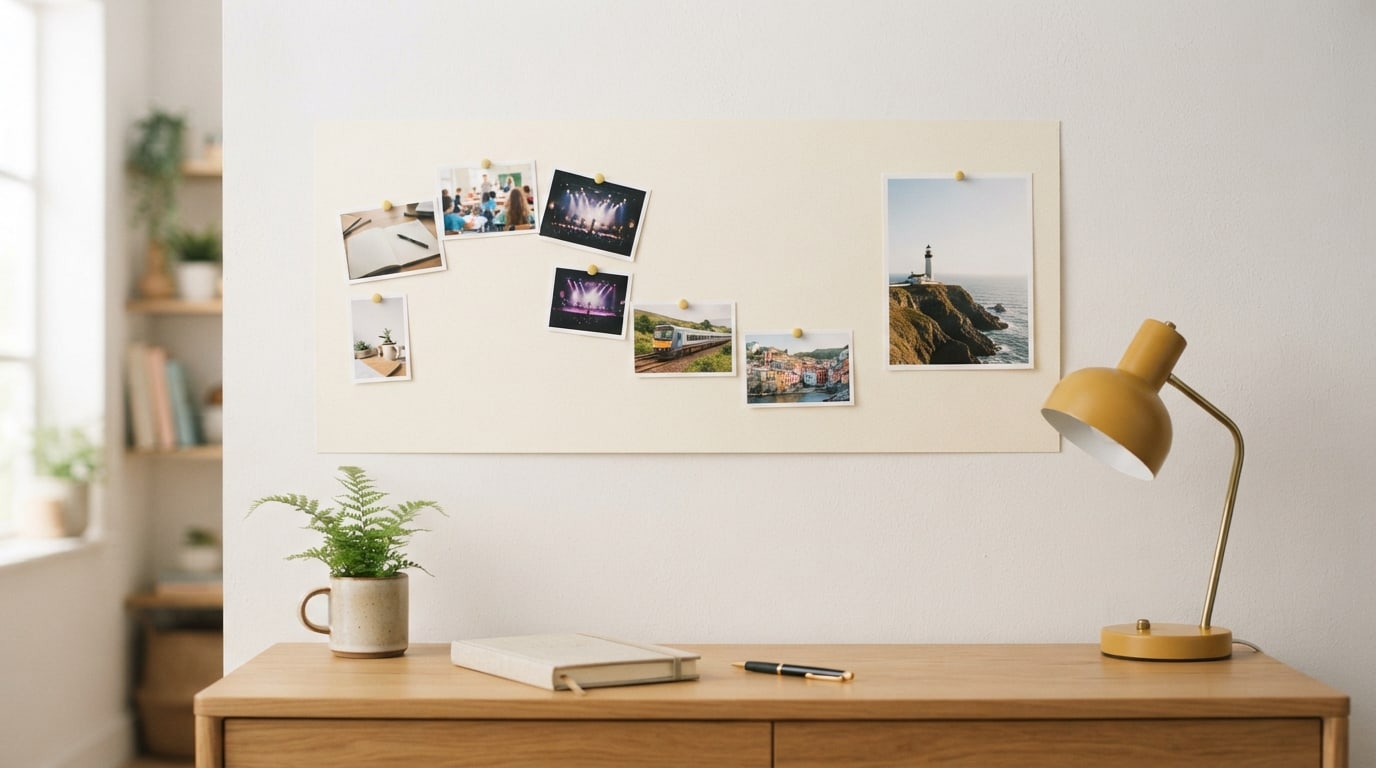
Lay smaller images in a winding line across the board, leading to one larger image at the end. Each stone is a step toward the big goal: a course, a first job in the field, a portfolio, then the dream role. A path is perfect for one big goal with clear stages, and you can tick each stone as you pass it.
2. What is a rings layout?
Draw two or three circles, one inside another. The centre holds what you are doing now, the middle ring holds this year and the outer ring holds someday. It shows at once what needs attention today and what can wait, which calms a board full of big dreams.
3. When should you split a board into now and next?
When you are in a season of change. Divide the board down the middle. The left side holds goals for now, the right holds goals for the next chapter. As goals on the left finish, move pictures across. It is a simple way to honour the present without losing sight of what is coming next.
4. How do season quarters work?
Split the board into four quarters, one per season. Put two or three goals in each, so the year has a natural rhythm: something to start in spring, something outdoors in summer, something to finish in autumn and something restful in winter. It spreads a busy year out so nothing lands all at once.
5. What is a tree layout?
Draw a simple tree. The roots hold your values and daily habits. The trunk holds the one or two things that support everything, like sleep or a steady routine. The branches hold your goals. It is a lovely reminder that big goals grow from small daily habits, and you can log those roots in a habit tracker for your vision board.
6. Why try a triptych?
A triptych is three panels side by side, like three small boards hung together. Give each panel one theme, such as body, mind and work, or home, people and adventure. Three panels feel balanced and are easy to hang in a row above a desk or a bed.
7. What about a film strip?
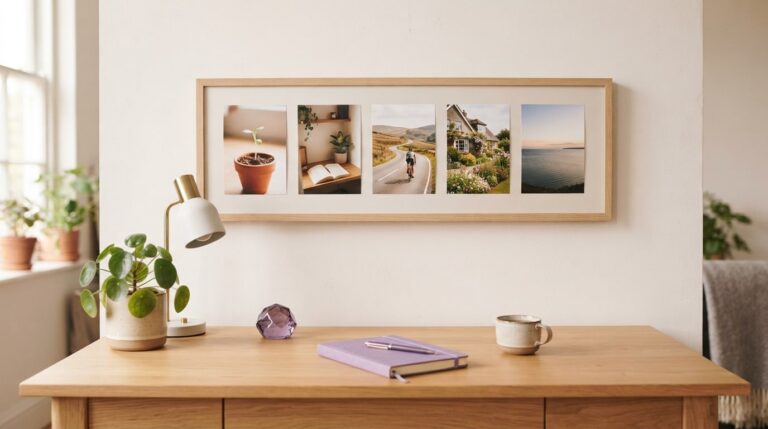
A film strip is one long row of images, perfect for a narrow wall above a desk or along a shelf. Read it left to right like a story of your year. It forces you to choose a small number of goals and gives each one equal weight. It also works well across the top of a computer screen as a wallpaper.
8. How does a string line work?
Hang a length of string across a wall and clip photos to it with small pegs. It is the easiest layout to change: unclip a finished goal, clip on a new one. It suits people whose goals change often, and it looks lovely with instant-style prints.
9. What is a mirror frame layout?
Arrange small images around the edge of a mirror you use every day. Your reflection sits in the middle, surrounded by your goals. It is a quietly powerful layout, because you see it while getting ready each morning, without any extra effort.
10. How do you lay out a shared board?
Give each person one column, with a shared row across the top for goals you hold together. Everyone can see their own goals and the common ones at once. The couple goals vision board works well for two people, and the same idea stretches to a family or housemates.
Can you combine two layout ideas?
Yes, and some of my favourite boards do. A tree whose branches are split into season quarters. A film strip with a stepping stone path running along it. A mirror frame with one column for each person in the house. Keep the combination simple, though. If you need to explain the layout to someone, it is probably one idea too many.
How do you choose the right layout idea?
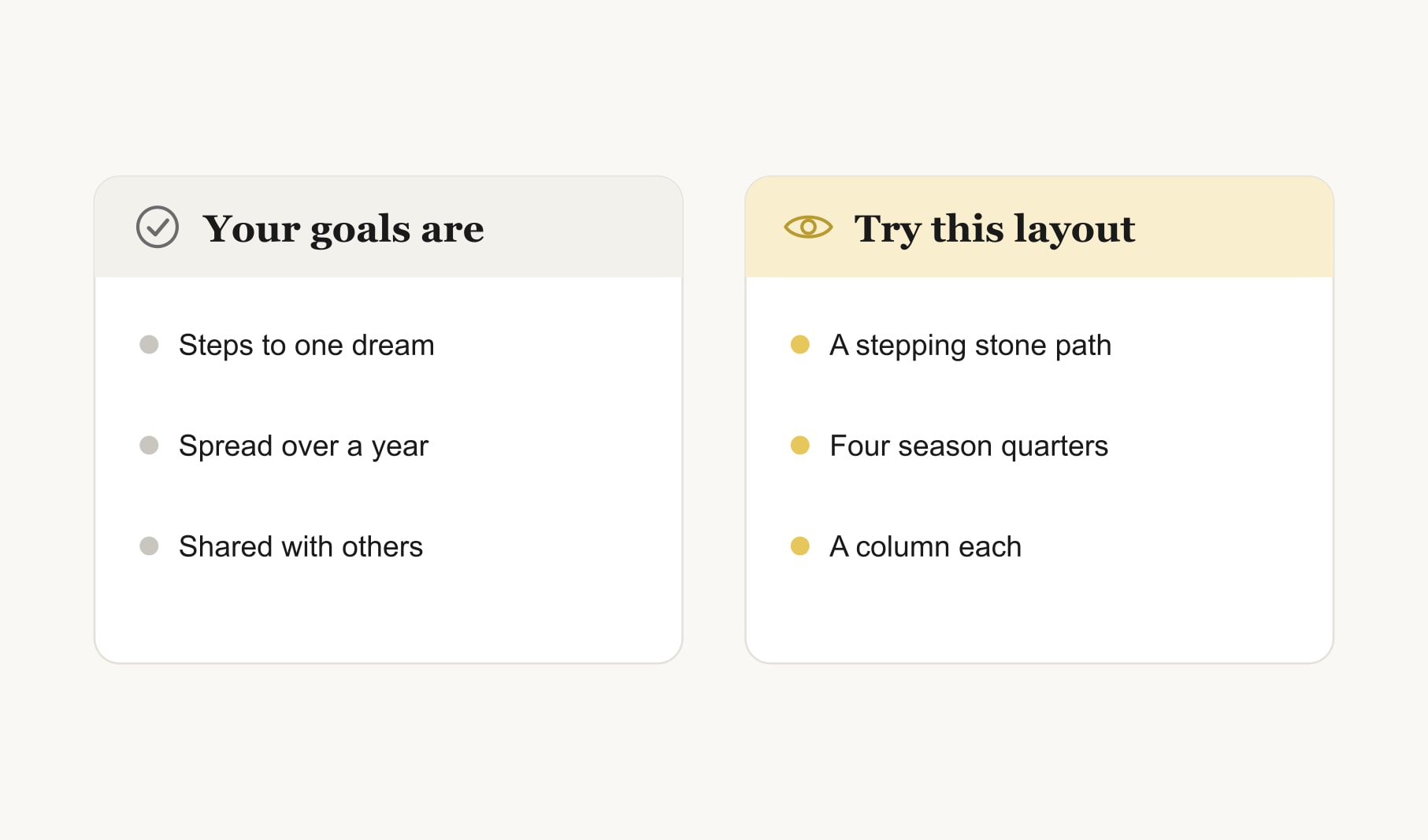
Ask how your goals connect. Steps toward one dream: a path. Spread across a year: season quarters. Now and later: rings or a split board. Shared with others: columns. Built on habits: a tree. Changing often: a string line. If nothing obvious fits, start with a grid and switch later.
For goals that stretch across your working life, the vision board and career timeline gives you a ready structure. And if you want a clean surface to sketch any of these layouts, a blank vision board template is the easiest place to start. Whatever shape you choose, leave space for one more goal, because the best layouts grow with you.
Keep reading
Vision board layout ideas: your questions
Unusual vision board layout ideas include a stepping stone path toward one big goal, rings from now to someday, a split board for now and next, four season quarters, a tree with roots and branches, a triptych, a film strip, a string line with pegs and a frame around a mirror.
A stepping stone vision board layout places small images in a winding line that leads to one larger image of your big goal. Each stone is a stage, such as a course or a first role, and you tick each stone as you reach it.
Split the vision board into four quarters, one for each season, and place two or three goals in each. Give each season a natural theme, such as starting in spring and resting in winter, so the year has rhythm and goals do not all land at once.
A string line is the easiest vision board layout to change. Hang a length of string across a wall and clip photos to it with small pegs. When a goal is finished, unclip it and add a new one, with no need to rebuild the board.
Lay out a shared vision board with one column for each person and a row across the top for goals you hold together. Everyone sees their own goals and the common ones at once, which keeps the board fair and makes it easy to talk through.
Choose a vision board layout by how your goals connect. Use a path for steps toward one dream, season quarters for goals across a year, rings for now and later, columns for shared goals and a tree for goals built on daily habits.
Keep your vision board alive
A board built in your browser resets when you close the tab. Vision Boardly saves your boards, reminds you as each vision date arrives, and tracks the habits and moods moving you toward them.
Get Vision Boardly Free