Travel Vision Board Ideas
Mix the kinds of trip you dream about, then add the small planning squares that turn a dream into a booking.
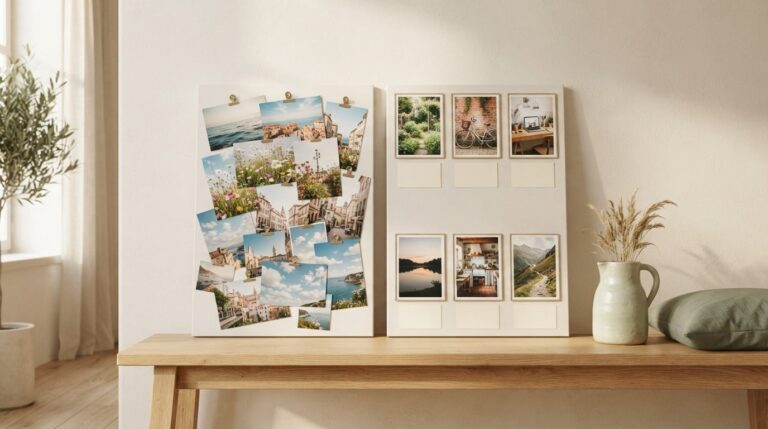
Good travel vision board ideas mix trip types: one big journey, a slow trip, a rail or road adventure, a food trip, a nature escape and a nearby weekend. Add planning squares under the dream ones, such as a savings jar, a passport check and a phrasebook, so every trip has a season and a first step.
A travel board is the easiest board to fill and the hardest to finish. It is easy to fill because the world is full of beautiful places. It is hard to finish because a wall of beaches never tells you which trip comes first. These travel vision board ideas fix both problems: they mix kinds of trip, so the board reflects how you actually like to travel, and they add planning squares that turn a dream into a booking.
What are the best travel vision board ideas?
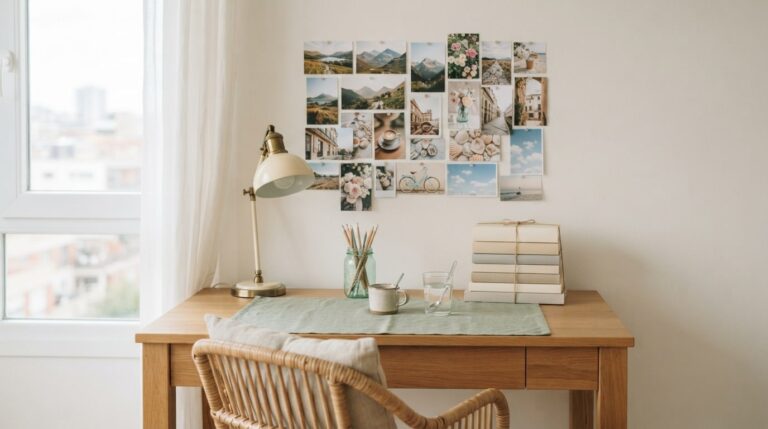
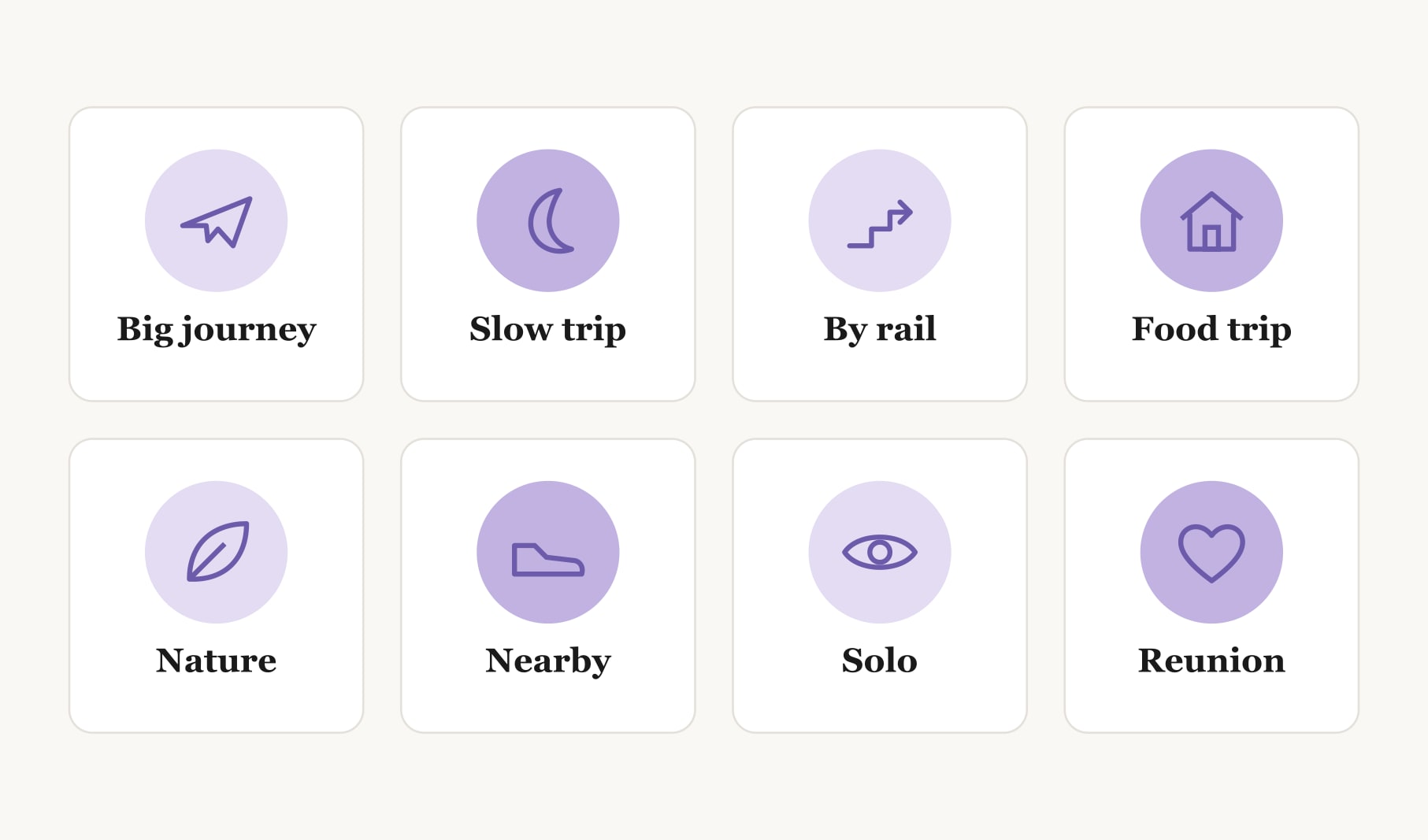
The best ones are specific and varied. Specific means a street, a trail or a market, not a country. Varied means mixing a big journey with small ones, so there is always a trip within reach. I sort trips into eight kinds and choose three or four for each board.
Which trip types belong on a travel board?
- A big journey. The trip you have talked about for years, pictured as one specific view.
- A slow trip. A week in one place with no itinerary, pictured as a hammock or a café table.
- A rail or road journey. A train through mountains or a coastal drive, where the travelling is the point.
- A food trip. A market, a cooking class or a dish you want to eat where it was invented.
- A nature escape. A cabin, a lake, a national park, somewhere quiet and green.
- A nearby adventure. A town an hour away you have never walked around.
- A solo trip. A few days alone, somewhere that feels safe and exciting.
- A reunion trip. Visiting friends or family who live far away.
Collect your favourites on the travel vision board builder, which gives each trip its own square with room for a date and caption.
How do you picture a trip so it feels real?
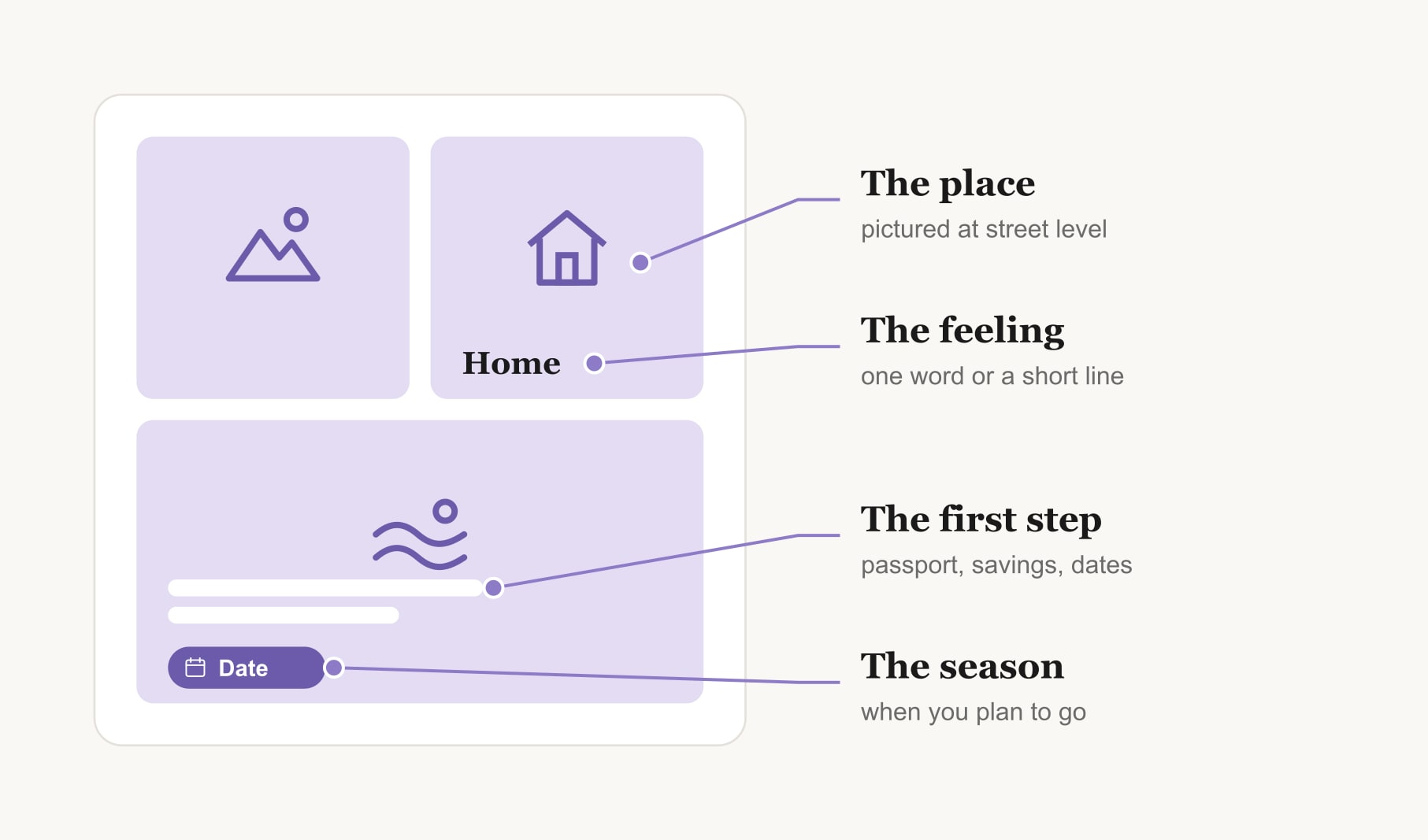
Choose the view you will see when you are there, not the postcard. A window seat on the train rather than the train from outside. The steps down to a beach rather than an aerial shot. A table in a small restaurant rather than a skyline. Pictures from street level let you imagine standing there, and that feeling is what keeps you saving and planning.
Under each picture, add one word or a short line for the feeling you want: “slow”, “awe”, “together”. It reminds you why the trip matters when the planning gets fiddly.
Which planning squares turn a dream into a trip?
Planning squares are small and practical, and they sit beside the dream squares. A savings jar for the trip, with a rough target in mind. A passport check, because an expired passport has ended many dreams. A phrasebook for the language you want to try. Days of leave marked on a calendar. A packing list for travelling light. These are not glamorous, but they are the squares that make the glamorous ones happen. A goal tracker for your vision board holds the steps for each trip in one list.
How do you add nearby adventures?
Give nearby trips their own row. A day walking around a town you have never visited. A night in a cabin an hour away. A local museum you keep meaning to see. Nearby adventures need little money or planning, so they keep the board moving while the big journey saves up. Many people find these small trips become their favourite memories of the year.
How do you make a map board?
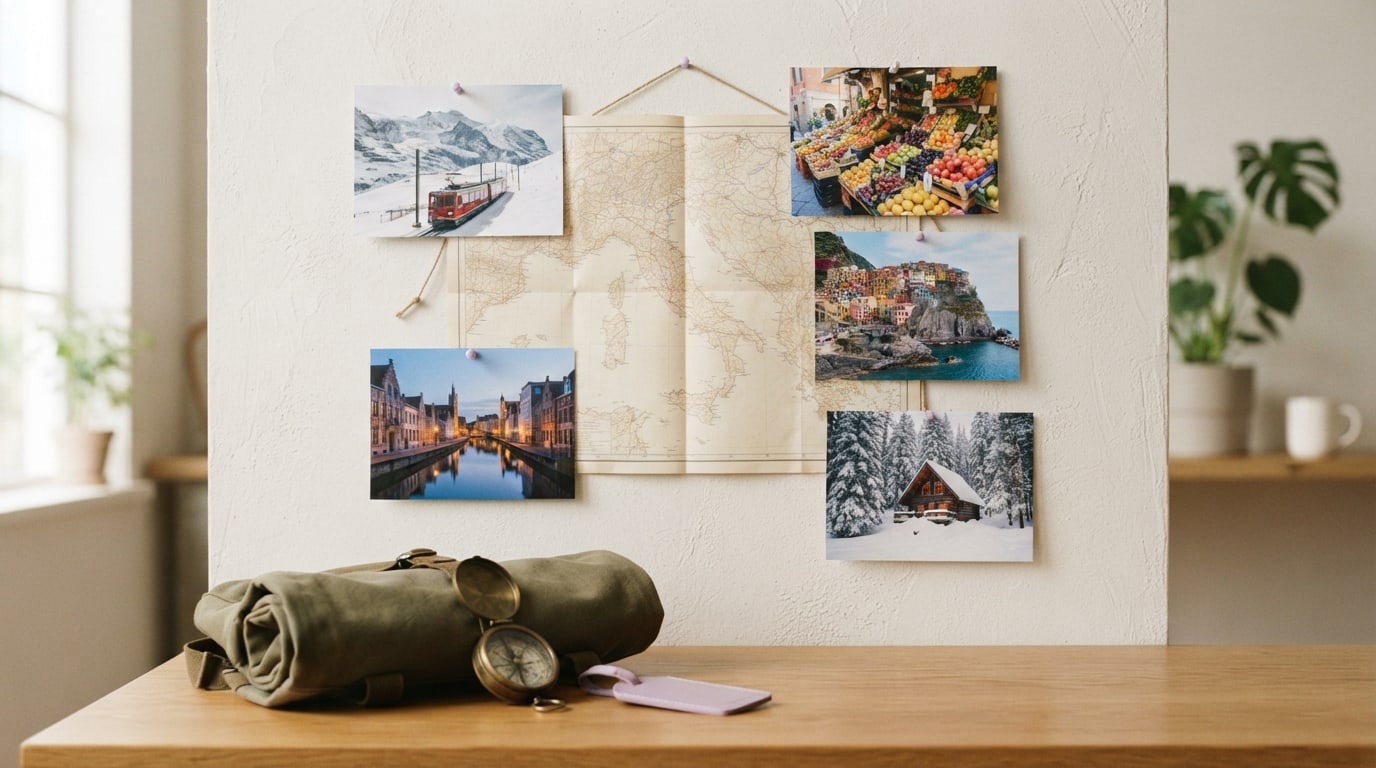
Put a large map in the centre of the board and pin photos around the edge, with a thread or a line from each photo to its place on the map. Use a different colour of pin for trips you have taken and trips you are planning. A map board shows at a glance how far you have come and where you are heading next, and it looks wonderful on a wall.
How do you plan a solo trip square?
A first solo trip is one of the most rewarding squares on any travel board, and it helps to make it feel safe and doable. Picture somewhere welcoming: a city with good trains, a walking route with friendly guesthouses, a retreat with set meals. Under it, add small steps: research the area, book the first night, share your plans with someone at home. Starting with two or three nights is plenty. Many people come home from a short solo trip already planning the next one.
How many trips should go on one board?
Three to six. One big journey, one or two medium trips and two or three nearby adventures is a balanced mix. More than that and the board turns into a wish list with no order. Keep a separate list of every other place you dream of, and move one onto the board when a trip is done.
What does a finished travel board look like?
Picture a folded map in the centre with five photos around it. A mountain railway for “the big rail journey, next autumn, first step: check the route”. A market stall for “a food trip, spring, first step: book a cooking class”. A coastal village for “a slow week by the sea”. A canal at dusk for “a weekend in the city two hours away”. A forest cabin for “a night in the woods with friends, this month”. Every trip has a feeling, a season and a step. If the people you travel with are part of the dream, the family trip vision board lets everyone add their own square. And for words to sit beside your pictures, browse these travel quotes for your vision board.
Keep reading
Travel vision board ideas: your questions
Good travel vision board ideas mix trip types: one big journey, a slow trip, a rail or road adventure, a food trip, a nature escape, a nearby weekend, a solo trip and a reunion. Choose three or four, picture each one at street level and add a season and a first step.
Choose travel vision board pictures from the point of view you will have when you are there: a window seat on a train, steps down to a beach or a table in a small restaurant. Street level images help you imagine standing there, which keeps the plan alive.
Planning squares are small practical squares on a travel vision board that sit beside the dream trips: a savings jar, a passport check, a phrasebook, leave days on a calendar and a packing list. They turn each dream trip into a set of steps you can take.
Three to six trips suit most travel vision boards: one big journey, one or two medium trips and two or three nearby adventures. Keep a separate list of every other dream destination and move one onto the board each time a trip is done.
Place a large map in the centre of your travel vision board and pin photos around the edge, linking each photo to its place with thread or a drawn line. Use one pin colour for trips you have taken and another for trips you are planning.
Yes, nearby trips belong on a travel vision board. A day in a town you have never visited or a night in a cabin an hour away needs little planning, keeps the board moving while bigger trips save up, and often becomes a favourite memory.
Keep your vision board alive
A board built in your browser resets when you close the tab. Vision Boardly saves your boards, reminds you as each vision date arrives, and tracks the habits and moods moving you toward them.
Get Vision Boardly Free