Dream Board vs Vision Board
Two names for the same tool, used in two different ways. Here is the practical difference, and why the best approach uses both.
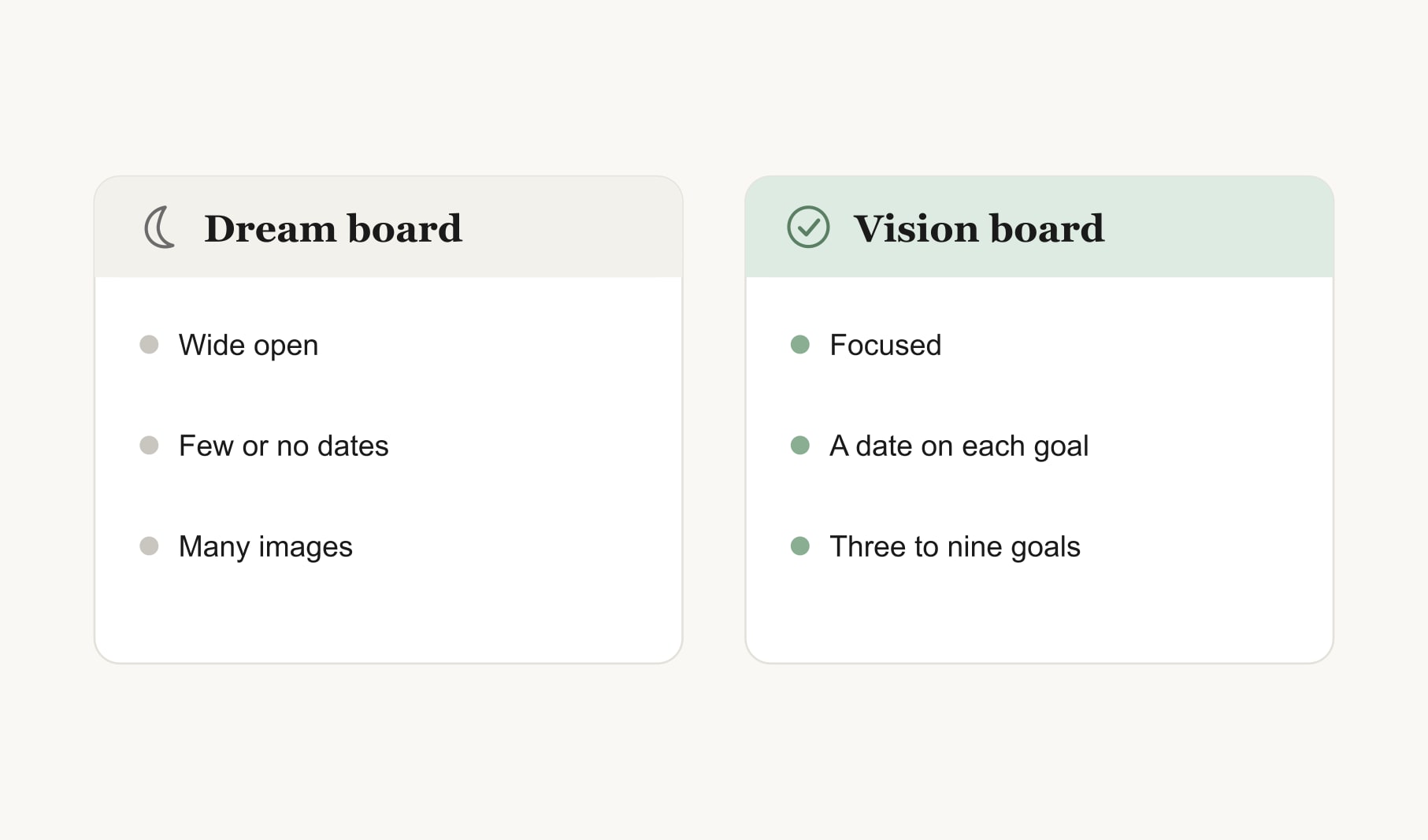
In dream board vs vision board, there is no formal difference: both are collages of images and words about the life you want. In practice, a dream board is usually looser, with big hopes and few dates, while a vision board is more focused, with three to nine goals, dates and first steps. Many people use both, in that order.
People ask me about dream board vs vision board more often than almost anything else, usually with a worry that they made the wrong one. Here is the reassuring answer: there is no official difference. Both are collages of pictures and words about the life you want, and Wikipedia’s dream board entry describes them as the same thing. But in everyday use, people tend to use the two names for two different styles, and knowing those styles helps you make the right board for the moment you are in.
Is there a real difference between a dream board and a vision board?
Not by definition. You will find both names used for exactly the same thing. The difference is in habit. When people say dream board, they usually mean something loose and open: lots of images, big hopes, very few dates. When they say vision board, they more often mean something focused: a handful of goals, each with a date and a first step. Think of it as two ends of one scale rather than two different tools.
When does a dream board help most?
When you do not yet know what you want. After a big change, at the start of a new chapter or when life has felt stuck, a dream board lets you collect freely without deciding anything. You pin whatever makes your heart lift: an ocean, a city at night, a garden, a kind of light. The point is to notice patterns. After a week or two, you will see themes you did not expect, and those themes are the raw material for real goals.
If you want a board that leans into this big, open feeling, the dream big vision board builder is a lovely place to start.
When does a vision board help most?
When you know what you want and need help acting on it. A focused vision board with three to nine goals, each with a date and a first step, turns hopes into a plan you can follow week by week. It suits the start of a year, a clear project or any time you want progress rather than possibility. The goal setting vision board builder has a square for every goal and a date under each.
Why not use both, one after the other?
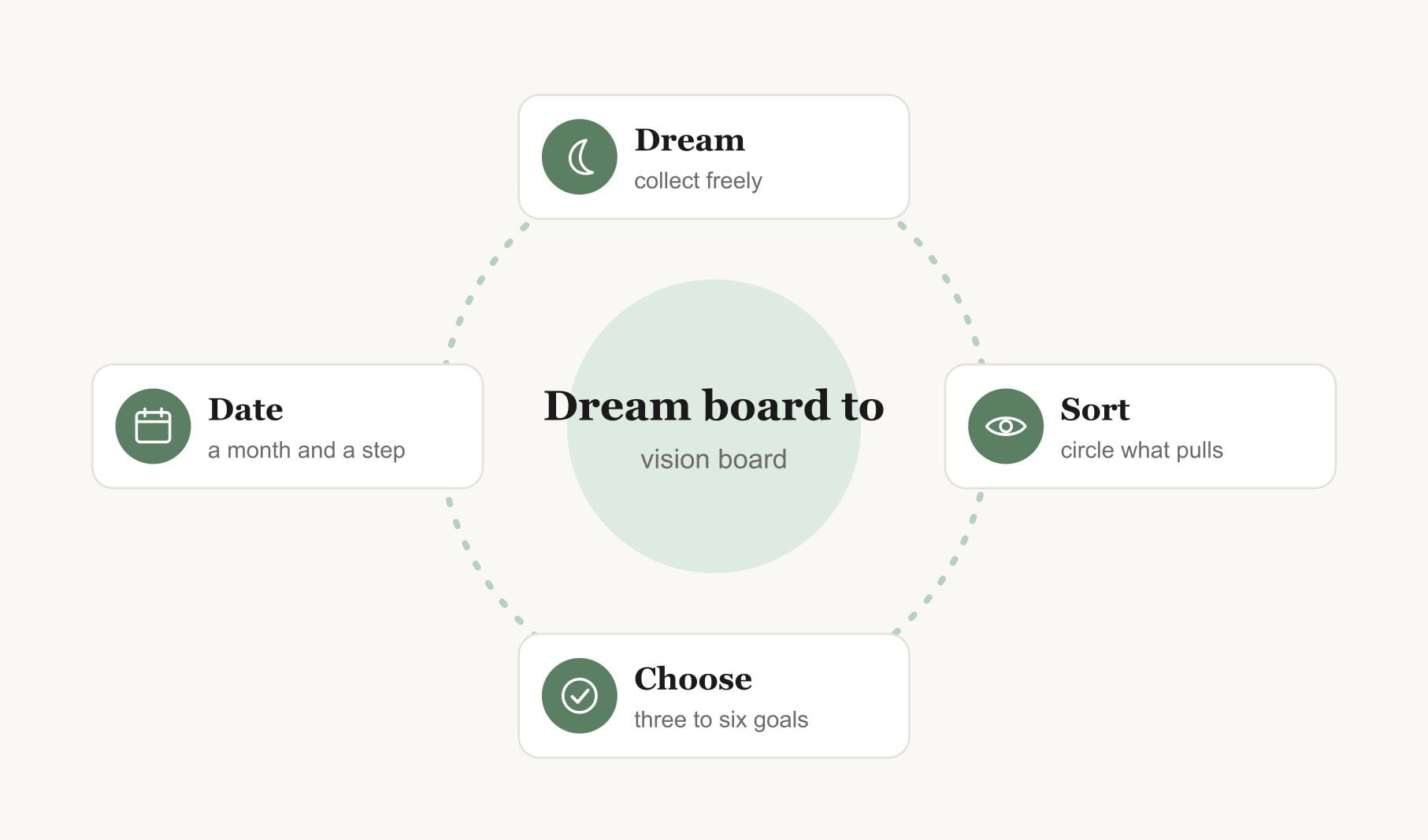
This is what I recommend to almost everyone. Start with a dream board: collect freely for a week, with no rules and no dates. Then sort it. Circle the images that still pull at you after a few days. Choose three to six of them. Turn each into a goal with a month and one first step. That second board is your vision board. The dream board shows you what you want; the vision board helps you get it.
What does each board look like in practice?
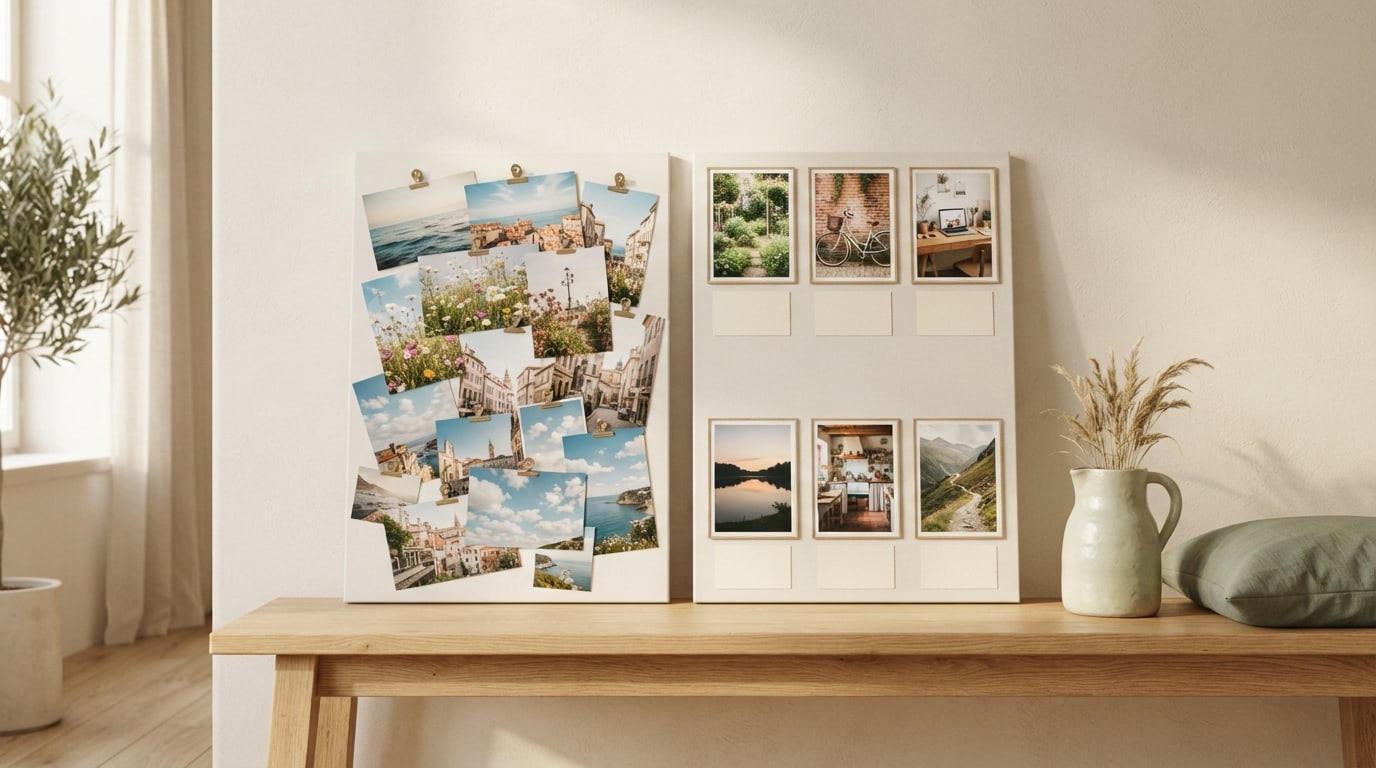
A dream board might be a large sheet covered in overlapping images: oceans, flowers, a city skyline, a cosy reading corner, a mountain hut, a market full of colour. No words, no dates, just a feeling. The vision board made from it might hold six neat squares: a coastal walk with “move to the coast, two years, first step: visit three towns this summer”, a reading nook with “reading corner, March”, a market with “weekend market stall, autumn”, and so on. Same dreams, now with a path.
Which one should you make first?
If you already have clear goals, skip straight to a vision board. If you feel unsure, scattered or in between chapters, start with a dream board and give yourself permission to not know yet. Neither choice is wrong. What matters is that, sooner or later, some of those dreams get a date.
Can one board be both?
Yes. Some people keep a dream zone and a vision zone on the same board: a loose collage in one corner for things they are still exploring, and a neat grid for current goals. As a dream firms up, it moves from the collage to the grid and gets a date. It is a lovely way to keep possibility and progress side by side. A dream life vision board works well for this, with room for both.
What mistakes do people make with each board?
With a dream board, the common mistake is stopping there. A beautiful collage of possibilities can sit on the wall for a year without a single one moving closer, because nothing on it asks you to act. With a vision board, the common mistake is starting too narrow. People choose goals they think they should have, skip the dreaming stage and end up with a tidy board that feels like a to-do list. The fix for both is the same: dream wide first, then choose a few dreams to date. Each stage covers the other’s blind spot.
How do you keep either board working?
Look at it every day and check in once a week. For the vision board, review each goal’s first step and write the next one. A goal tracker for your vision board keeps those steps in one list. For the dream board, add and remove freely until the themes are clear. In dream board vs vision board, the name never matters as much as the habit of looking, choosing and acting.
Keep reading
Dream board vs vision board: your questions
There is no formal difference: both are collages of images and words about the life you want. In everyday use, a dream board is usually looser and more open, while a vision board is more focused, with a few goals, dates and first steps.
Make a dream board if you are unsure what you want and need to collect ideas freely. Make a vision board if you already know your goals and want help acting on them. Many people make a dream board first, then narrow it into a vision board.
Collect freely on a dream board for a week, then circle the images that still pull at you. Choose three to six, and turn each into a goal with a target month and one first step. That focused second board is your vision board.
Yes. Keep a loose dream zone in one corner for ideas you are still exploring and a neat grid of dated goals for the rest. As a dream becomes clear, move it into the vision board grid and give it a date and a first step.
A dream board is not less effective, it does a different job. It helps you discover what you want, while a vision board helps you act on it. A dream board on its own rarely moves you forward, so pair it with dated goals once your themes are clear.
Dream board is simply an older, very common name for the same practice. Many people grew up hearing it, and it suits the hopeful feeling of the board. Some now prefer vision board for boards with dates and steps, but both names describe the same idea.
Keep your vision board alive
A board built in your browser resets when you close the tab. Vision Boardly saves your boards, reminds you as each vision date arrives, and tracks the habits and moods moving you toward them.
Get Vision Boardly Free