Inspiration Goal Setting Vision Board
One row to inspire you, one row to move you. Pair every big picture with a specific goal and the board does both jobs at once.
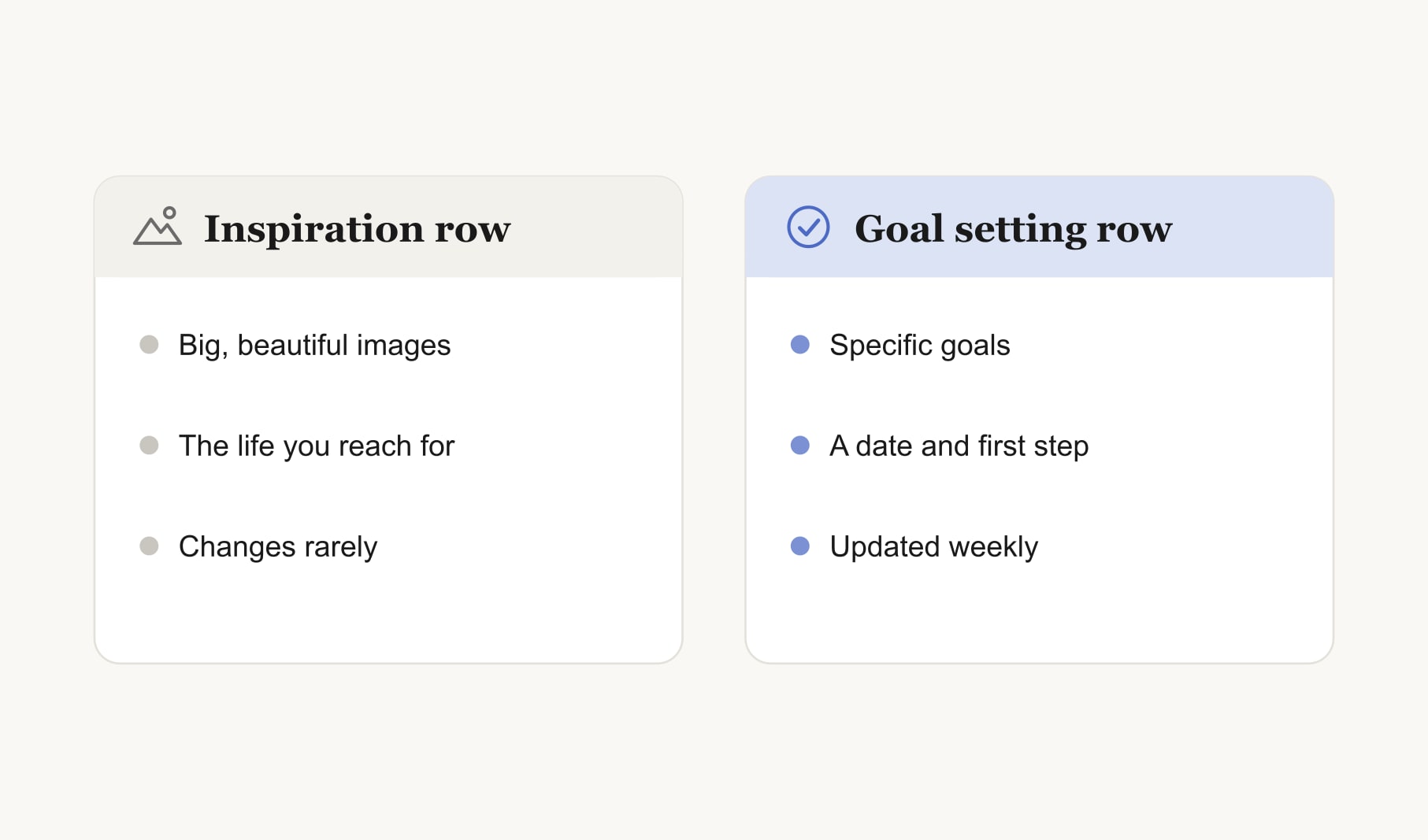
An inspiration goal setting vision board has two layers. The top row holds big, inspiring images of the life you are reaching for. The bottom row holds specific goals with a date and a first step, each paired with an image above. Inspiration gives you the pull; goal setting gives you the path.
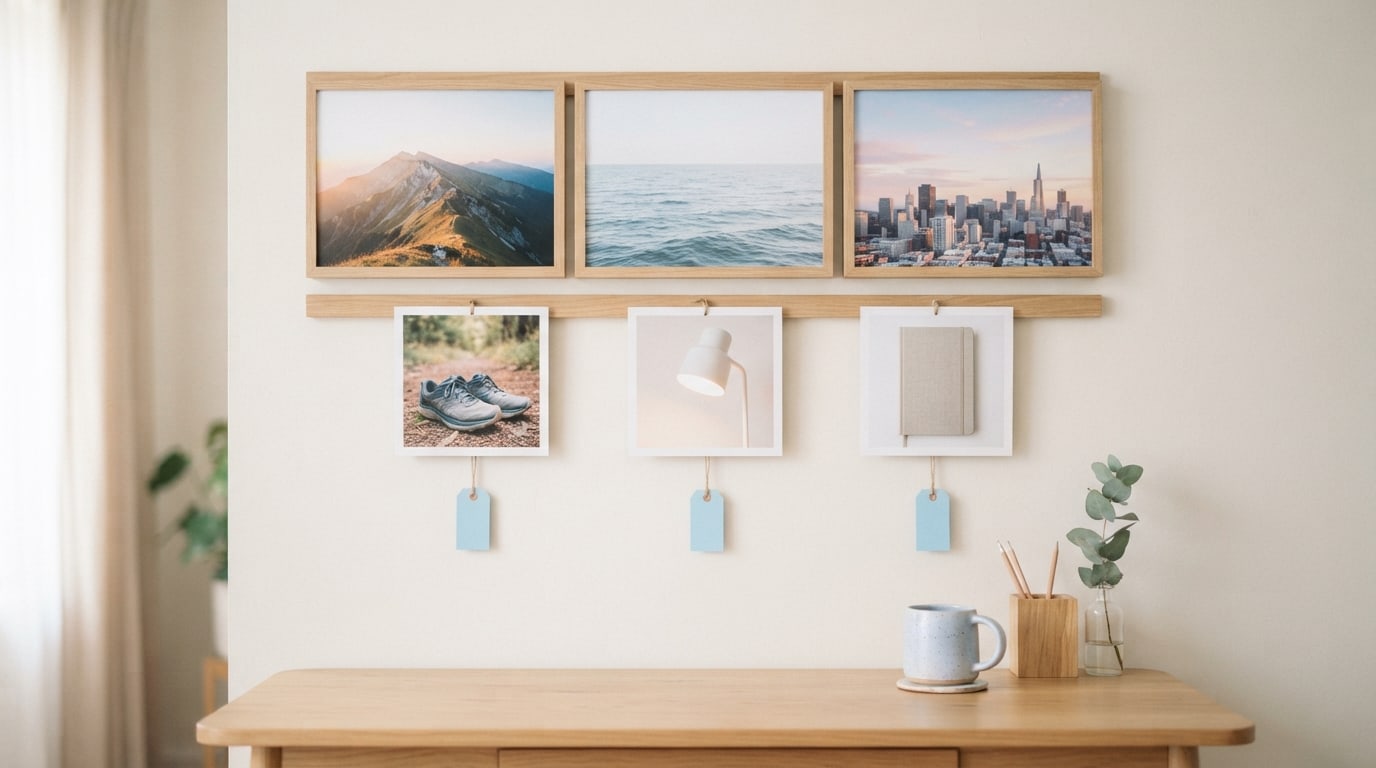
An inspiration goal setting vision board does two jobs at once. The top half inspires you: big, beautiful images of the life you are reaching for. The bottom half sets goals: specific, dated steps that move you toward it. Most boards do only one of these. Pure inspiration boards feel wonderful and change little. Pure goal boards are useful and feel like homework. Put the two together and each makes the other stronger.
Why combine inspiration and goal setting on one board?
Because they fail in opposite ways. Inspiration without goals leaves you dreaming with no next step; you feel the pull of the mountain but never book the first hike. Goals without inspiration leave you with a to-do list and no reason to care; “walk three times a week” is easy to skip when nothing reminds you why. On one board, the inspiring image answers “why”, and the goal beneath it answers “what next.”
I like to think of the two rows as a promise and a plan. The top row is the promise of the life you want. The bottom row is the plan that honours it.
How do you choose the inspiration row?
Go big. This row is for images that make you catch your breath: a ridge at sunrise, an open sea, a city waking up, a home full of light. They can be bolder and less literal than the goal row, because their job is feeling, not instruction. Three or four images are enough. If you need a starting point, browse vision board inspiration and notice which pictures you keep returning to.
Choose for meaning, not fashion. Ask of every image: does this stand for something I genuinely want my life to feel like? If you picked it because it looked good on someone else’s board, let it go.
How do you build the goal setting row?
Under each inspiring image, set one specific goal that moves you toward it. Write it as a sentence with a finish line, a date and a first step. The mountain ridge becomes “Hike a big hill by late summer. First step: a local walk on Saturday.” The open sea becomes “Swim confidently in open water this year. First step: book four lessons.”
The well-known SMART criteria are a handy check here: is the goal specific, measurable, achievable, relevant and time-bound? You do not need to follow them rigidly. They simply help you turn a feeling into something you can act on.
Why pair each inspiration with exactly one goal?
One to one pairing keeps the board readable and honest. If an inspiring image has no goal beneath it, ask whether it belongs on this board or on a later one. If a goal has no inspiration above it, ask whether you truly care about it, or whether it is a chore that crept in. Pairs make gaps obvious, which is exactly what you want from a planning tool.
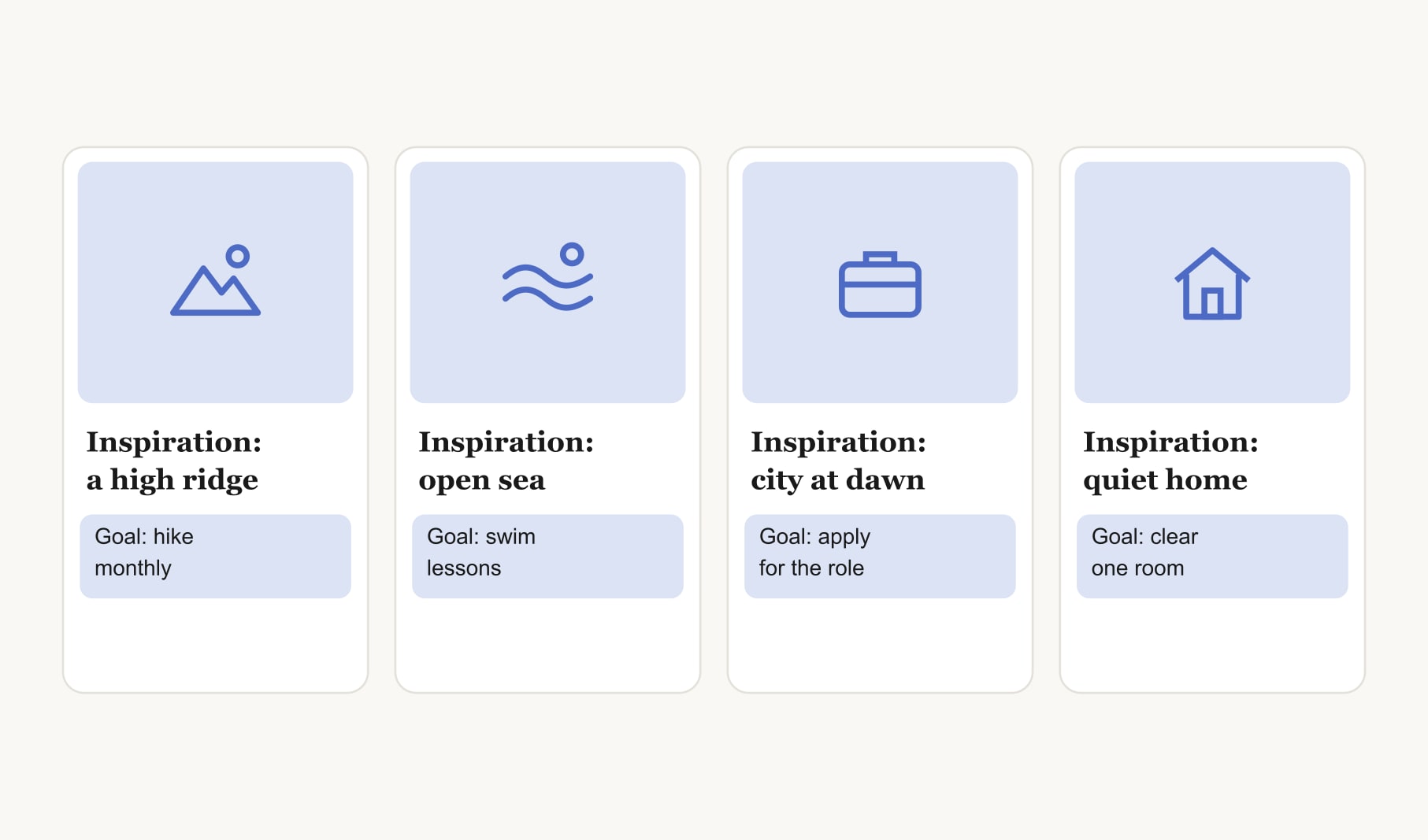
What does an inspiration goal setting vision board look like?
Here is an example with four pairs. Top row: a mountain ridge at sunrise, an open sea, a city skyline at dawn, a quiet, light-filled home. Bottom row, each beneath its partner: “Hike monthly from spring. First step: Saturday’s local walk.” “Four swimming lessons by the end of the season. First step: book them today.” “Apply for a senior role within six months. First step: update my portfolio this week.” “Clear the spare room by next month. First step: one box on Sunday.”
The top row barely changes all year. The bottom row changes every week, as first steps are done and new ones take their place. That rhythm is the heart of the board.
How do you review a two-row board?
Weekly for the goal row, seasonally for the inspiration row. Each week, tick the steps you took and write the next one. A goal tracker for your vision board keeps every pair’s progress in one view. Each season, look at the top row and ask whether each image still inspires you. If one has lost its pull, swap it, and check whether its goal still makes sense.
When should you change the goals but keep the inspiration?
Often. An inspiring image can carry several goals in a row over a year. The mountain ridge might start with “walk weekly,” move on to “hike a big hill” and end with “plan a walking holiday.” The picture stays; the goals climb. That continuity is one of the nicest things about a two-row board. It shows you a single dream unfolding through a series of real steps.
What mistakes should you avoid on a two-row board?
Three are common. The first is letting the inspiration row grow while the goal row stays thin, so the board slides back into pure dreaming. Keep the rows the same length. The second is setting goals so big they feel as distant as the pictures above them. A goal row works when its steps fit into an ordinary week. The third is never touching the board after the first day. The goal row is meant to be the busiest part of your board, updated every single week.
Where should you start?
With one pair tonight. Choose the inspiring image that pulls at you most, and write one specific goal beneath it. If you want ready-made squares for the goal row, a goal setting vision board gives each one a date and a caption. For exercises that sharpen each goal before it goes on the board, see my goal setting vision board ideas. Add a second pair next week, and a third the week after. A board built slowly, pair by pair, tends to be a board you trust.
Keep reading
Inspiration goal setting vision board: your questions
An inspiration goal setting vision board has two layers. A top row holds big, inspiring images of the life you want, and a bottom row holds specific goals with a date and a first step, each paired with an image above. The inspiration gives you pull, and the goals give you a path.
Inspiration and goals fail in opposite ways when kept apart. Inspiring images alone leave you dreaming with no next step, while goals alone feel like homework. On one vision board, the image answers why and the goal beneath it answers what to do next.
Three or four pairs suit most inspiration goal setting vision boards. That gives each pair real attention and keeps the board readable at a glance. If you have more dreams, start a second board or rotate new pairs in as goals finish over the year.
Under each inspiring image, write one specific goal with a finish line, a date and a first step, such as hike a big hill by late summer, first step a local walk on Saturday. The SMART criteria are a useful check that each goal on the vision board is actionable.
Update the goal row of your vision board weekly, ticking steps and writing the next one, and review the inspiration row each season. If an inspiring image has lost its pull, swap it and check whether the goal beneath it still makes sense for you.
The most common mistake is letting the inspiration row grow while the goal row stays thin, which turns the vision board back into pure dreaming. Keep the two rows the same length, keep goal steps small enough for an ordinary week and update the goal row weekly.
Yes. An inspiring image can carry several goals in a row across a year. A mountain ridge on your vision board might start with walk weekly, move to hike a big hill and end with plan a walking holiday, showing one dream unfolding through real steps.
Keep your vision board alive
A board built in your browser resets when you close the tab. Vision Boardly saves your boards, reminds you as each vision date arrives, and tracks the habits and moods moving you toward them.
Get Vision Boardly Free