Ideas to Put on a Vision Board
Six questions, six prompts under each. Your own answers make better board ideas than any list you could copy.
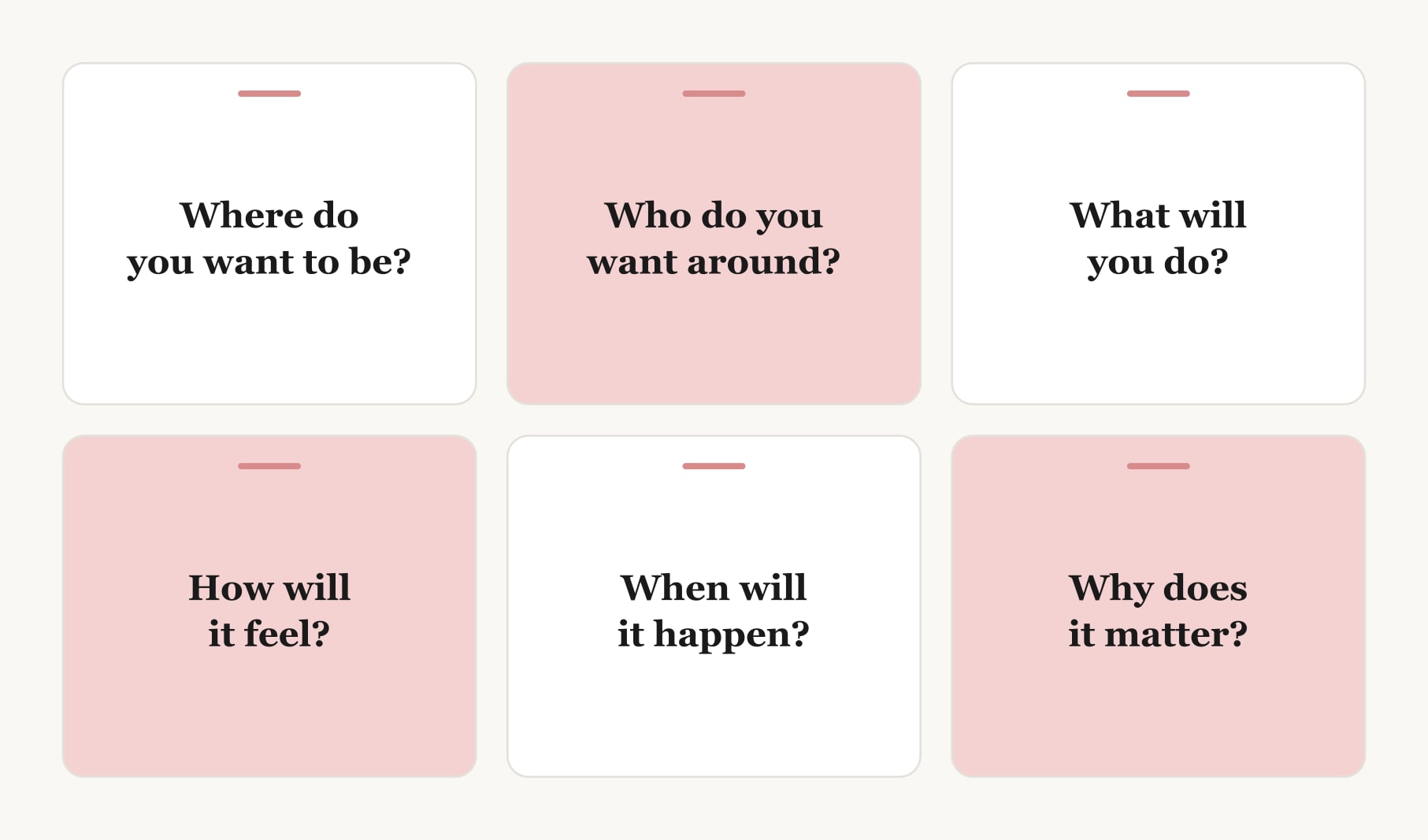
Good ideas to put on a vision board answer six questions about the life you want: where you want to be, who you want around you, what you want to do, how you want to feel, when each goal lands and why it matters. Pick one idea per question and you have a balanced, personal board.
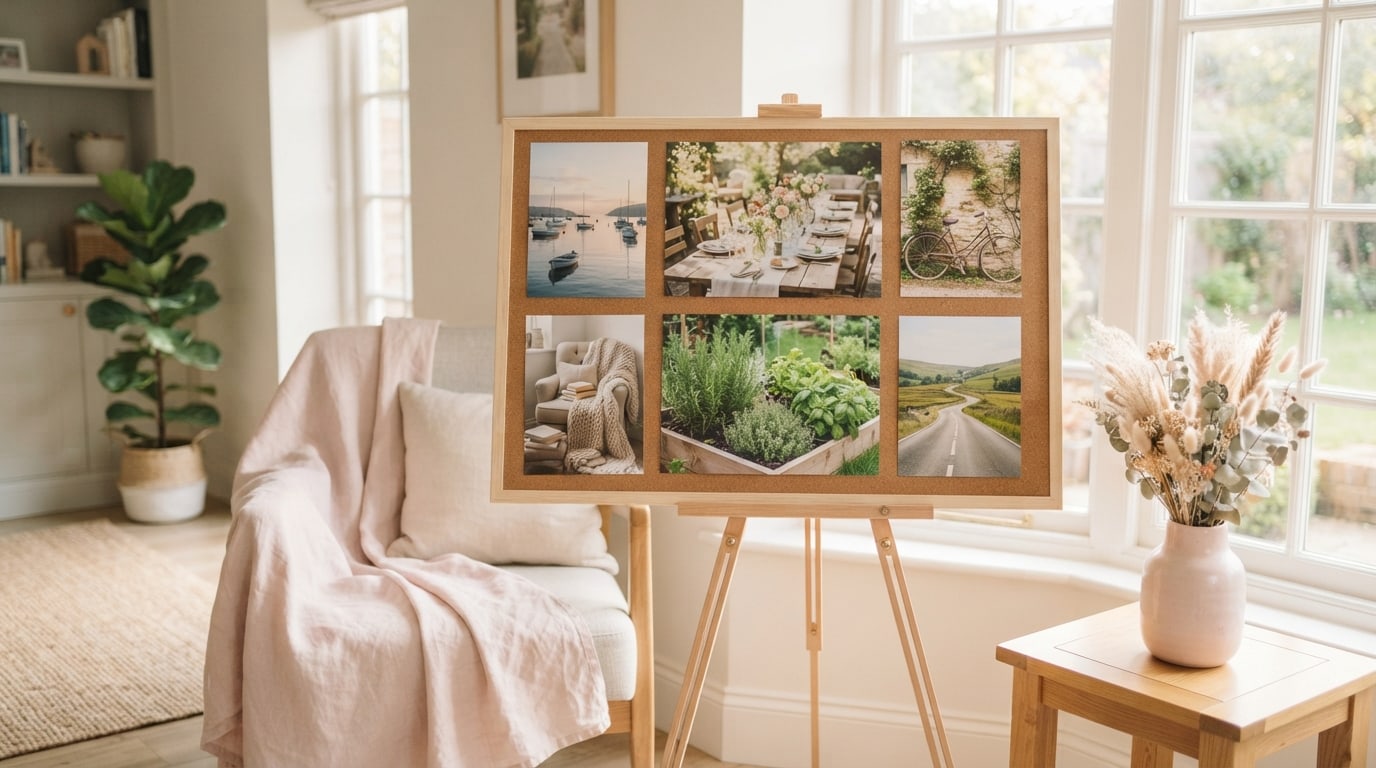
When people ask me for ideas to put on a vision board, they usually expect a list of pretty pictures. I prefer to hand you questions, because the best ideas come from your own answers. Below are the six questions I ask before every board I make, with six prompts under each. Read them slowly, notice the ones that make you sit up, and let the rest go.
If you want to know which kinds of item work best, such as photos, words and keepsakes, my guide to things to put on a vision board covers that side. This page is about the ideas themselves: the what, not the how.
Where do the best ideas to put on a vision board come from?
They come from the gap between your life now and the life you keep picturing. Generic ideas, like a beach or a big house, rarely hold your attention for long. Specific ones do. “A small flat with a balcony and morning sun” is an idea you can picture, plan for and recognise when it arrives. Each question below pushes your ideas toward that kind of detail.
Where do you want to be?
- A city you have wanted to see for years, pictured at street level.
- A walk you could do this month, an hour from home.
- One room in your home, finished the way you imagine it.
- A desk or workplace that suits the way you want to work.
- A quiet outdoor spot you could visit every week.
- A place from your past you would love to see again.
Places are the easiest ideas to picture, which makes them a gentle way to start. If trips fill most of your list, the travel vision board builder lets you lay them out side by side.
Who do you want around you?
- A friend you want to see more often.
- A family tradition you want to start or bring back.
- A team, class or club you want to join.
- A mentor or teacher you want to learn from.
- A community you want to give time to.
- Someone close to share an adventure with.
People ideas are often left off boards, and they are the ones I hear most about later. A board built around connection works well as a family and friends vision board, where every square holds someone you love.
What do you want to do?
- A skill you want to learn, from baking bread to speaking a language.
- A creative project you keep putting off.
- A way of moving you would enjoy rather than endure.
- A first: something you have never tried.
- A challenge with a finish line, like a long walk or a recital.
- A weekly ritual, such as a slow breakfast on your day off.
Doing ideas are the engine of a board. They are the ones you can start this week, and every small start makes the bigger ideas feel closer.
How do you want to feel?
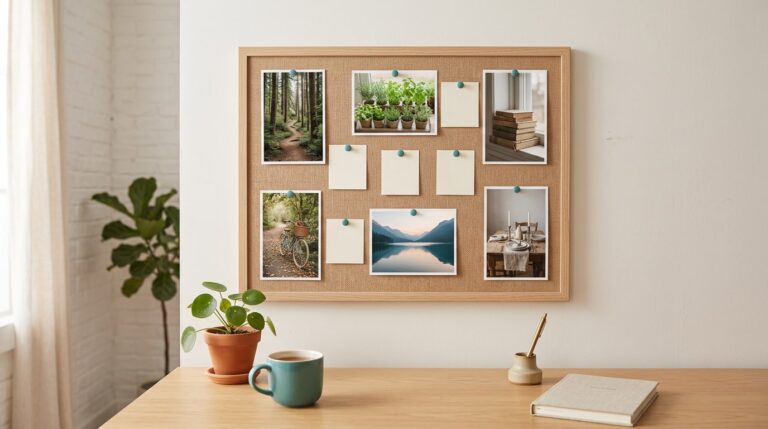
This question catches the ideas that never fit on a to-do list. Calm, capable, rested, curious, proud. Feelings are hard to photograph, so use images that carry the mood: a still lake for calm, a mountain trail for capable, a made bed in soft light for rested.
- Calmer mornings.
- More confidence at work.
- Lighter evenings with less screen time.
- A sense of progress you can see.
- Room to be creative without pressure.
- Gratitude for what is already here.
To see whether those feelings show up, log a quick note each day in a mood tracker for your vision board. Patterns appear within a few weeks, and they tell you which ideas are working.
When will each idea happen?
Timing turns an idea into a plan. Not every idea needs a deadline, but each one benefits from a rough season.
- This week: one small first step.
- This season: one idea you can finish.
- This year: two or three bigger ideas.
- Within five years: one long horizon idea.
- Every week: a ritual that keeps going.
- Someday: one dream you are not ready to date yet.
Why does each idea matter?
This is the filter. Write one short line under each idea that answers why. “Because I want to know my cousins better.” “Because I feel like myself when I paint.” If you cannot write the line, the idea probably belongs on someone else’s board. Keep only the ideas with a real reason behind them.
How do you turn these ideas into one board?
Choose one idea from each question, giving you six. Add up to three more if they genuinely pull at you. Find one image for each, write the why line beneath it, then give it a season and a first step. Place your favourite where your eye lands first, usually the centre or the top left.
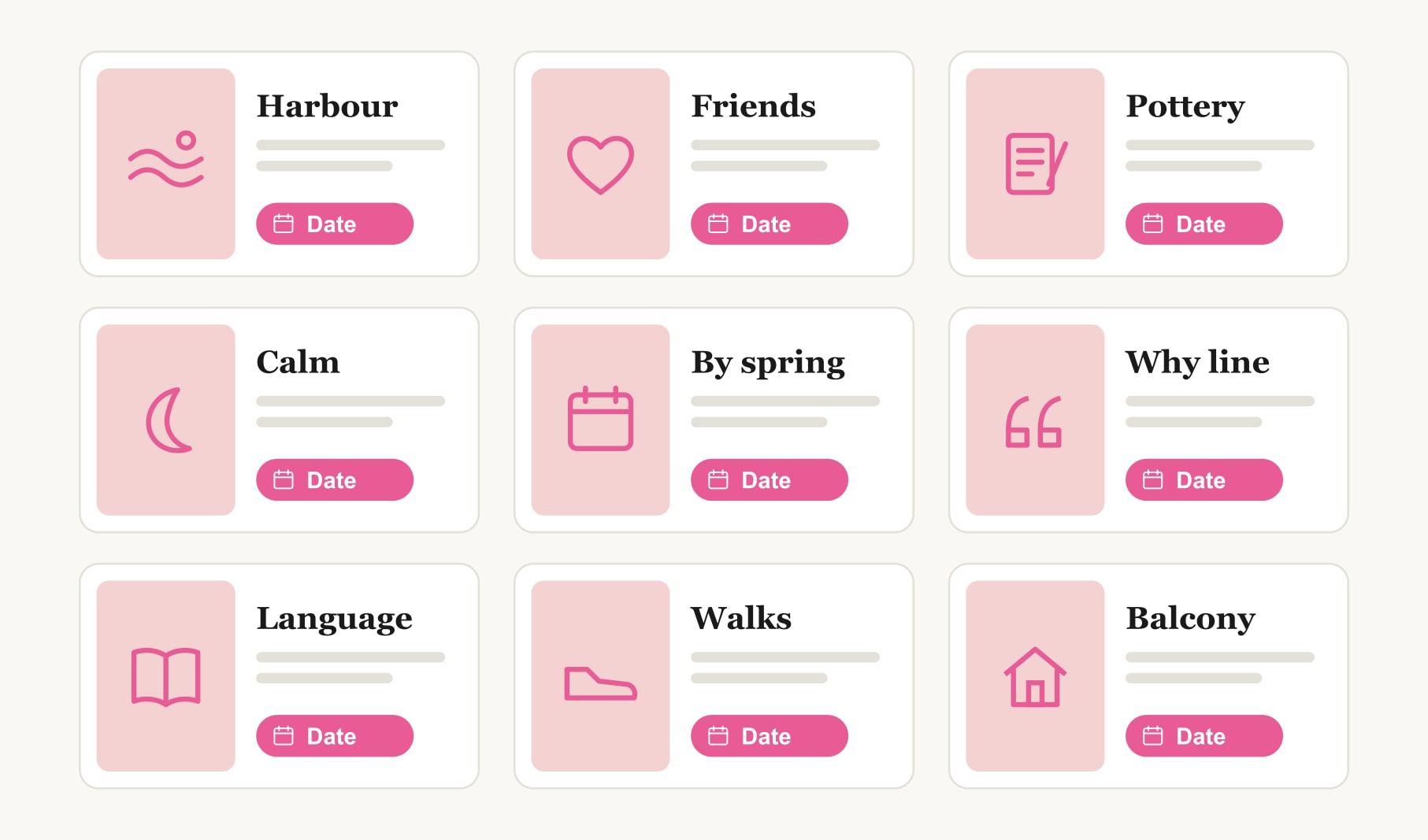
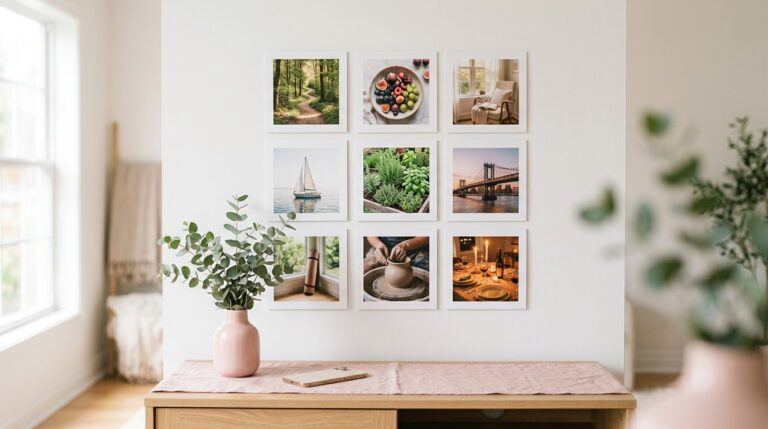
A finished board from these prompts might hold a harbour town for where, a long table of friends for who, a pottery wheel for what, a still lake for how, a spring calendar square for when and a short handwritten note for why. Six ideas, all of them yours. If you would rather start from a ready layout, the dream life vision board gives you nine squares to fill with exactly these answers.
Which ideas do people forget to put on a vision board?
Three come up again and again. The first is ideas about people, because goals feel more serious when they are about work or money. The second is rest, which somehow never feels important enough for a square. The third is ideas you have already started, like a class you love or a friendship you want to protect. Keeping something good is just as worthy as chasing something new. If your board has none of these, add one and see how differently it feels.
Come back to the questions whenever the board starts to feel stale. Your answers will change as your life does, and that is the point.
Keep reading
Ideas to put on a vision board: your questions
Good ideas to put on a vision board answer six questions: where you want to be, who you want around you, what you want to do, how you want to feel, when each goal lands and why it matters. Choose one specific idea for each question to build a balanced board.
Six to nine ideas suit most vision boards. Six gives you one idea for each of the six questions, and up to three extras leave room for anything that genuinely pulls at you. Beyond nine, ideas start to compete for attention, and your eye skips past the whole board.
Ask yourself where you want to be, who you want around you and what you want to do, then write six answers for each question. Circle the answers that make you sit up. Those specific, personal answers make better vision board ideas than any list you could copy.
Yes, feelings make strong vision board ideas because they shape every other goal. Use images that carry the mood, such as a still lake for calm or a mountain trail for confidence. Pair each feeling with a small habit, so the vision board shows how you will create it.
Most vision board ideas benefit from a rough season, such as this spring or this year, plus one first step for this week. A season keeps the idea moving without pressure. One undated dream is fine too, as long as the rest of the board has clear timing.
Write one short line explaining why the idea matters to you. If the line comes easily and feels true, the idea belongs on your vision board. If you struggle to write it, the idea may reflect what other people expect of you rather than what you want.
Mixing big and small ideas keeps a vision board motivating. Small ideas, like a weekly walk or a new recipe, give you quick wins, while one or two big ideas give the board direction. Aim for mostly small and medium ideas plus one long horizon dream.
Keep your vision board alive
A board built in your browser resets when you close the tab. Vision Boardly saves your boards, reminds you as each vision date arrives, and tracks the habits and moods moving you toward them.
Get Vision Boardly Free