Vision Board Ideas for High School Students
High school changes every year. These ideas follow it, from the first week to the choices after graduation.
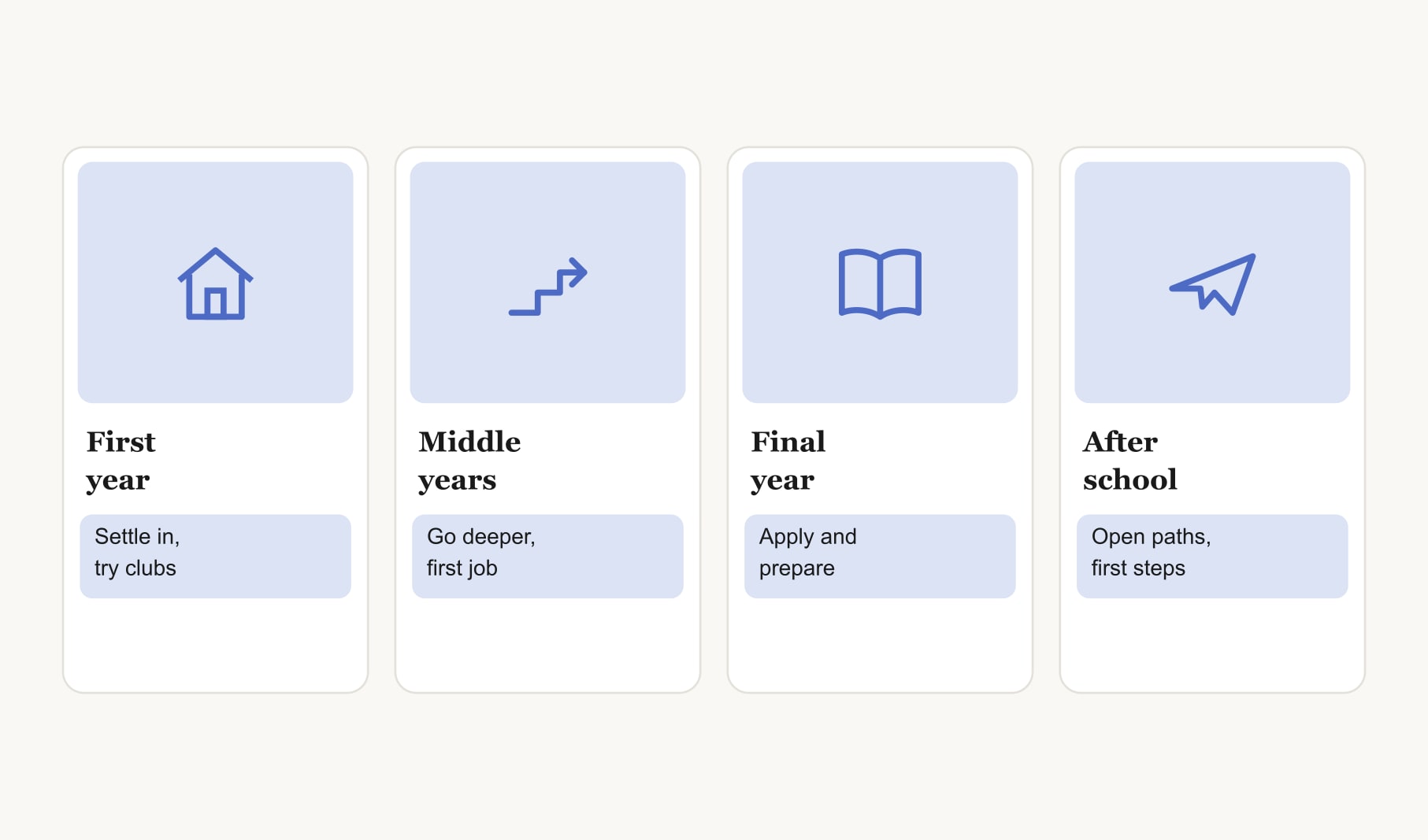
Good vision board ideas for high school students change by year. Early years suit settling in, clubs and homework routines. Middle years suit deeper skills, a part-time job and exploring careers. The final year suits applications, exams and the next step, whether that is college, an apprenticeship, work or a gap year.
High school is not one long stretch. Each year asks something different of you, so the best vision board ideas for high school students change as you move through it. This guide follows that path, year by year, and ends with the big question of what comes next.
Take the ideas that fit where you are now. You can always come back and borrow from the next stage when you get there.
What vision board ideas suit the first year of high school?
The first year is about settling in and finding your people. Good squares for this stage:
- Know your way around. Feeling at home in a new building, timetable and routine.
- Try two clubs. Sport, drama, robotics, debate, art or a language club. Sample before you commit.
- One new friend outside your old group. A lunch table, a team or a class partner.
- A homework routine. A set time and place each day, pictured as your desk ready to go.
- Ask for help early. Picture a classroom door, as a reminder that asking is a skill.
What vision board ideas suit the middle years?
Once you are settled, the middle years are a great time to go deeper. Pick one or two:
- Get good at one thing. An instrument grade, a team position, a coding project or a portfolio piece.
- A first part-time job or volunteering role. Real responsibility, and something to talk about later.
- Explore careers. Shadow someone for a day or ask three adults about their jobs.
- Lead something small. Run a club session, captain a practice or organise a fundraiser.
- Choose subjects with intention. Pick courses that match what you enjoy and where you might head.
The goal setting vision board for students is a ready layout for these, with a date and caption under every square.
What vision board ideas suit the final year of high school?
The final year is busy, so keep the board tight: three to five goals at most. Ideas that fit:
- Applications finished. College, training, apprenticeship or job applications, each with its own deadline.
- Exam preparation. A weekly revision plan, pictured as a calm study space.
- A portfolio, audition or interview ready. Whatever your next step asks for.
- Enjoy the last year. A trip, a dance, a final match or a goodbye picnic with friends.
- Life skills for leaving home. Cooking a week of meals, doing laundry and planning a weekly shop.
For grade goals in particular, an academic goals vision board keeps each subject and its revision steps in one place.
How do high school students picture life after graduation?
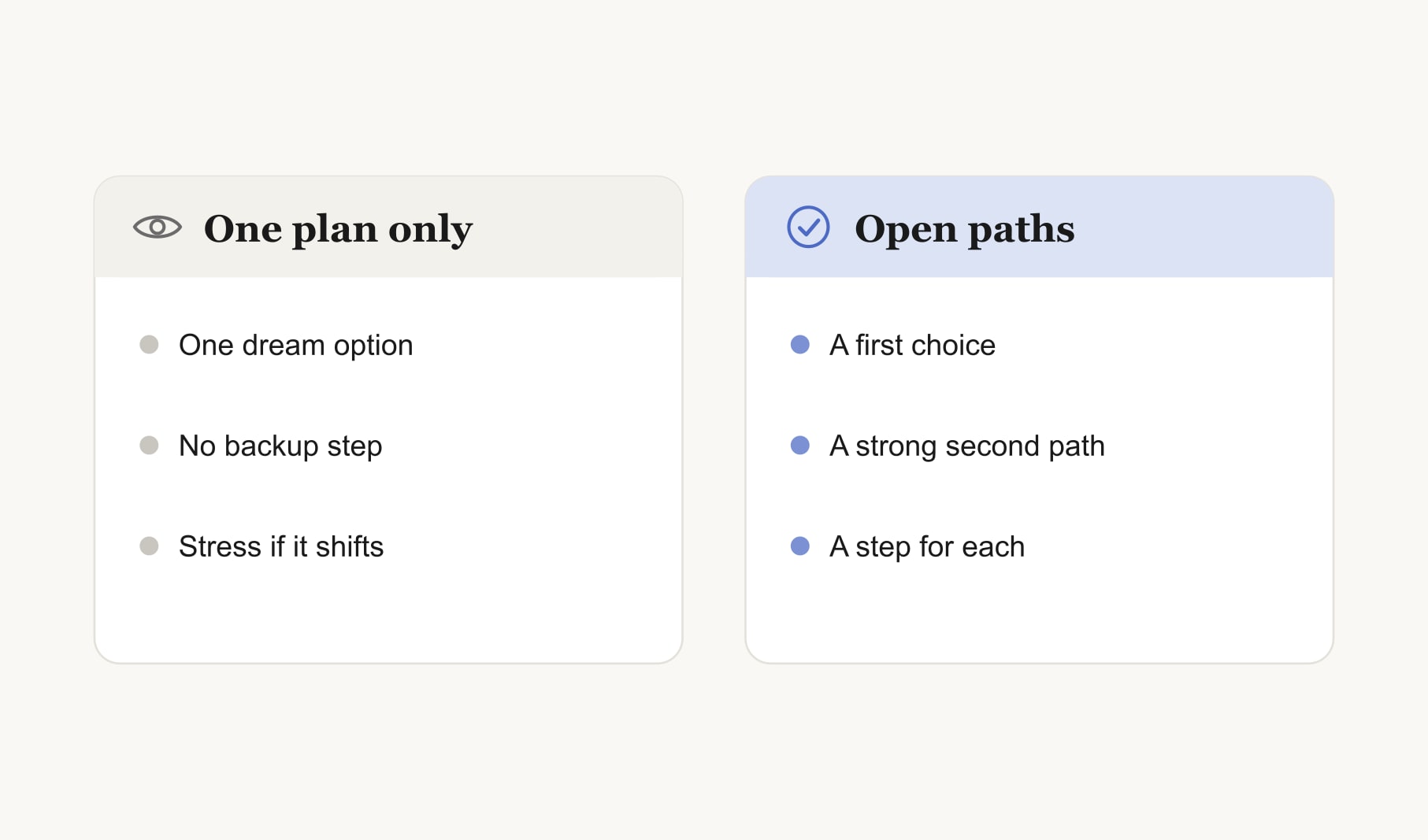
This is where a vision board really earns its place. Many students feel pressure to have one perfect plan. A board lets you hold a few open paths at once and take a small step toward each. Squares might include:
- College or university. A campus you want to visit, with “go to one open day” as the first step.
- An apprenticeship or trade. A workshop, a kitchen or a building site, with “talk to someone in the trade” as the step.
- Straight into work. The kind of workplace you want, with “update my CV” as the step.
- A gap year. Travel, volunteering or saving, with one practical first step.
The career vision board for students works well here, because it keeps the career picture and the first steps side by side.
Which vision board ideas suit high school athletes, artists and workers?
Plenty of high school students carry a second timetable on top of classes. If that is you, give your main commitment its own square and protect the rest of the board from it. A student athlete might add a personal best, a recovery routine agreed with a coach and a study block on travel days. A musician or artist might add a recital piece, a portfolio deadline and one day a week with no practice at all. A student with a part-time job might add a set number of shifts, a savings habit and one evening kept clear for friends. The point is balance: one square for the commitment, and others that make sure school and rest still fit around it.
How do you keep a high school vision board from adding pressure?
Put experiences and habits on the board, not just outcomes. A grade target can sit there, but write the routine that supports it underneath. Leave space for fun: friendships, hobbies and rest belong on a high school board as much as exams. If a goal starts to feel like a weight rather than a pull, change it. And if school stress is building, talk to a parent, a counsellor or another adult you trust.
How do high school students track their vision board goals?
Keep it light. Choose one small action per goal each week, and tick it off when it is done. A simple goal tracker for your vision board shows every goal and its progress at a glance, so you can see which ones are moving and which need a smaller first step. Review your board at the start of each term, take down finished goals, and add the next stage.
What does a final-year high school vision board look like?
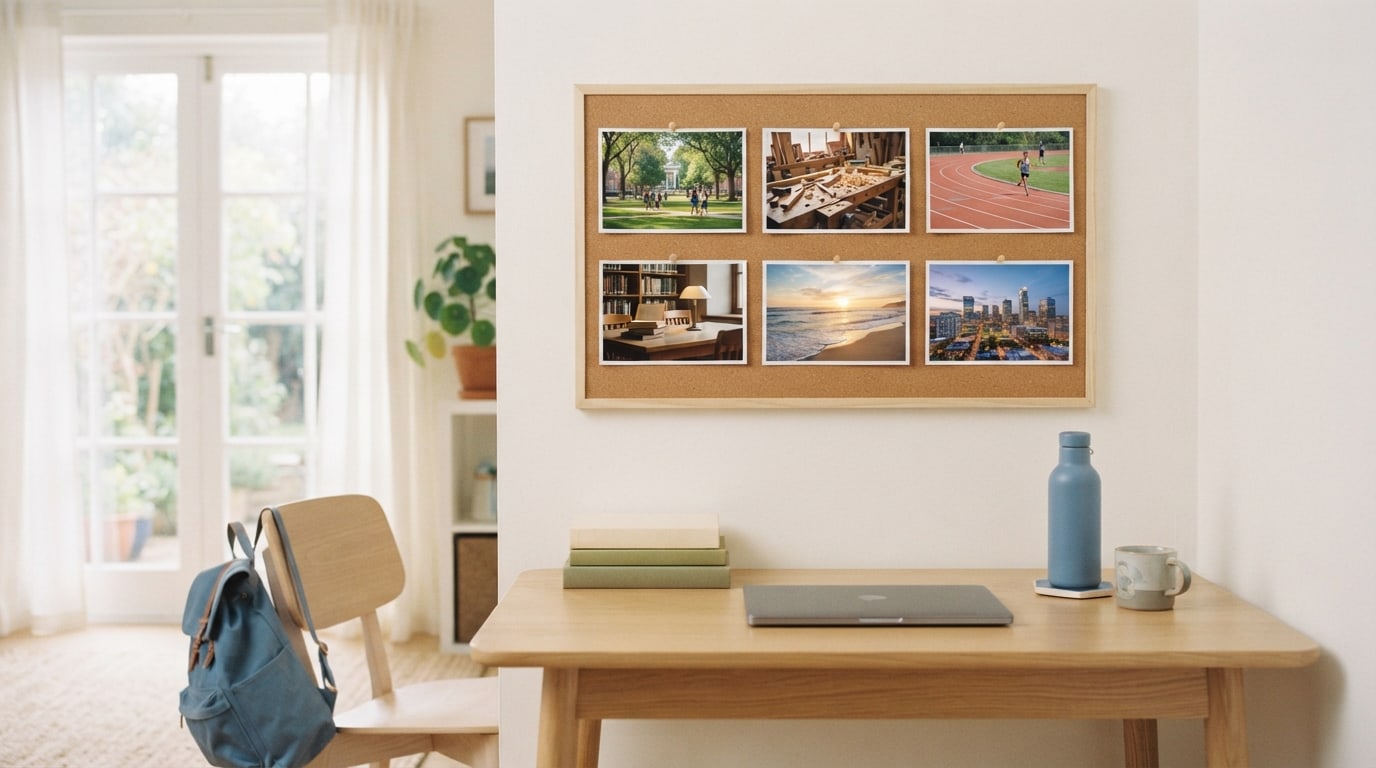
Picture six squares. A campus lawn: “visit two colleges this autumn, first step: book the first tour.” A desk with past papers: “revise three evenings a week, first step: make the timetable tonight.” A workshop bench: “ask a local electrician about apprenticeships, first step: send an email this week.” A café counter: “keep my weekend shift, first step: confirm hours with my manager.” A beach at sunset: “a trip with friends after exams, first step: pick a date together.” And a kitchen: “cook five meals on my own, first step: learn one this Sunday.” Every path stays open, and every square has a next move.
Keep reading
Vision board ideas for high school students: your questions
A high school student can put study routines, clubs and sports, friendships, a part-time job, skills to build and steps toward life after graduation on a vision board. Pairing each goal with a date and a small first step keeps the board practical through busy school years.
The start of the school year is a natural time for high school students to make a vision board, with a quick refresh at the start of each term. A new school, a new job or the final year are also good moments to start a fresh board.
A vision board helps with college applications by keeping each deadline, essay and campus visit in view. Give every application its own square with a deadline and first step, such as drafting one paragraph. Seeing the steps daily makes a long process feel more manageable for high school students.
A high school vision board can include grades, but pair each one with the routine behind it, such as three revision sessions a week. The routine is the part a student controls, and it keeps the vision board motivating even when a single result disappoints.
That is completely normal. A high school vision board can hold several paths at once, such as college, an apprenticeship, work or a gap year, each with one small step like talking to someone in that field. Exploring options is a worthy goal in itself.
Yes. Teachers often use vision boards at the start of a school year or term. Each student makes a personal board, shares one goal if they choose, and reviews it at set points. Keeping personal goals optional helps every high school student feel comfortable taking part.
Three to six goals suits most high school vision boards. Early years can hold a few more, while the final year works best with three to five, because applications and exams already take up so much time and attention. Fewer goals means each gets a real weekly step.
Keep your vision board alive
A board built in your browser resets when you close the tab. Vision Boardly saves your boards, reminds you as each vision date arrives, and tracks the habits and moods moving you toward them.
Get Vision Boardly Free