Vision Board Examples for Students
Vision Board Examples for Students
Five worked examples, from secondary school to studying alongside a job, with the goals and first steps written out.
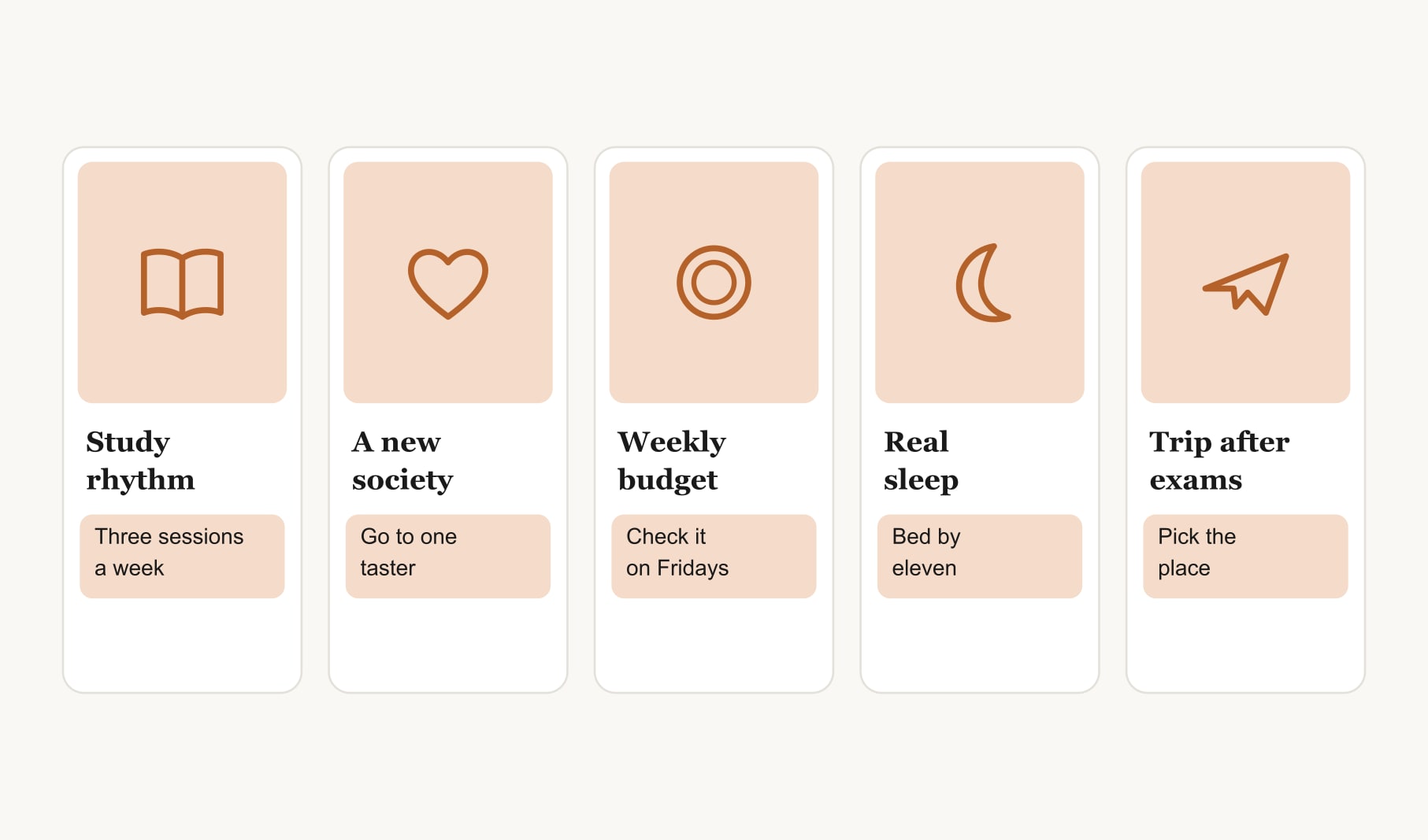
Useful vision board examples for students show real goals with first steps, not just pretty pictures. A first-year board might pair a library photo with three study sessions a week, a society photo with one taster session, and a budget photo with a weekly check-in. Copy the structure, then swap in your own goals.
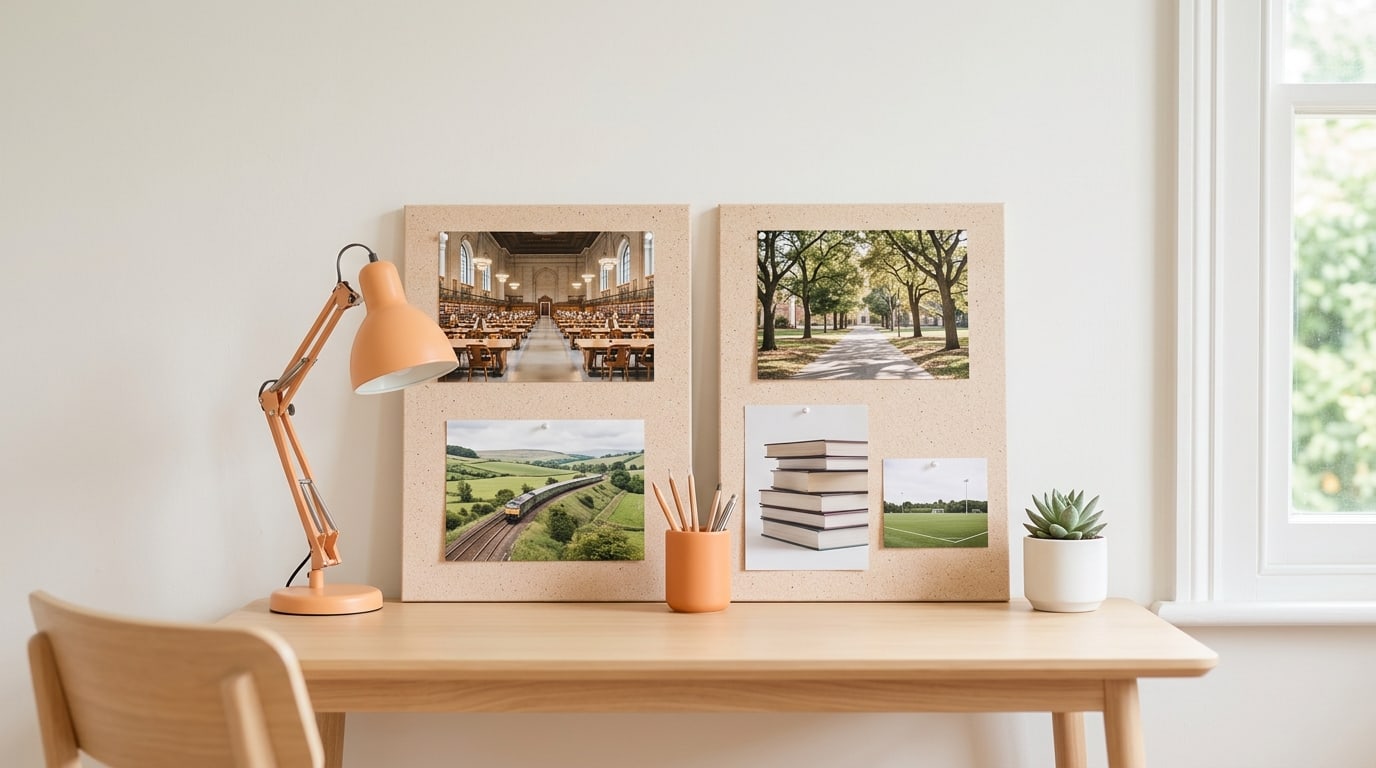
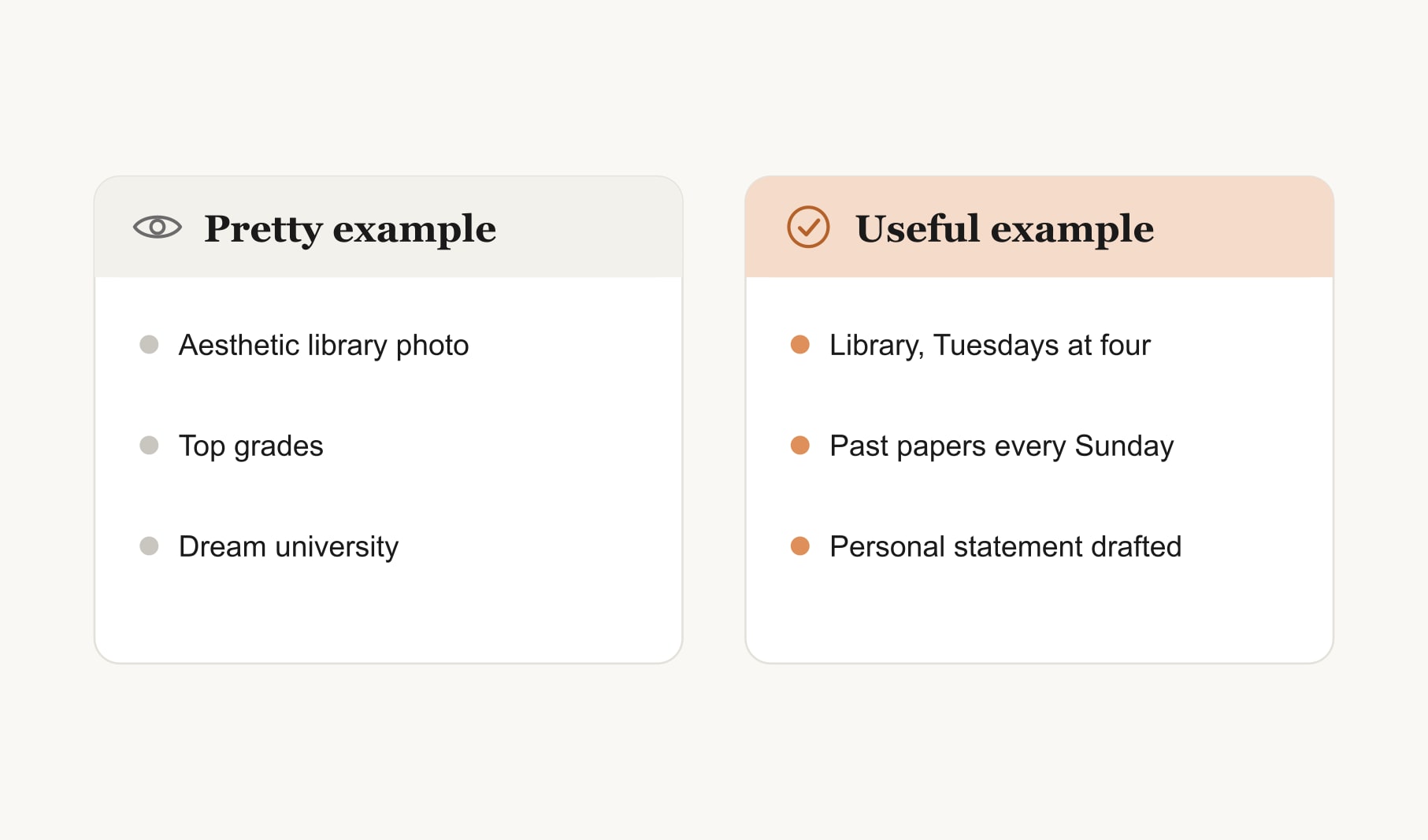
I love looking at other people’s boards, but most vision board examples for students online are all aesthetic and no plan: a pretty library, a graduation cap, done. So here are five examples written out properly, with the goal and the first step under every picture. Copy the structure, not the goals.
What makes good vision board examples for students?
Three to five goals, one image each, a deadline from the term calendar, and a first step small enough to do this week. That is it. For more on choosing the goals themselves, see my vision board ideas for students.
Example 1: a secondary school board
- A tidy desk at home: homework before screens on weeknights. First step: clear the desk tonight.
- A sports pitch: make the school team. First step: two extra training sessions this week.
- A stack of books: read one book a month for fun. First step: pick the first one.
- A sunrise: a regular bedtime. First step: phone charging outside the bedroom.
Example 2: a first year at university
- A library: three study sessions a week. First step: block them in the calendar.
- A society noticeboard: join one club. First step: go to one taster session.
- A jar of coins: a weekly budget. First step: check it every Friday.
- A calm bedroom: bed by eleven on weeknights.
- A train through hills: a trip after exams. First step: choose the place.
Example 3: a final year with a dissertation
- A finished bound document: dissertation handed in by the deadline. First step: a chapter plan by Friday.
- An interview room: a graduate job or further study application. First step: draft the personal statement.
- A running track: a weekly run to manage stress. First step: Saturday morning, two kilometres.
Example 4: studying alongside a job
- A kitchen table at night: two study evenings a week. First step: tell the household which ones.
- A certificate: finish the course by the end of the year. First step: complete module one.
- A quiet Sunday: one full day off a week, protected.
Example 5: a student athlete or musician
- A practice room or a training ground: five sessions a week, with one full rest day. First step: write the week’s timetable.
- A performance or match: the goal event for the season, with its date. First step: tell the coach or teacher.
- A desk with textbooks: two study blocks on training days. First step: pick the two days.
- A calm evening: a set wind-down time before competition days.
Balancing a passion with study is its own skill, and a board that shows both keeps either from quietly taking over.
Example 6: a school or college class board
For teachers and group leaders: each student adds one square to a shared board with a goal and a first step, and the class checks in every half term. It builds a lovely, gentle culture of goal setting. The school vision board gives you a ready grid to start from.
What do these vision board examples for students have in common?
Look back at all five and you will notice a pattern. None of them has more than five goals. Every goal is something the student controls: sessions, drafts, bedtimes, not grades or offers. Every image is ordinary and believable, a real library rather than a famous one. And every first step is small enough to do within a week, sometimes within a day. That is the whole trick. A student board that follows those four rules will outperform the prettiest collage every time, because it tells you what to do on a Tuesday afternoon when the deadline still feels far away.
Notice what is missing too. There are no comparison images, no photos of other people’s results, no perfect grades. A good student board is kind to the person who has to live with it all term.
How do you turn an example into your own board?
Take the shape, then swap every goal for one that is genuinely yours. Keep the first steps tiny. Then write your goals in SMART terms if that helps, specific and dated, and track the weekly progress in a goal tracker for your vision board. An example is a starting point, never a template for your life.
One last tip from experience: make the board in the first week of term, not the night before your first deadline. The start of term is when motivation is highest and your timetable is still flexible, which makes it the perfect moment to decide where your effort will go before everything else decides for you.
Keep reading
Vision board examples for students: your questions
Good vision board examples for students show three to five real goals with a first step under each image, such as three study sessions a week, joining one society or keeping a weekly budget. They include deadlines from the term calendar rather than only aesthetic photos.
A student might put study habits, a skill or course, an application, a club or team, a budget, sleep and a trip after exams on a vision board. Choose three to five that matter this term, and add a deadline and a small first step to each one.
You can copy the structure of a student vision board example, such as one image per goal with a deadline and first step. Swap the goals for your own, though, because a board only works when every goal is something you genuinely want this term.
A good university vision board example includes a study rhythm, one society or club, a weekly budget, a sleep routine and a trip or reward after exams. Each image carries a first step, such as blocking study sessions in your calendar this week.
Teachers often show a vision board example first, then ask each student to make their own or add one square to a shared class board. Keeping the focus on effort goals and first steps makes the activity useful rather than purely decorative.
A student vision board example can include a grade target, but pair it with the effort behind it, such as practising past papers every Sunday. Effort is what you control, and it keeps the board motivating even when a result disappoints.
Students should update a vision board at the start of each term or semester, when timetables and deadlines change. A quick weekly look at progress helps too. Replace finished goals with new ones and keep the completed ones as proof of progress.
Keep your vision board alive
A board built in your browser resets when you close the tab. Vision Boardly saves your boards, reminds you as each vision date arrives, and tracks the habits and moods moving you toward them.
Get Vision Boardly Free