What Are Things to Put on a Vision Board
Everything on a good board does one of five jobs. Once you know the jobs, choosing what goes on gets much easier.
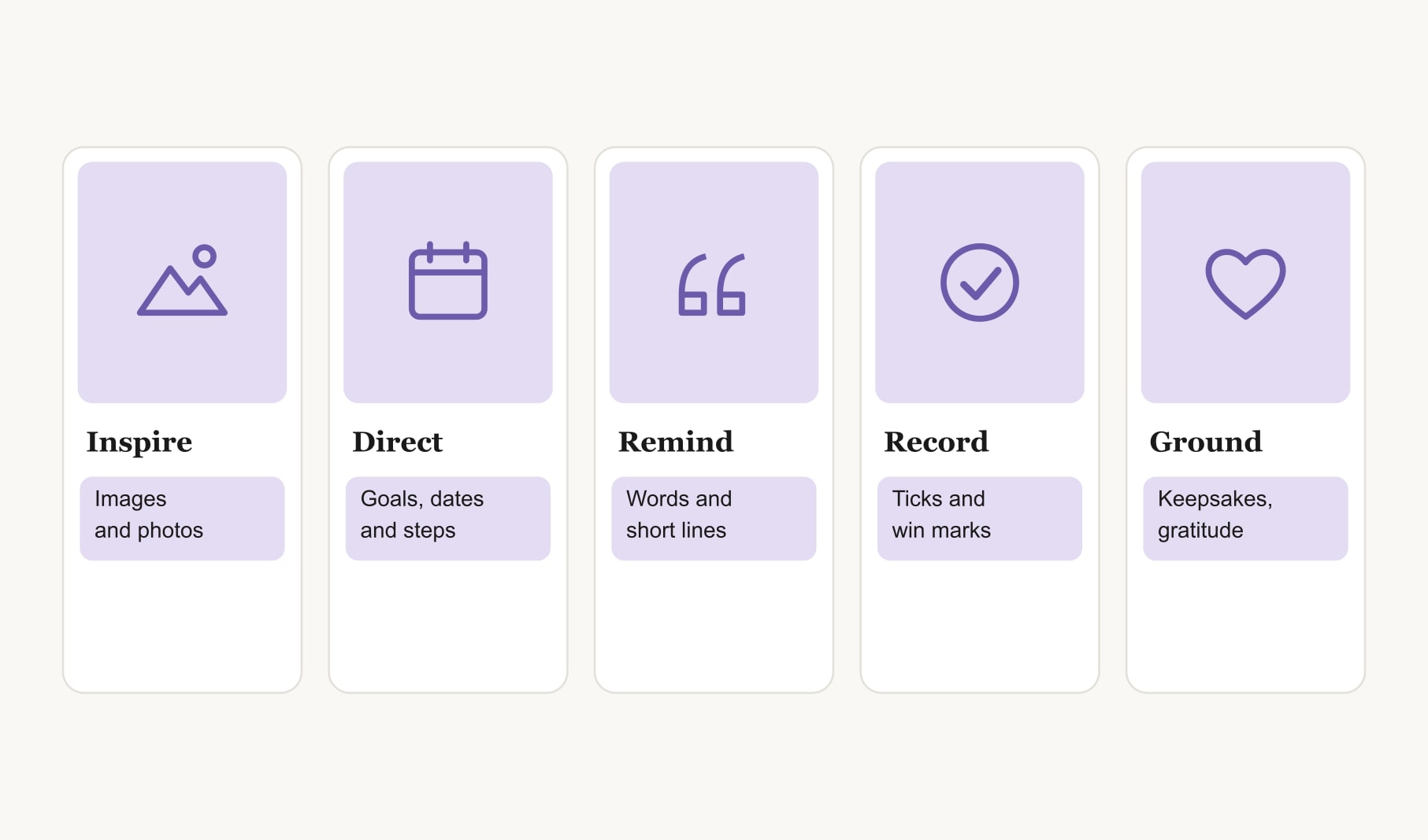
Things to put on a vision board fall into five kinds, sorted by the job each one does: images that inspire, goals and dates that direct, words that remind, marks that record progress and personal items that ground you. A strong board carries at least one of each, with images doing most of the work.
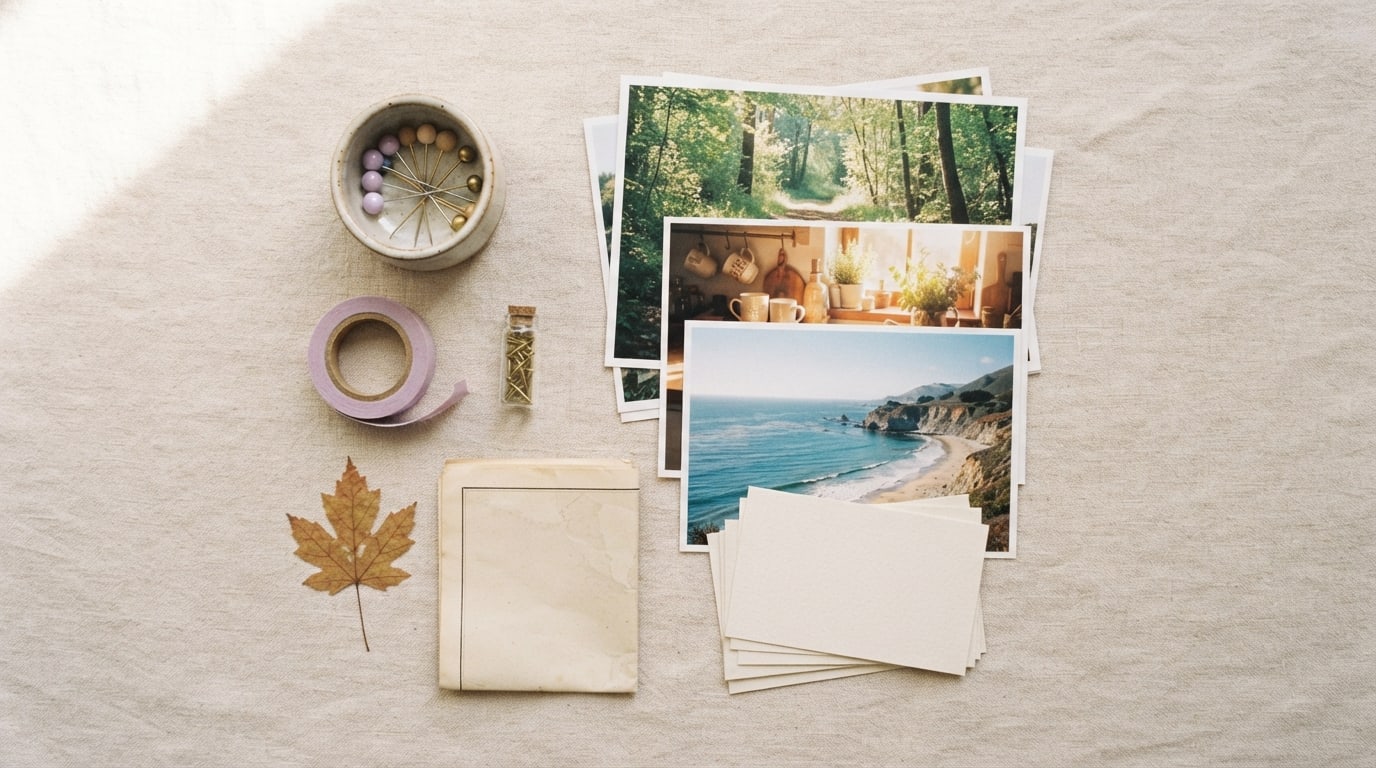
What are things to put on a vision board? The short answer is pictures, but that answer leaves out most of what makes a board useful. After years of making boards, I sort everything that goes on one by the job it does. There are five jobs, and every item you add should be doing at least one of them.
Thinking in jobs rather than items stops you from piling on pictures that all say the same thing. It also shows you, at a glance, what your board is missing.
What are things to put on a vision board, sorted by job?
The five jobs are to inspire, to direct, to remind, to record and to ground. Images inspire. Goals, dates and first steps direct. Words remind. Ticks and win marks record. Personal keepsakes and gratitude ground the board in your real life. Most boards stop at the first job, which is why so many end up ignored.
Which things inspire you?
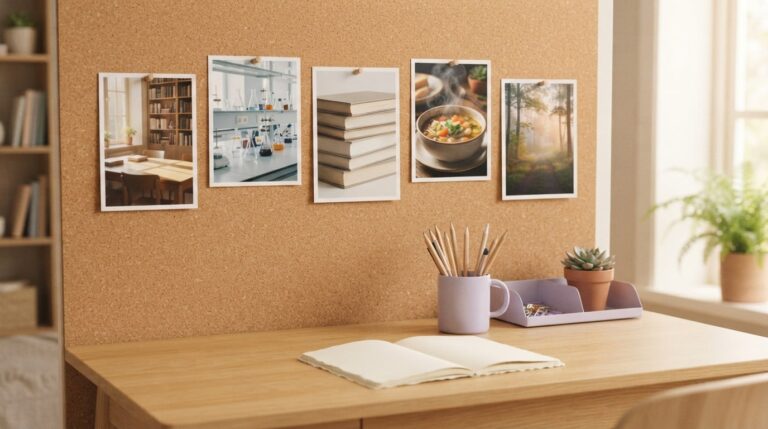
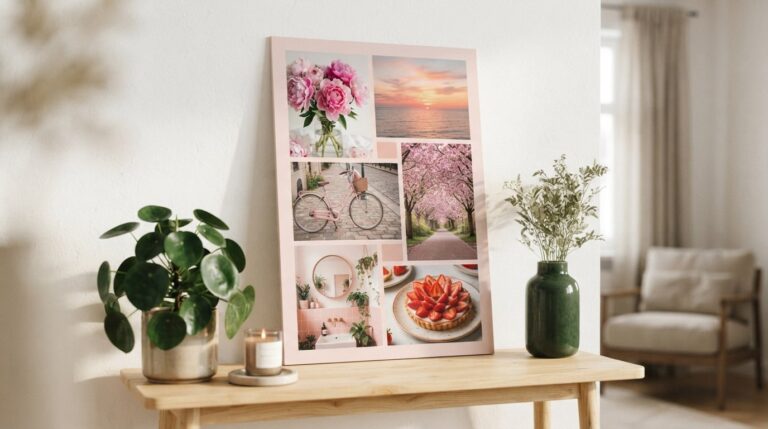
Inspiring things are your images: photos of places, activities, rooms, people and moments you want more of. They do the heavy lifting, so they deserve most of the space. Choose images that show the goal from the inside, like the view from a trail rather than a medal, and use your own photos wherever you can.
If you are short of images for a goal, browse vision board pictures grouped by theme, then swap in your own photos as your life catches up with the board.
Which things give your board direction?
Direction comes from three small additions under each image: a one-line goal, a rough season and a first step. “Swim in the sea, by summer, first step: book two pool sessions.” These lines take seconds to write and they turn a picture into a plan.
A first step only works if you take it, so keep the steps somewhere you check often. A goal tracker for your vision board lists every goal with its next action, which keeps the board itself clean.
Which things remind you why?
Words are reminders. A word for the year across the top, a short affirmation beside a goal that scares you, or one quote that sounds like you. Keep words few and large, so they read from across the room. If you are not sure what to write, the affirmation generator drafts lines you can trim to a few words.
Which things record your progress?
Recording things show movement. A small tick beside each finished first step. A sticker when a goal is reached. A date crossed out and moved, which is progress too. A done corner where finished goals go to be celebrated. These marks matter more than they look, because seeing progress makes you far more likely to keep going.
Leave room for them when you build. A board with no space for ticks quietly tells you nothing will change.
Which things ground the board in your real life?
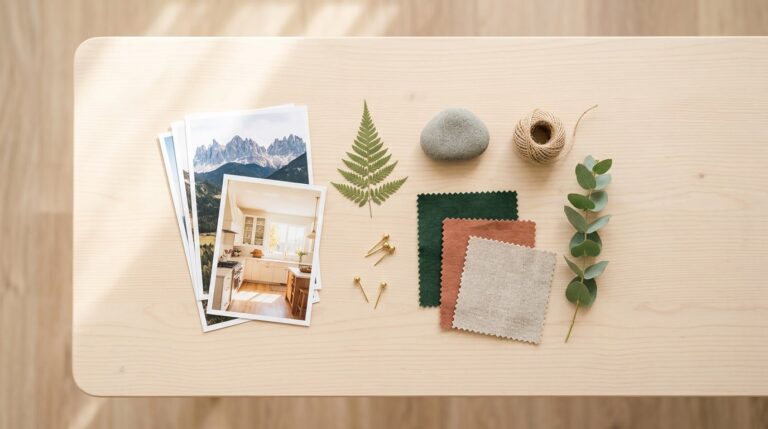
Grounding things make the board yours rather than a page from a magazine. A photo of you at your happiest. A ticket from a day you loved. A pressed leaf from a favourite walk. A line of gratitude for something you already have. A note in your own handwriting. One or two of these are enough to make a board feel personal.
How much of each kind belongs on one board?
My rough guide: images take most of the space, the direction lines sit small beneath every image, one or two reminder words sit at the top, a strip at the edge holds your progress marks and one or two grounding items sit wherever they feel right. If words start to crowd the images, cut words. If the board has no ticks after a month, look again at your first steps.
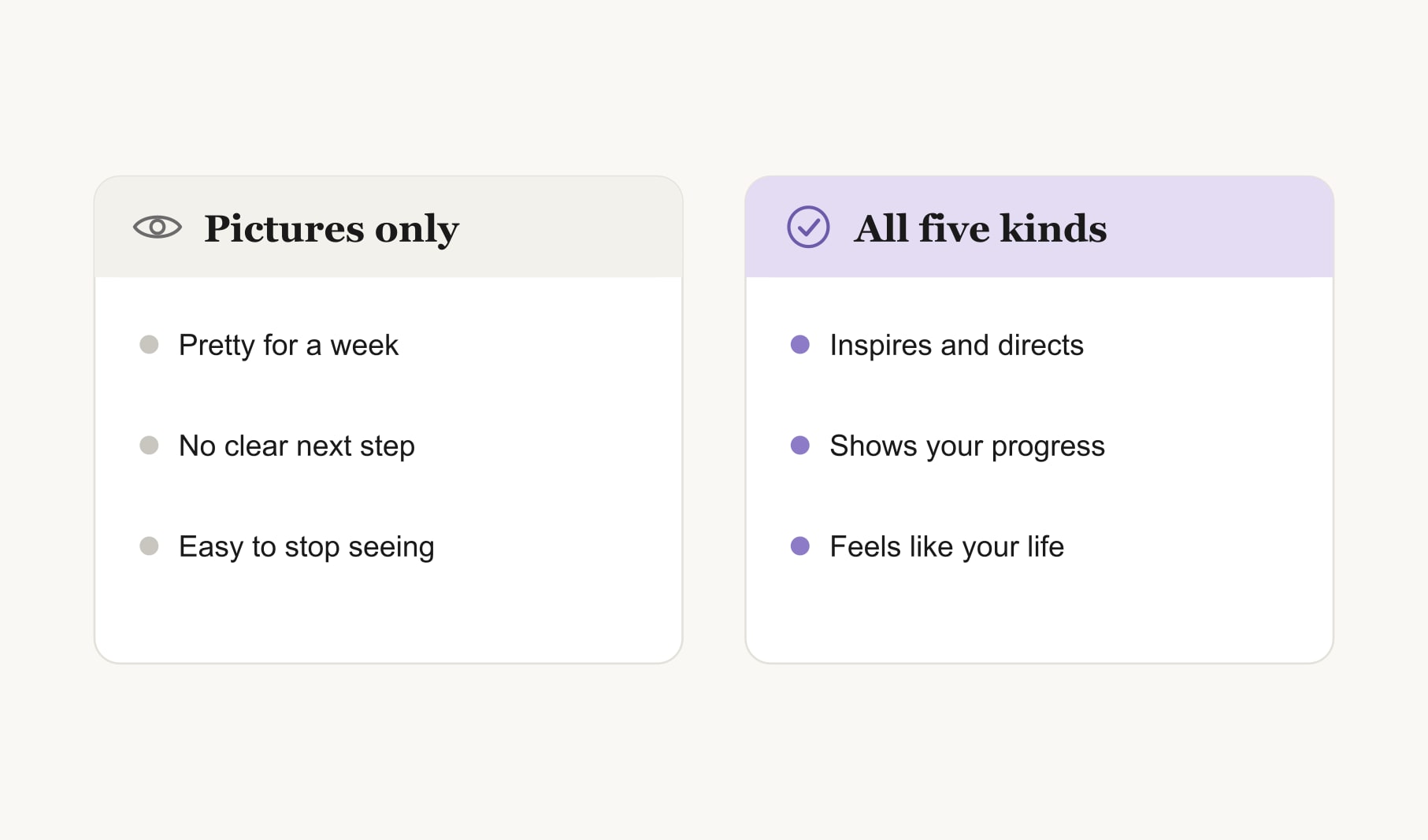
What does a board with all five kinds look like?
Picture a board with “Steady” across the top. Beneath it, five photos: a pool, a desk by a window, a garden, a long table of friends and a mountain hut. Under each, a goal, a season and a first step in small print. A strip down the right edge holds four ticks and one sticker. In the bottom corner sits a pressed leaf and one line: “Grateful for this flat.” It is calm, it is personal and it tells you exactly what to do next.
How do you check which kind your board is missing?
Stand back and run a two minute audit. Point at each item and name its job out loud: inspire, direct, remind, record or ground. Most people find plenty of inspiring images and very little else. If nothing directs, add a goal and a first step under your three favourite images. If nothing records, draw a small box beside each first step for a tick. If nothing grounds, add one photo of your own. Ten minutes of small additions often does more than a whole new board.
Do digital boards hold the same five kinds of things?
Yes, and the jobs stay exactly the same. On a phone or computer, images still inspire, captions still direct and a word still reminds. Progress marks become ticks or a changed colour, and grounding items become your own photos and a line of gratitude. The only difference is space: a phone screen holds fewer things, so trim each kind to its strongest example.
For a full board built around one area, the personal goal vision board gives you squares with space for the goal, date and caption already in place.
Keep reading
What are things to put on a vision board: your questions
The main things to put on a vision board are images that inspire, goals and dates that direct, words that remind, marks that record progress and personal items that ground the board in your life. Images take most of the space, and the other four kinds sit around them.
Pictures create the feeling, but on their own they rarely change what you do. A vision board with goals, dates, first steps and progress marks shows you the next action and the distance you have already come, which keeps you looking at it long after the excitement fades.
Short words work best on a vision board: a word for the year, a brief affirmation beside a goal that feels daunting, or one quote that sounds like you. Keep them few and large, so they read at a glance and never crowd out the images.
Show progress on a vision board with small ticks beside finished first steps, a sticker when a goal is reached and a done corner for completed goals. Moving a date and noting it counts as progress too. Leave space for these marks when you first build the board.
Good personal items for a vision board include a photo of you at your happiest, a ticket from a day you loved, a pressed leaf from a favourite walk, a handwritten note and a line of gratitude. One or two personal items make the whole board feel like yours.
Keep text on a vision board to one or two reminder words at the top and a short line under each image for the goal, season and first step. If the words start to crowd the pictures, cut words first, since the images do most of the motivating work.
Keep your vision board alive
A board built in your browser resets when you close the tab. Vision Boardly saves your boards, reminds you as each vision date arrives, and tracks the habits and moods moving you toward them.
Get Vision Boardly Free