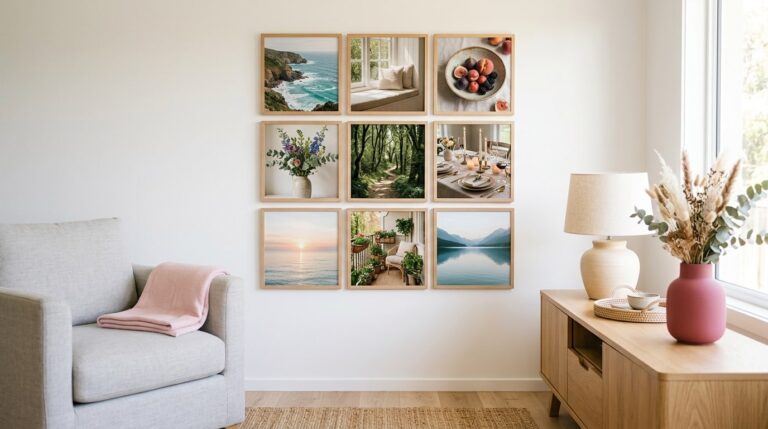
Mental Health Vision Board Examples
Six gentle boards, each built around small habits and the people who support you. A companion to care, never a replacement for it.
Helpful mental health vision board examples focus on gentle habits and support: a calm morning routine, people to stay close to, rest and boundaries, small daily joys, time outside and a support square with a trusted friend or professional. A board like this sits alongside professional care, never in place of it.
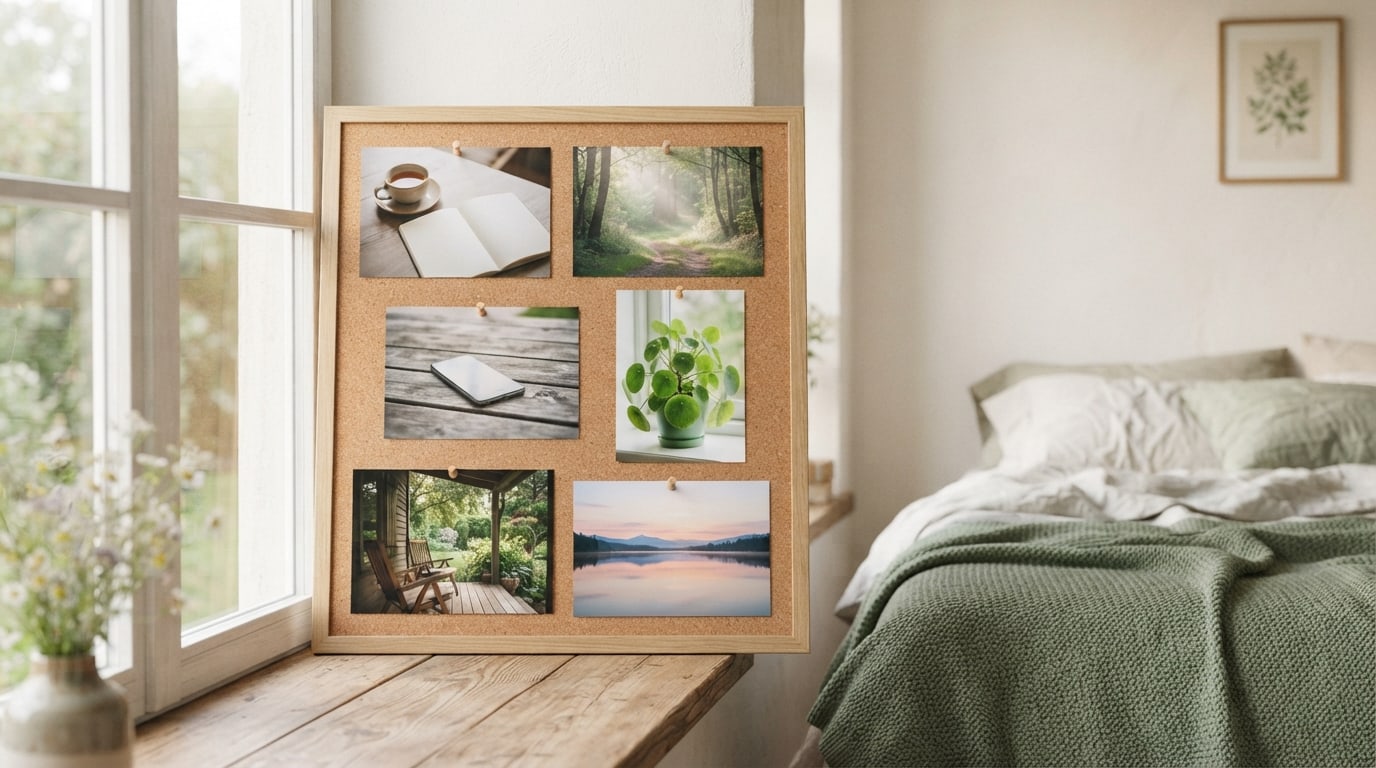
A board about your wellbeing should feel like a deep breath, not another to-do list. These mental health vision board examples are built around small, gentle habits and the people who support you. They do not promise outcomes, and they are never a replacement for professional care. They are a visual reminder of the routines and connections that help you feel more like yourself.
If you are struggling right now, please reach out to a doctor, a mental health professional or someone you trust. If you are in crisis or feel unsafe, contact your local emergency services or a crisis line straight away.
What do mental health vision board examples have in common?
The helpful ones share three things. They focus on small habits you can do on a hard day, not big goals for a good one. They include people, because connection matters. And they include support, so the board points you toward help as well as toward habits. The World Health Organization describes mental health as part of overall health, shaped by many things in our lives, which is a good reminder to keep a board gentle and broad.
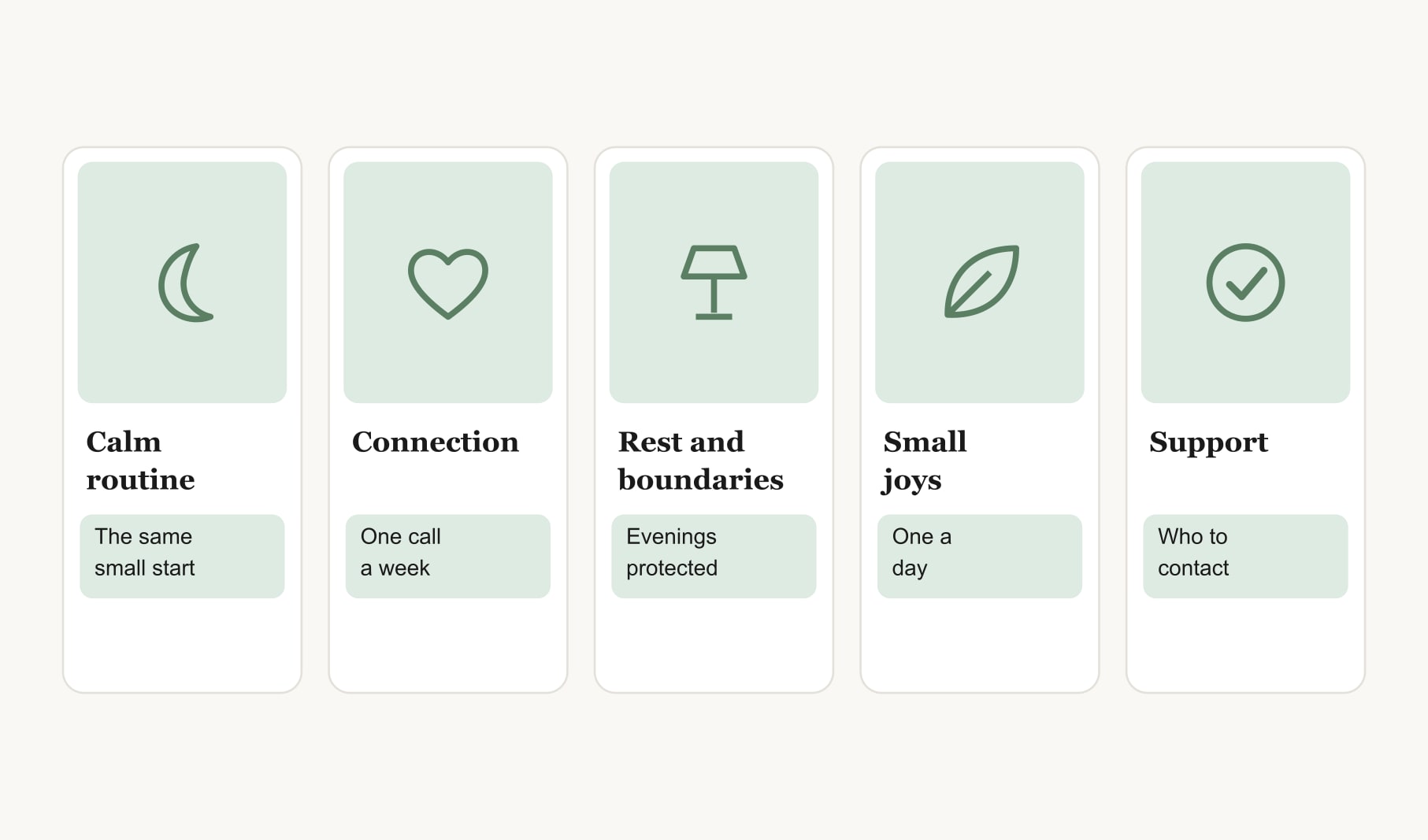
Example 1: what does a calm routine board look like?
This board pictures the first and last half hour of the day. A cup of tea by a window for “tea before my phone”. An open notebook for “three lines of journaling”. A short path for “a ten minute walk”. A dim lamp for “screens off by ten”. The same small steps every day give the day a steady shape, and that steadiness is the point.
Example 2: what does a connection board look like?
Connection boards picture people and places of belonging. Two coffee cups for “coffee with a friend every fortnight”. A phone on a table for “one call a week to someone far away”. A community hall for “the Thursday choir”. A long table for “Sunday lunch with family”. Each square has a name or a day, so it is easy to act on. If you want a board for the people around you, a family and friends vision board keeps them all in view.
Example 3: what does a rest and boundaries board look like?
This board protects your energy. A phone face down for “no work messages after seven”. A made bed in soft light for “a regular bedtime”. An empty calendar square for “one evening a week with no plans”. A closed door for “it is fine to say no”. Boundaries are hard to picture, so simple, quiet objects work best here.
Example 4: what does a small joys board look like?
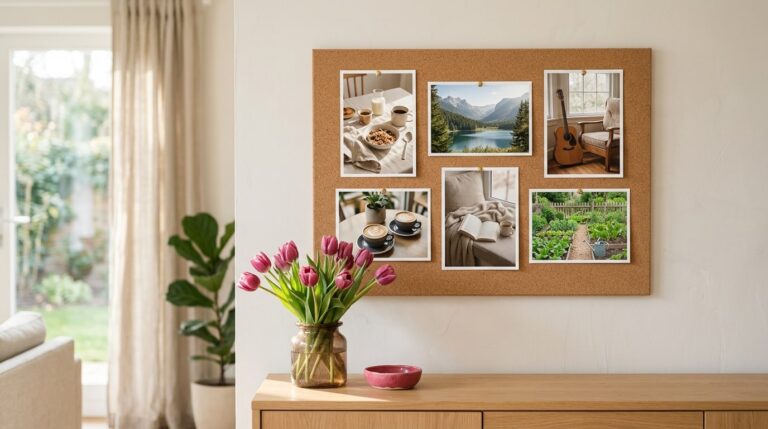
Small joys boards collect the little things that lift a day. Fresh flowers on a table. A favourite song. A warm bath. A crossword with a coffee. A walk in the rain with a good coat. Aim for one small joy a day, not all of them. Writing one down each evening in a gratitude tracker for your vision board builds a gentle record of good moments to look back on.
Example 5: what does a time outside board look like?
This board is all about getting outdoors. A forest path. A park bench. A calm lake at dawn. A plant on a sill for the days you cannot get out. Add a small habit to each: “lunch outside on dry days”, “a Saturday walk in the woods”, “water the plants each morning”. Time outside is simple to picture and simple to start.
Example 6: what does a support board look like?
A support board is the most practical of all. It holds the people and services you can turn to. A friend you trust, pictured as their front door or your favourite place together. A square for your doctor or a mental health professional, with a first step such as “book an appointment”. A note of where to find a crisis line, kept somewhere easy to reach. This board is quiet reassurance that you do not have to manage everything alone.
How do you make your own board gently?
Start with two or three squares, not nine. Choose habits you can do on your hardest day, and let the board grow later if you want it to. Keep the language kind: “a walk when I can”, not “walk every day or else”. Notice how you feel with a quick daily note in a mood tracker for your vision board, and share what you notice with a professional if you are working with one.
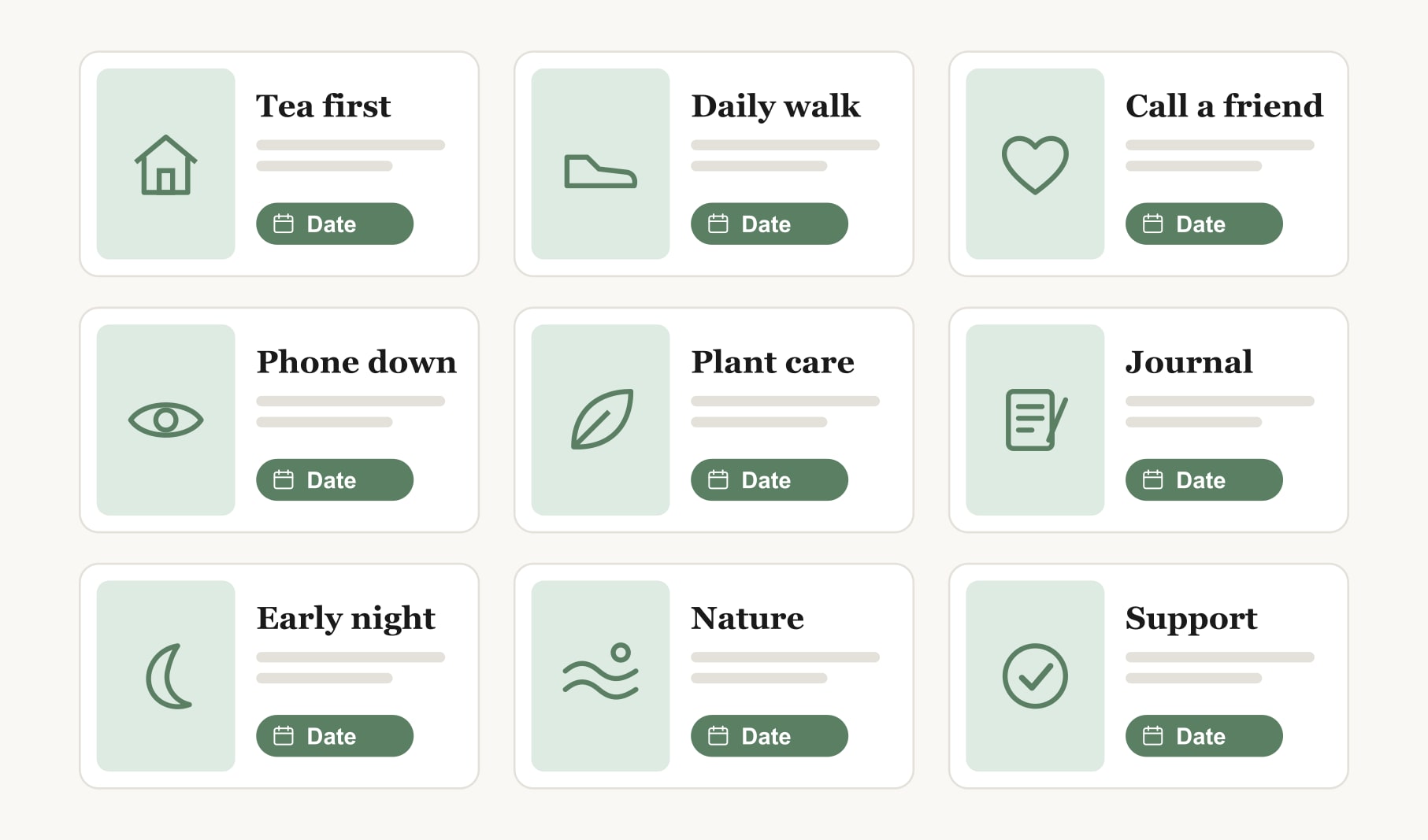
Many people combine squares from several examples into one board: tea first, a daily walk, a call to a friend, a phone put down in the evening, a plant to care for, a journal, an early night, time in nature and a support square. Nine small, kind things on one calm page. If you would like a starting layout, the self-care vision board gives you squares for exactly this kind of board.
When is a vision board not enough?
Often. A board supports habits; it does not replace care. If low mood, worry or other difficulties are affecting your daily life, talk to a doctor or a mental health professional. If you ever feel unsafe, contact emergency services or a crisis line immediately. Reaching out is a strong, wise step, and it belongs on any board about wellbeing. You can even make it the first square you add, so the board starts from support rather than from effort.
Keep reading
Mental health vision board examples: your questions
Helpful mental health vision board examples include a calm routine board, a connection board, a rest and boundaries board, a small joys board, a time outside board and a support board. Each focuses on gentle habits and people rather than outcomes, and sits alongside professional care.
No, a vision board cannot replace professional support. It can remind you of gentle habits and the people around you. If low mood or worry affects your daily life, talk to a doctor or mental health professional, and contact emergency services if you ever feel unsafe.
A calm routine vision board pictures the first and last half hour of your day: tea before your phone, a few lines of journaling, a short walk and screens off at a set time. Small, repeatable steps give the day a steady shape you can rely on.
Show boundaries on a vision board with quiet objects: a phone face down for no work messages after a set time, an empty calendar square for an evening without plans and a closed door for saying no. Simple images make abstract boundaries easier to remember.
A support square reminds you that help is available. Put a trusted friend, your doctor or a mental health professional on the vision board, with a first step such as booking an appointment. It turns the board into a source of reassurance as well as habits.
Start a mental health vision board with two or three squares, chosen so you can manage them on your hardest day. Let the board grow later if you want it to. Fewer, gentler squares feel supportive, while too many can quickly start to feel like pressure.
Keep your vision board alive
A board built in your browser resets when you close the tab. Vision Boardly saves your boards, reminds you as each vision date arrives, and tracks the habits and moods moving you toward them.
Get Vision Boardly Free