Vision Board Words Only
A board with no pictures at all can be the clearest board you ever make. Here is who it suits and how to build one.
A vision board words only layout uses text instead of pictures: one guiding word at the top, then one short line per goal with a date. It suits people who think in words, small spaces and private goals. Use a clear type hierarchy, generous spacing and a layout such as a list, a grid of word tiles or index cards.
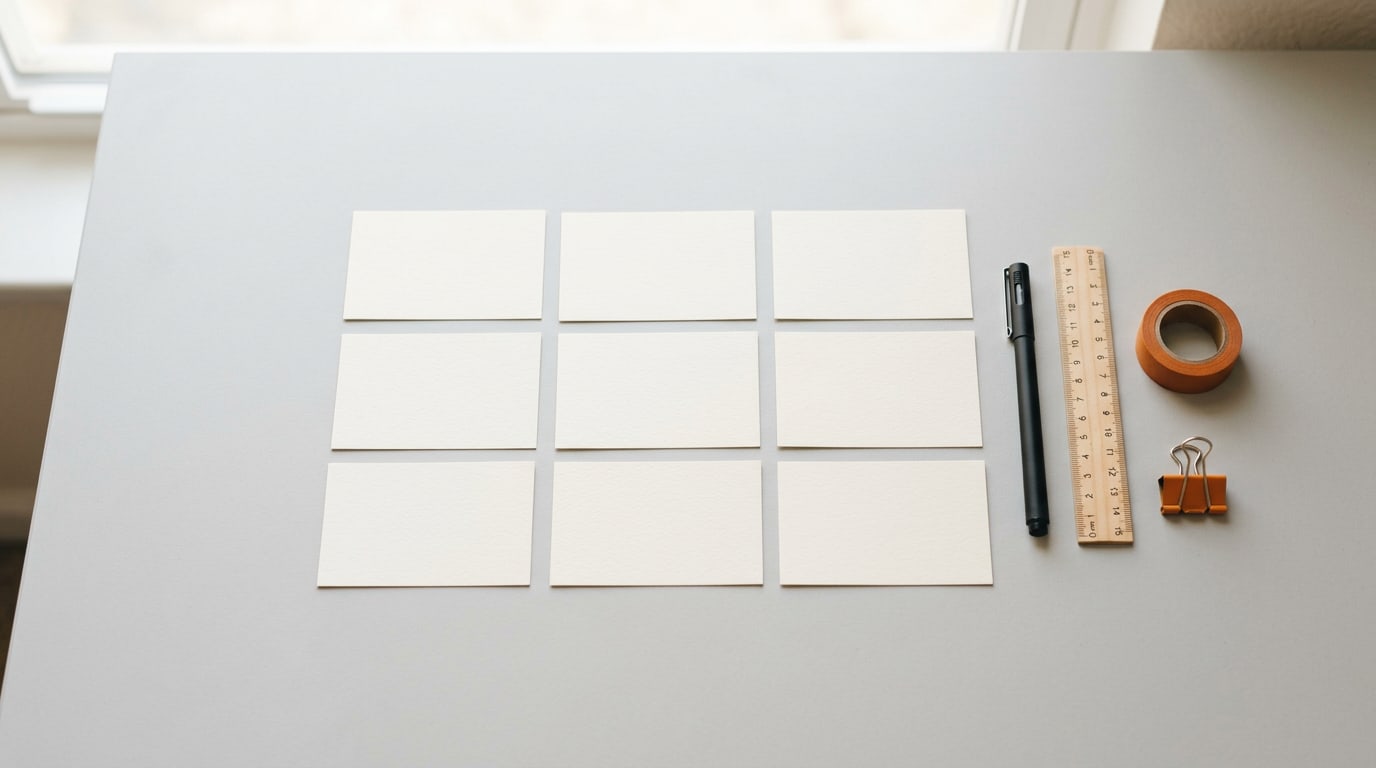
Not everyone thinks in pictures. Some of the most useful boards I have ever seen had no images at all, just a handful of clear lines, beautifully set out. A vision board words only layout swaps photos for language: a guiding word, one line per goal and a date beside each. It is quicker to make, easier to update and often clearer to read. Here is who it suits and how to build one that you will want to look at.
Who suits a vision board words only layout?
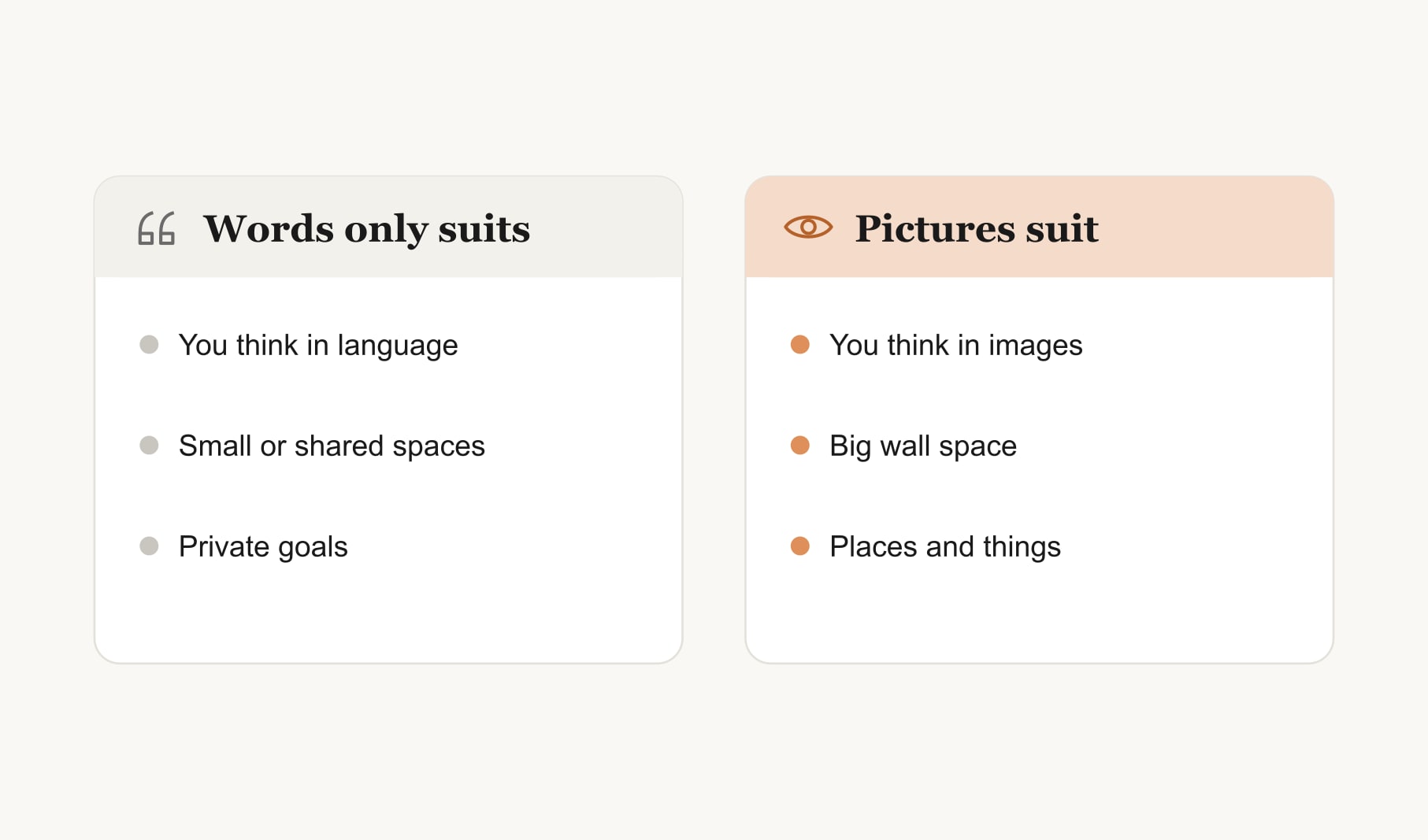
People who think in language rather than images, such as writers, planners and anyone who loves a list. People with small or shared spaces, because a words-only board can be as small as an index card. People whose goals are private, because a line like “the conversation, by spring” means everything to you and nothing to a visitor. And people whose goals are about feelings or habits, which can be hard to picture but easy to name.
What goes on a board made only of words?
Three layers. At the top, one guiding word or short phrase that sets the tone for the year. Below it, one line per goal, written as specific actions: “run 10K by June”, not “get fit”. Beside or beneath each goal, a date or a time frame. That is all. You can add a small word of feeling to any line if it helps, but resist the urge to fill the space.
If you need a starting point for the guiding word, my list of vision board words is organised by area of life.
Which layouts work for a words-only board?
- The list. A single column, guiding word at the top, goals below. Simple, calm and easy to print.
- The word tile grid. Nine squares, one goal per square, with the guiding word in the centre. A blank vision board template gives you the grid ready to fill.
- The typographic poster. Lines in different sizes and weights, arranged like a gig poster. The most striking option.
- The index card wall. One card per goal, pinned in a row. Easy to move, swap and tick off.
- The card ring. Index cards on a ring, flipped one per day. Perfect for a desk or a bag.
How do you make a words-only board easy to read?
Use a clear hierarchy, because without pictures the type does all the work. Make the guiding word the largest thing on the board, about three times the size of the goal lines. Set goal lines in one medium size, and dates smaller again. Stick to one or two fonts. Leave generous space between lines, roughly a line’s height, so each goal reads as its own idea.
Colour can stand in for pictures. Give each life area its own colour, such as green for health and blue for work, and use it for a dot, an underline or the date. For lettering styles that make words feel like art, see my guide to vision board word art.
How do you write the lines?
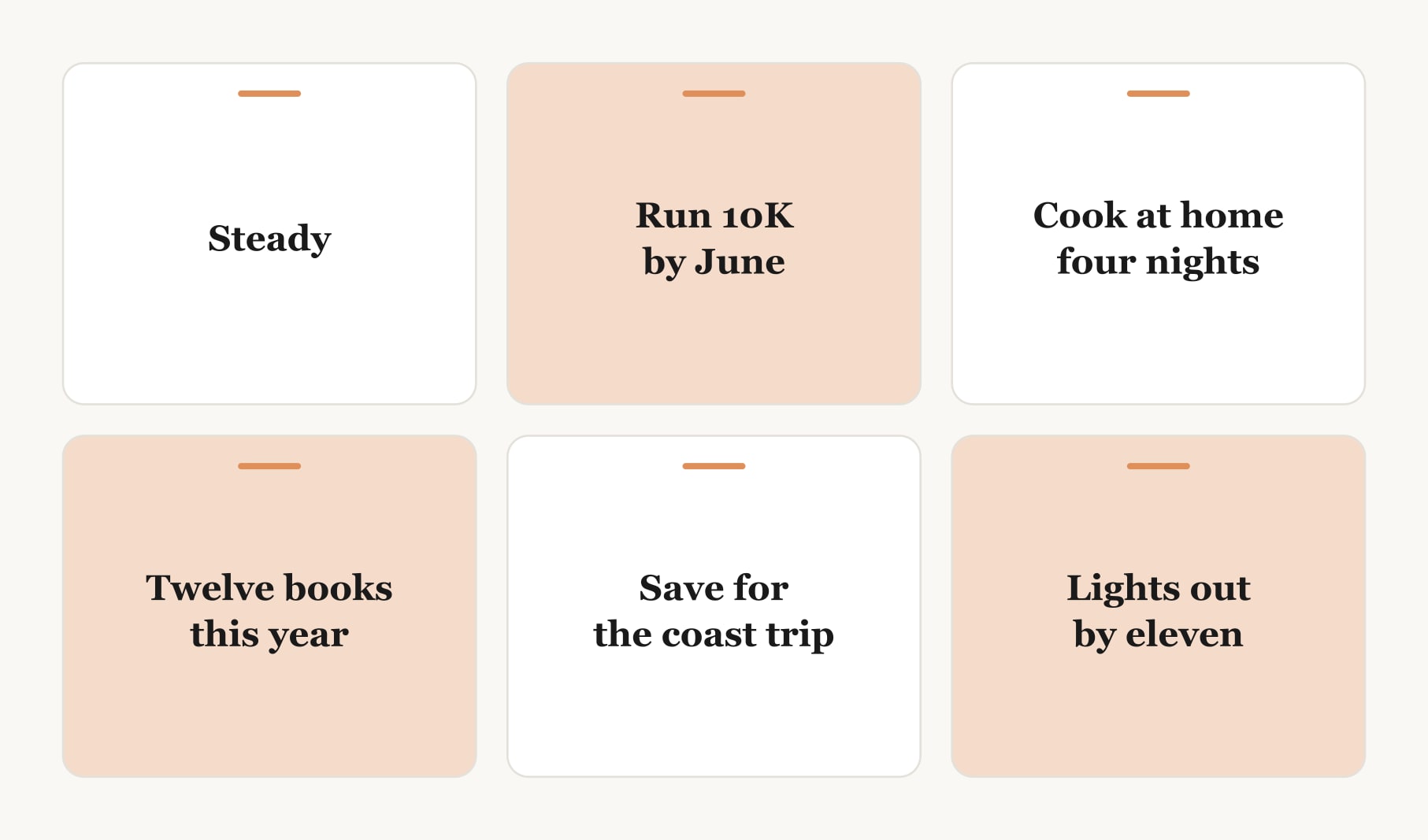
Each line should pass a simple test: could someone else tell exactly what you plan to do? “Read more” fails. “Twelve books this year” passes. “Be healthier” fails. “Lights out by eleven” passes. Keep each line under eight words. If a goal needs more explanation, keep the detail in a notebook and let the board hold the headline.
What does a finished words-only board look like?
Picture a sheet of thick cream card. Across the top, in large deep orange letters: “Steady”. Below, five lines in a clean serif, each with its time frame in small grey type: “Run 10K, by June.” “Cook at home, four nights a week.” “Twelve books, this year.” “Save for the coast trip, by August.” “Lights out by eleven, every weeknight.” Nothing else. It takes thirty seconds to read and leaves no doubt about the year ahead.
What are the trade-offs of a board with no pictures?
Pictures stir feelings quickly, and a words-only board can feel cooler at first glance. The fix is to choose words that carry warmth, such as a place name or the name of a person you are doing the goal for. On the plus side, a words-only board is faster to make, simpler to update and much easier to act on, because every line is already an instruction.
Can a words-only board grow pictures later?
Yes, and that is one of its quiet strengths. Start with words to get clear on your goals, then add a picture to any line that needs a little more pull. Many people find that one photo beside their hardest goal is all they need, while the rest of the board stays as text. Others keep the words-only sheet as their working plan and make a separate picture board purely for inspiration. There is no wrong mix. What matters is that every goal on the wall is clear enough to act on this week.
How do you keep a words-only board working?
Read it every morning and tick a line when you take a step toward it. A habit tracker for your vision board fits this style perfectly, because each line is already written as a habit or a deadline. Rewrite the board each season. A fresh sheet with updated lines feels like a small new start, and that ritual is one of the quiet pleasures of a vision board words only approach.
Keep reading
Vision board words only: your questions
Yes. A vision board can use words only, with a guiding word at the top and one short line per goal with a date. It works especially well for people who think in language, for small spaces and for private goals that are hard to picture.
Put one guiding word or short phrase at the top of the vision board, then one specific line per goal, such as "run 10K by June", with a date or time frame beside each. Keep lines under eight words and leave plenty of space between them.
Use a clear type hierarchy: a large guiding word, medium goal lines and small dates. Stick to one or two fonts, leave generous spacing and use colour for each life area. A well-set words-only vision board can look as striking as a poster.
It can be, especially if you think in words. Pictures stir feelings faster, but a words-only vision board makes every goal an instruction, which is easy to act on. Choose the style you will genuinely read every day, since attention is what makes either kind work.
Popular layouts include a single list, a nine-square grid of word tiles, a typographic poster, a wall of index cards and a ring of cards you flip daily. Each suits a different space, from a large wall to a desk or a bag, for your words-only vision board.
Rewrite a words-only vision board each season, or whenever a goal is finished. Because it is only text, updating takes minutes. Many people enjoy rewriting the whole sheet by hand, which turns each refresh into a small ritual of starting again.
Keep your vision board alive
A board built in your browser resets when you close the tab. Vision Boardly saves your boards, reminds you as each vision date arrives, and tracks the habits and moods moving you toward them.
Get Vision Boardly Free