Business Vision Board Examples
Seven worked boards for seven kinds of business, each with its images, goals and the first step that gets it moving.
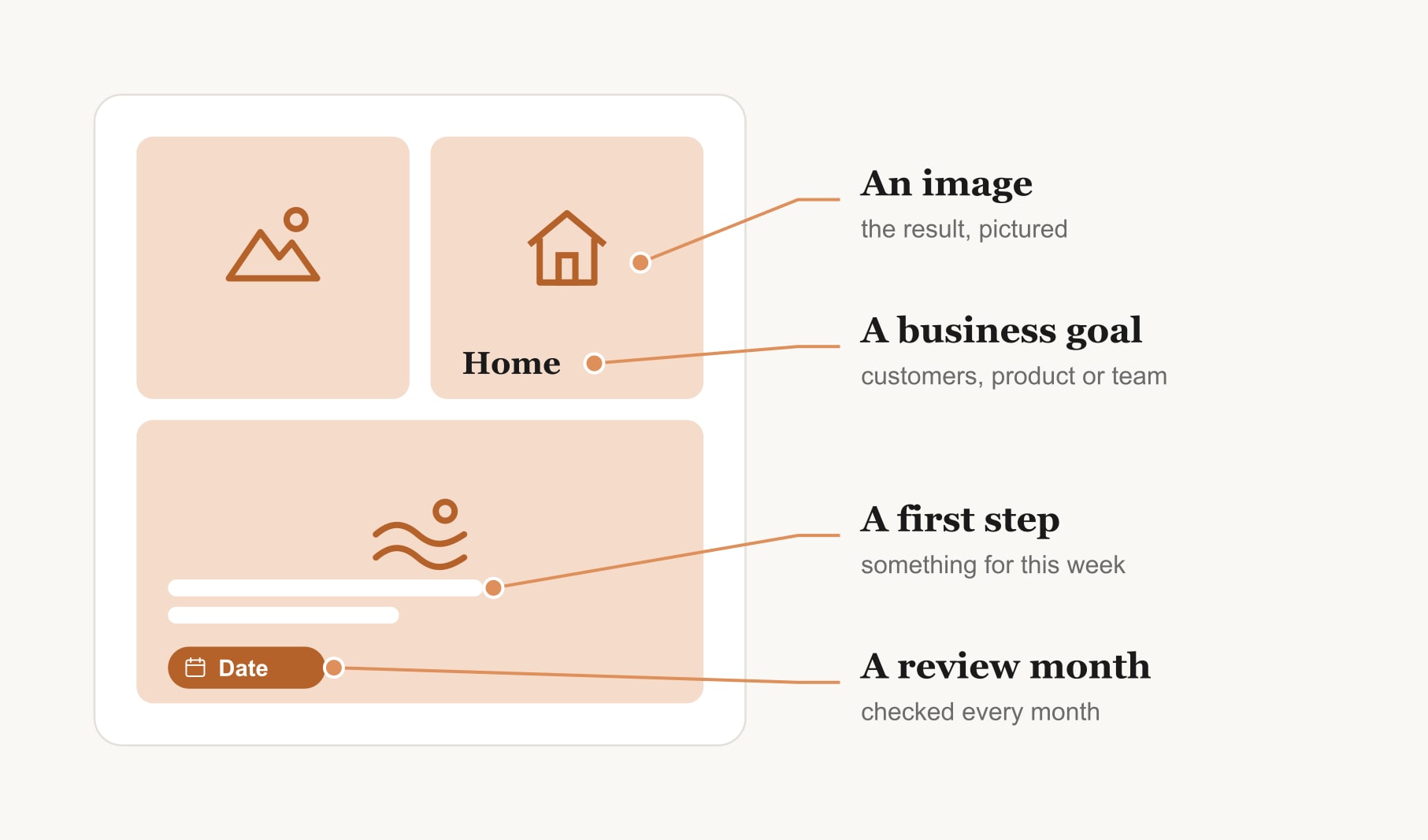
Good business vision board examples hold four to six goals across customers, product, operations, sales targets you set, people and rest. A café might picture a calm morning rush and a seasonal menu. An online shop might picture a new collection and faster dispatch. Every square carries an image, a date and a first step.

A business plan tells you what to do. A business vision board shows you why, every time you walk past it. These business vision board examples cover seven different kinds of business, from a one-person service to a busy café, with the images, goals and first steps written out in full.
If you want a long list of ideas first, my business vision board ideas cover the whole range. Here, the goal is to show you finished boards you can adapt.
What makes a good business vision board example?
Each example below covers four to six areas: customers, the product or service, how the business runs, a sales target the owner sets, the people involved and the owner’s own rest. Every square carries an image of the result, a goal, a first step and a month to review it. Money goals appear as targets the owner chose, paired with the actions behind them. These are planning examples, not financial advice.
Example 1: a solo service business
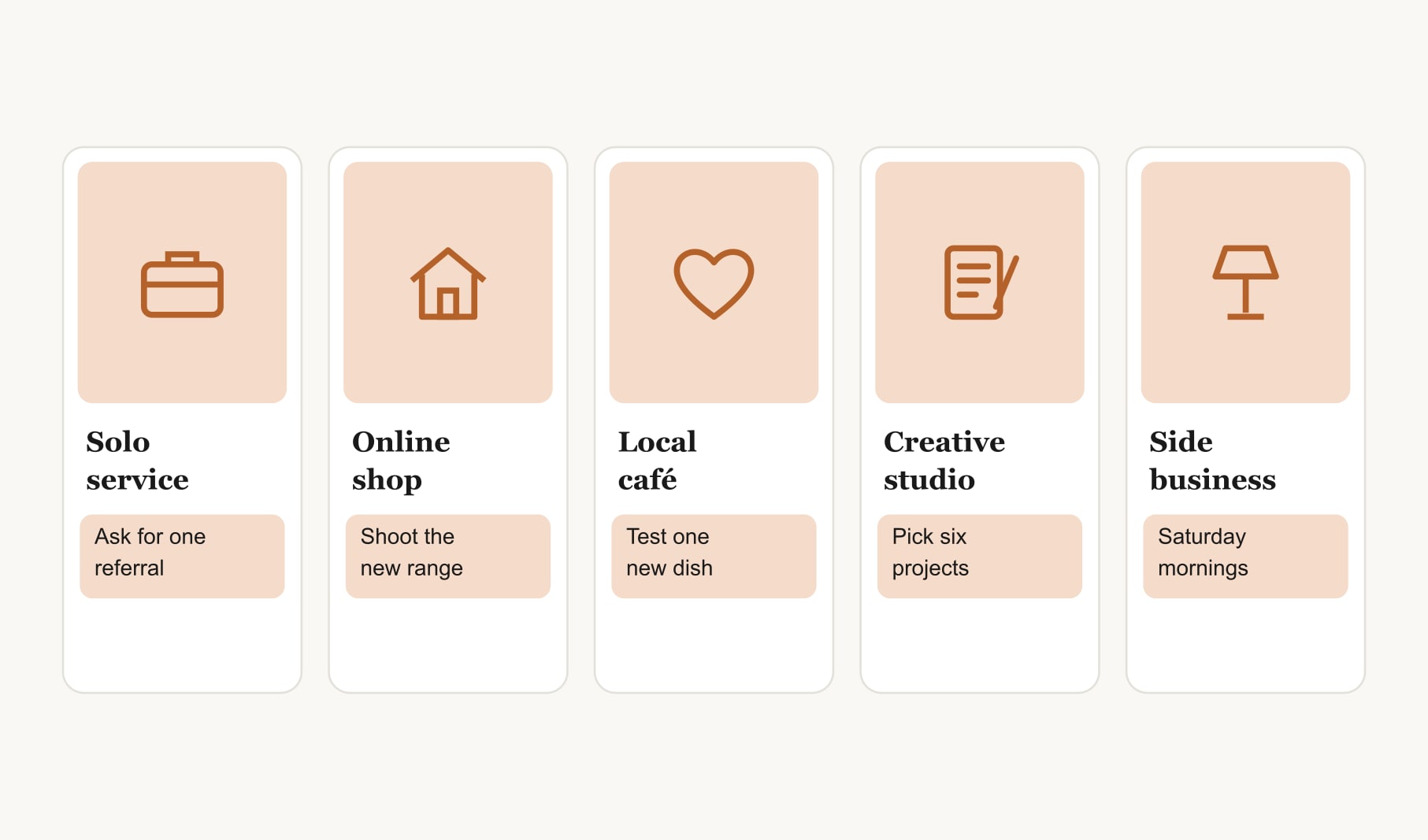
For a bookkeeper, coach, consultant or tutor. A calm desk with a full diary: “eight regular clients I love working with, first step: ask two happy clients for a referral this week.” A handshake across a café table, pictured as two cups: “one new partner who sends work my way, first step: list three people to approach.” A tidy folder: “a simple system for every new client, first step: write the welcome email once.” A hillside path: “Fridays kept for thinking and rest, first step: block every Friday afternoon.”
Example 2: an online shop selling handmade goods
A table of new pieces: “a new seasonal collection, first step: sketch six designs this week.” A light, white backdrop: “better product photos, first step: shoot the new range by the window.” A wrapped parcel: “orders dispatched within two days, first step: set up a packing station.” A shop shelf: “one local stockist, first step: visit two shops with samples.”
Example 3: a neighbourhood café
A busy counter in morning light: “a calm morning rush, first step: prep the pastry case the night before.” A plate of something new: “a seasonal menu every quarter, first step: test one new dish this week.” A team laughing in an empty kitchen, pictured as aprons on hooks: “a trained, steady team, first step: a fifteen minute huddle each Monday.” A long shared table: “a community evening once a month, first step: pick the first date.”
For a board built around goals like these, the vision board for business goals opens with example images you can replace with photos of your own business.
Example 4: a creative studio
A large print on a studio wall: “two dream projects this year, first step: write to one client I admire.” A row of printed layouts: “a refreshed portfolio, first step: choose six projects.” A bright, empty room: “a studio space with daylight, first step: visit two shared studios.” A desk for two: “mentor one junior designer, first step: offer at the next meetup.”
Example 5: a trades business
For an electrician, plumber, builder or gardener. A second van parked on a quiet street: “take on an apprentice, first step: call the local college.” A phone on a tidy dashboard: “an online booking system, first step: try two options this month.” A thank-you card: “a review from every finished job, first step: send a link with each invoice.” A fishing pier at dawn: “every other Friday off, first step: tell regular customers the new hours.”
Example 6: a side business alongside a job
A market stall: “my first ten customers, first step: tell five friends what I make.” A laptop on a kitchen table: “a simple website, first step: write the about page.” A coffee on a Saturday morning: “Saturday mornings for the business, first step: set an alarm and protect them.” A sofa with a book: “weeknights kept clear for rest, first step: no business email after seven.”
Example 7: a small community enterprise
A room full of chairs set in a circle: “a monthly community event, first step: book the hall.” A pile of hand-made signs with no lettering: “twelve regular volunteers, first step: a short volunteer evening.” A folder of paperwork: “submit one funding application, first step: read the guidance this week.” A local park: “one partnership with a local school or business, first step: arrange a coffee.”
What do these business vision board examples share?
Every board mixes outward goals, like customers and products, with inward ones, like systems and rest. Every board protects the owner’s time somewhere, because a tired owner is the biggest risk to most small businesses. And every first step is small enough to do this week. A goal tracker for your vision board makes the monthly review quick: you see which squares moved and which need a smaller step.
How do you adapt a business vision board example?
Choose the example closest to your business, keep its shape and rewrite every goal with your own numbers, customers and products. Use photos from your own business wherever you can, like your counter, your workshop or your best piece of work. Then hang the board where you plan, and review it monthly alongside your accounts and calendar. A business vision board builder gives you a ready grid if you prefer to start on screen.
Refresh the whole board once a year. Your old board, with its finished squares, is one of the best records you will have of how far the business has come.
Keep reading
Business vision board examples: your questions
A good business vision board example holds four to six goals across customers, product, operations, people and rest, each with an image, a target date and a first step. A café might picture a calm morning rush and a seasonal menu, with steps like testing one new dish this week.
A small business vision board should include goals for customers, products or services, smoother operations, the team, a sales target the owner sets, and rest for the owner. Each goal works best with an image of the result, a review month and one first step.
Money goals can sit on a business vision board as targets the owner sets, paired with the actions that support them, such as following up every quote within a day. These are planning ideas, not financial advice. A qualified accountant or adviser can help with bigger decisions.
Yes. A side business vision board works well when it protects time as much as it sets goals: a first set of customers, a simple website, a fixed weekly slot such as Saturday mornings and weeknights kept clear of work. Small steps fit around a main job.
A vision board for a café or shop works best with images from the business itself: a busy counter, a new menu item, a tidy stockroom or a community event. Add goals for customers, the team and the owner’s rest, each with a date and a simple first step.
Review a business vision board monthly, ideally alongside the accounts and the calendar for the month ahead. Move finished goals to a wins section, adjust dates honestly and set the next first steps. A fuller refresh each year keeps the vision board aligned with the business.
Yes. Inviting employees to add a square to a business vision board shows them where the business is going and how their work fits. Keep contributions optional and in each person’s own words, and review the shared board together at a regular team meeting.
Keep your vision board alive
A board built in your browser resets when you close the tab. Vision Boardly saves your boards, reminds you as each vision date arrives, and tracks the habits and moods moving you toward them.
Get Vision Boardly Free