
Do Vision Boards Actually Work
Most disappointment comes from expecting the wrong result at the wrong time. Here is what working actually looks like, stage by stage.
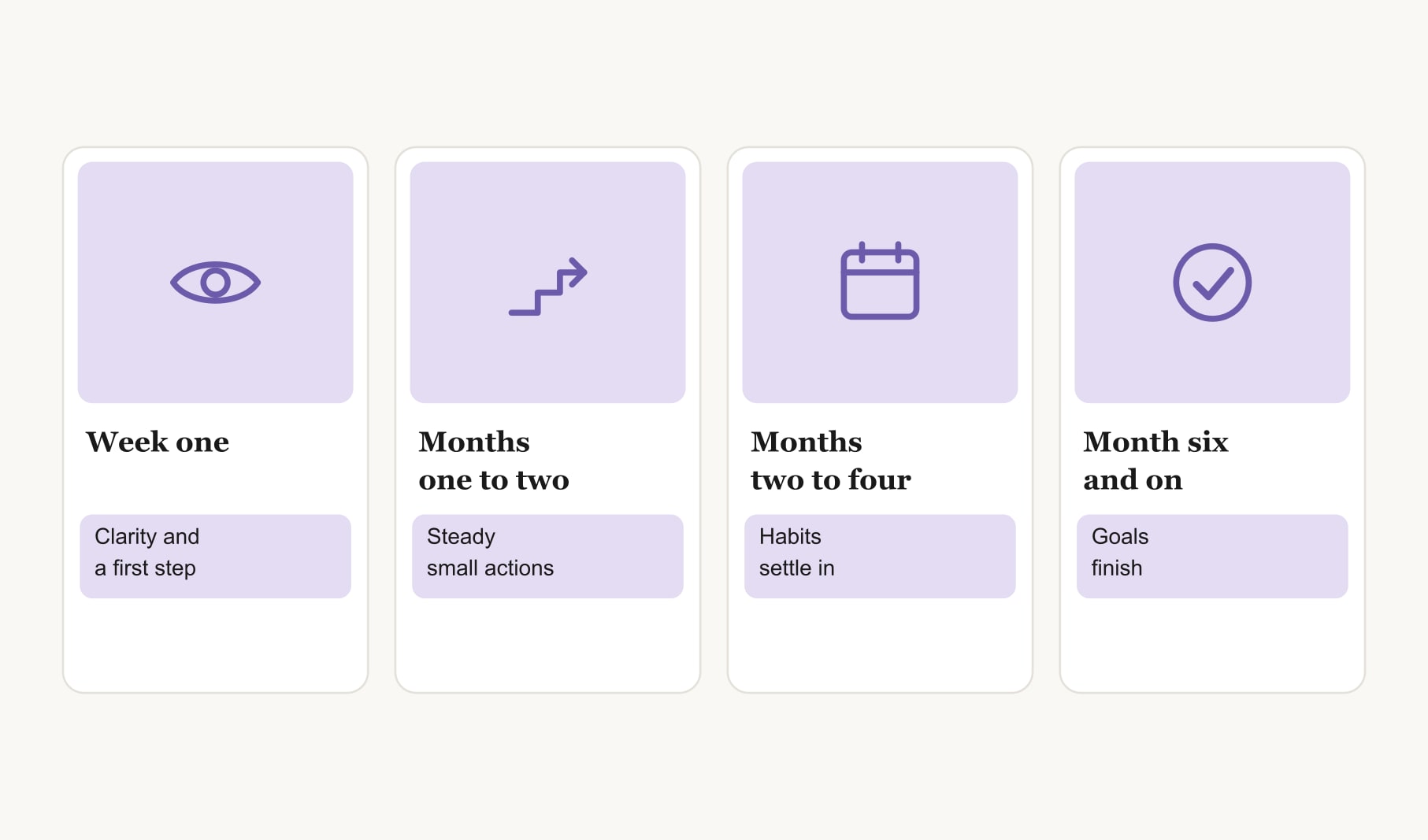
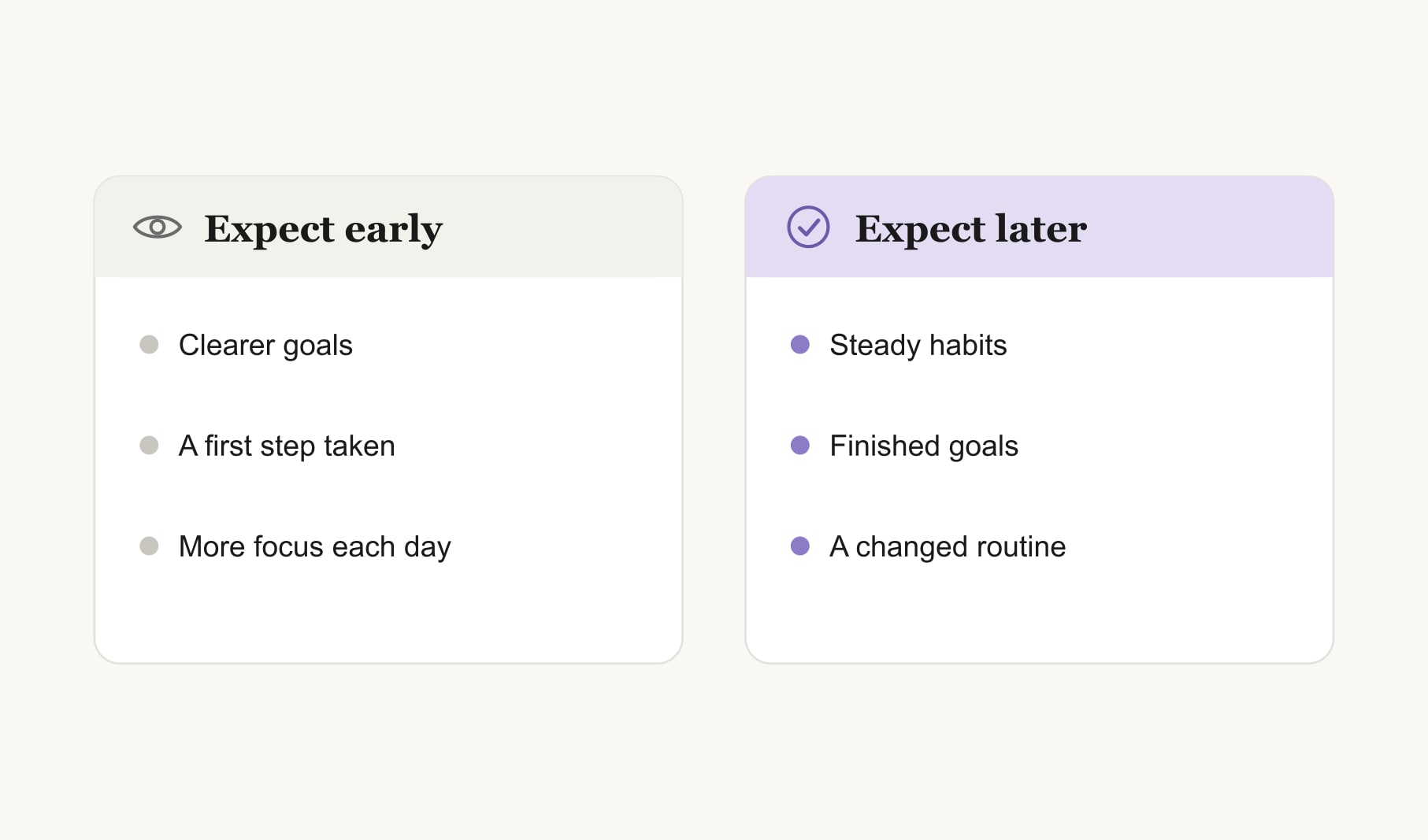
Vision boards actually work when you expect the right results at the right time. Clarity and a first step often come in week one, steady action in the first months, habits after several weeks of repetition, and finished goals later still. The middle often feels flat; that is normal, not failure.

Do vision boards actually work in real life, on a real timeline? I think most disappointment with boards comes from expecting the wrong result at the wrong moment. Someone makes a board, waits a month for a big goal to arrive and decides the whole thing is nonsense. So rather than argue yes or no, I want to show you what working actually looks like in the first week, the first months and the first half year.
What does actually working look like?
A board can give you four kinds of result, and they tend to arrive in order. First comes clarity: you know what you want and why. Then comes action: small steps you take more often than before. Then habits: actions that start to happen without much effort. Last come finished goals. Each layer rests on the one before it, which is why judging a board by finished goals in week three almost always ends in disappointment.
What should you expect in week one?
Clarity, mostly. Making a board forces choices. You decide which three to five goals matter most, and you write a date and a first step for each. That alone is a result, and many people feel lighter for it. By the end of the first week, I would hope to see at least one first step done. A booked lesson, a cleared shelf, an email sent. Small, but real.
Why do the first months feel slow?
Because habits take time to form, and this is the stage where they are forming. A well-known study by Lally and colleagues, summarised in the overview of habit research, found that participants took an average of 66 days for a new daily behaviour to feel automatic, with a very wide range, from 18 to 254 days. In other words, two months of repetition before a step feels easy is perfectly ordinary, and some habits take much longer.
During this stretch the board’s job is simple: keep bringing you back. The pictures will not feel as exciting as they did on day one. That is fine. You are not looking for excitement now. You are looking for repetition.
When do goals actually start to finish?
Usually somewhere between three and six months for goals of a sensible size. Small goals, such as a course of lessons or a tidied room, often finish early. Larger ones, such as a career move or a long trip, will still be in progress, but you should see clear movement: milestones reached, skills growing, plans firming up.
Some goals will also be dropped by now, and that is a healthy result too. A board that helped you realise a goal was not really yours has done you a favour.
Do vision boards actually work if a goal never arrives?
Sometimes a goal does not arrive, however well you plan and act. Outcomes depend on many things beyond your control: timing, other people, luck. I would never promise otherwise. What you can judge is what the board helped you do. If it kept you acting on what mattered, made you clearer and helped you build habits you are proud of, it worked, even if one particular outcome is still out of reach.
How do you keep going through the flat middle?
Make progress visible. In the middle stretch you will often feel as if nothing is happening, even when you are acting most days. A quick daily tick in a habit tracker for your vision board shows the truth: a row of small actions quietly adding up.
Break big goals into milestones, so you get a finish line every few weeks rather than one at the very end. My guide to milestones for a single goal walks through how.
And refresh the board halfway through. A mid-year vision board is a lovely way to take stock: celebrate what finished, retire what no longer fits and give the remaining goals fresh first steps.
What should you track to see it working?
Track the layers in order. In the first week, note whether each vision has a clear finish line and a first step. In the first months, count actions: how many days you did something toward a goal. From around the second month, notice which actions now happen without a debate in your head; those are your habits forming. Only later, count finished goals. Tracking this way means you always have something honest to measure, even in the weeks when the big results are still far off. It also tells you exactly where a stalled goal is stuck, so you know what to change.
What is a realistic first season with a vision board?
Here is one I would be happy with. Four visions at the start: a short course, three walks a week, a tidier home office and a trip with a close friend. By week one, the course is booked and the first walk is done. By month two, walks happen most weeks, though not every week. By month four, the course is finished, the office is clear and the trip has dates. By month six, walks feel automatic and the trip is a week away. Nothing dramatic happened. Everything moved.
So, do vision boards actually work?
Yes, when you judge them on the right timeline. Expect clarity first, action next, habits after a couple of months and finished goals after that. Keep your progress visible through the slow middle, and your board will do what it was always meant to do: keep you moving, steadily, toward a life you chose.
Keep reading
Do vision boards actually work: your questions
A vision board can bring clarity and a first step within a week. Steady action usually follows over the first months, habits often take around two months of repetition or longer, and finished goals tend to come later. Judging the board too early is the most common reason people give up.
Most vision boards hit a flat middle after the first few weeks, when the excitement fades but habits are not yet automatic. That stage is normal. Tracking small daily actions shows you the progress you cannot feel, and a refreshed first step under each image can restore momentum.
Habit research suggests a new daily behaviour takes an average of about 66 days to feel automatic, with a wide range from 18 to 254 days. Expect a vision board habit, like a morning walk, to need a couple of months of repetition before it feels easy.
In the first week, expect clarity rather than big results. Making a vision board helps you choose a few goals and write a date and first step for each. Taking at least one of those first steps by the end of the week is a good early sign.
A vision board can still work even if one goal does not happen, because outcomes depend on timing, other people and circumstances beyond your control. Judge the board by what it helped you do: clearer goals, more consistent action and habits you are proud to have built.
Yes, a mid-year refresh helps a vision board keep working. Celebrate any goals that finished, retire ones that no longer fit, and write fresh first steps for those still in progress. A refreshed board is easier to notice and gives the second half of the year new momentum.
Keep your vision board alive
A board built in your browser resets when you close the tab. Vision Boardly saves your boards, reminds you as each vision date arrives, and tracks the habits and moods moving you toward them.
Get Vision Boardly Free