Vision Board Ideas for Weight Loss
A board about habits you can live with, the support around you and the days you want to have. No numbers, no comparison.
The kindest vision board ideas for weight loss focus on habits rather than numbers or bodies: movement you enjoy, meals you cook at home, regular sleep, water within reach and a plan made with a doctor or dietitian. Picture each habit as a scene from your day, and track the habit you did rather than any figure.
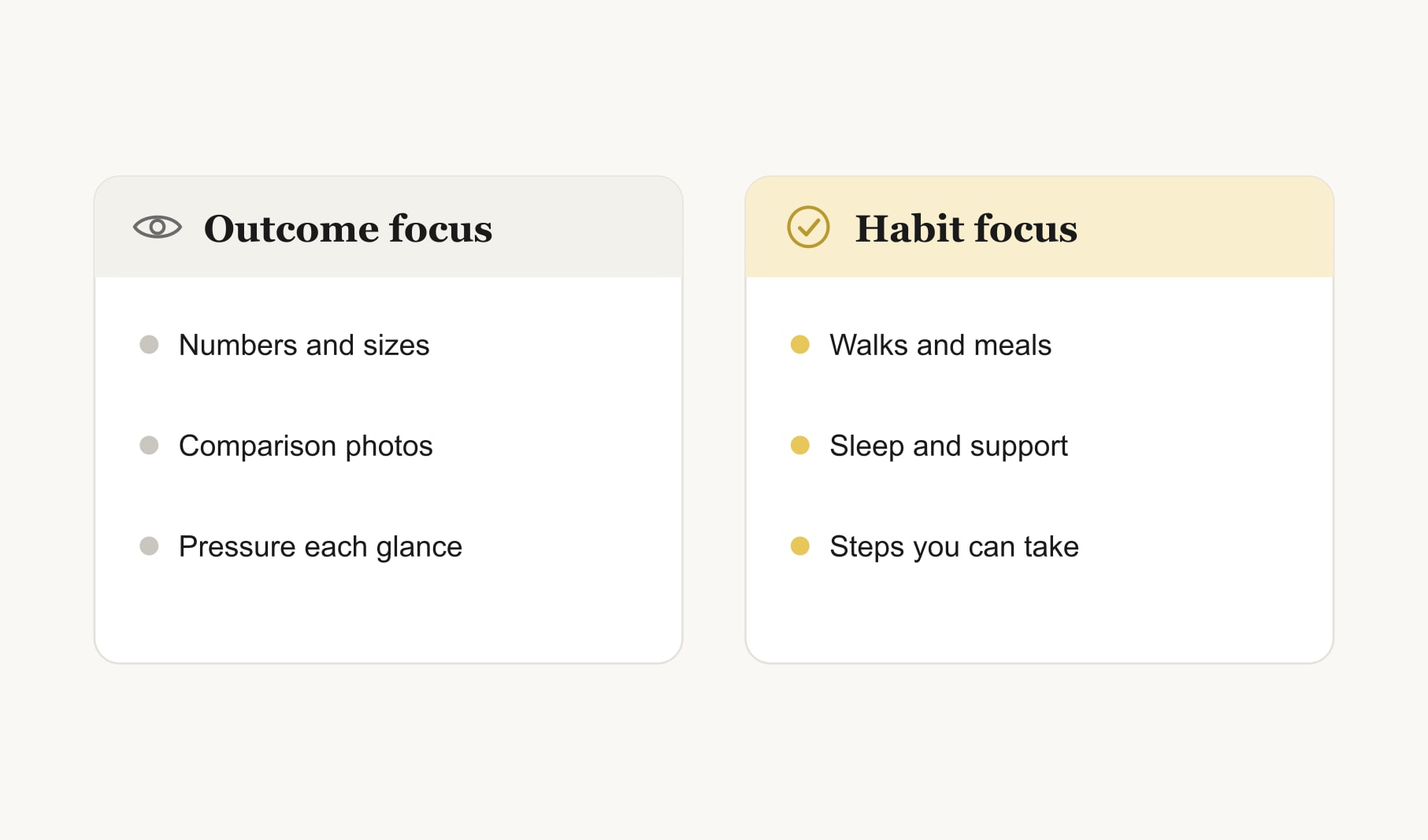
If you are looking for vision board ideas for weight loss, I want to start with something important. A board works best when it shows what you will do, not what you want to weigh. Numbers, sizes and pictures of other people’s bodies tend to bring pressure and comparison every time you glance at them. Habits do the opposite: they give you something kind and doable for today. So every idea below is a habit, a routine or a source of support.
These are ideas for a board, not medical advice. Please talk to a doctor or a registered dietitian before changing how you eat or move, especially if you have a health condition.
How should you approach vision board ideas for weight loss?
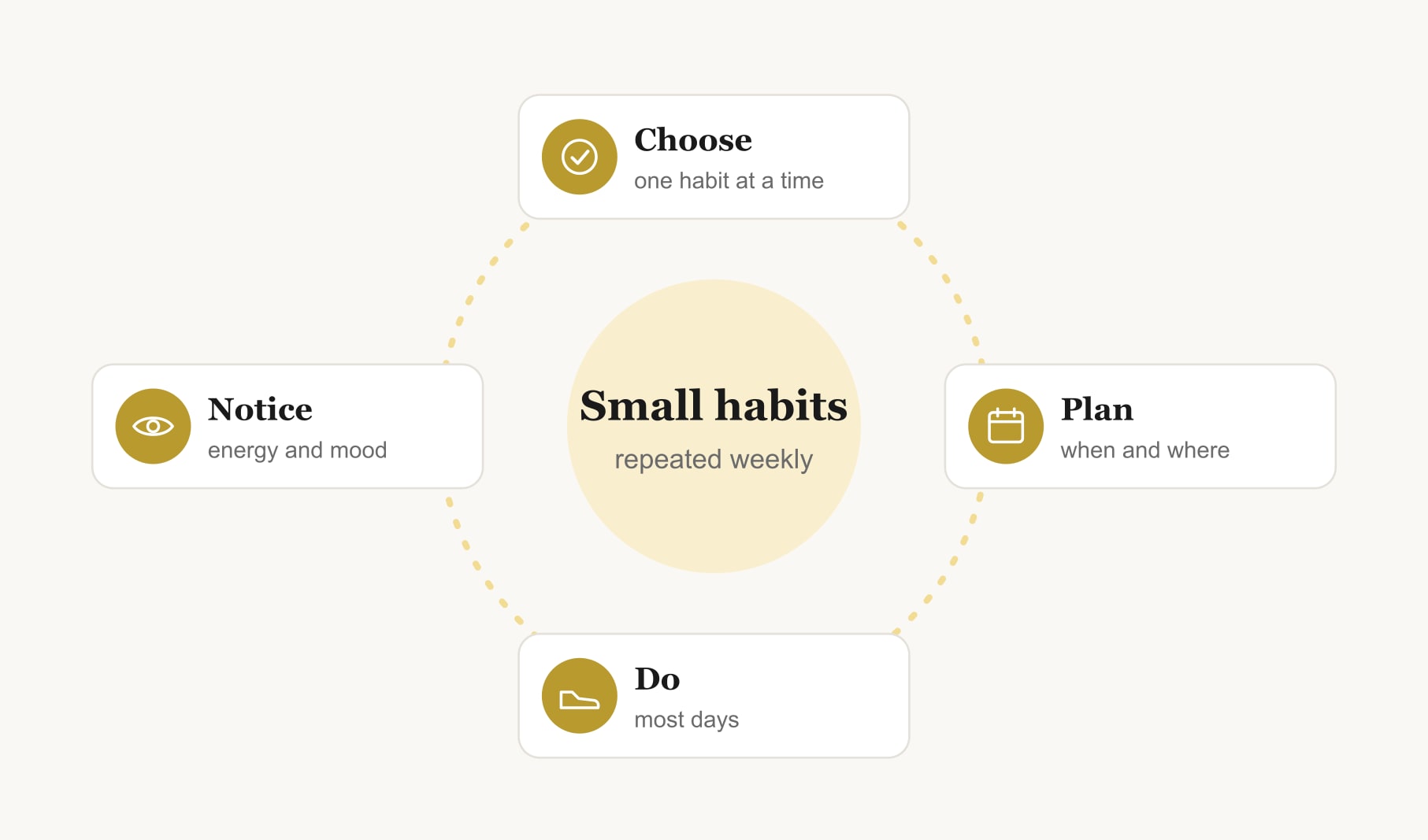
Think of the board as a picture of the days you want to have. Days with a walk in them, meals you enjoy cooking, good sleep and people who support you. Choose three to five habits, picture each one as a scene from your day and add a small first step. Then let the board remind you of those days, rather than of a number.
Why focus on habits instead of numbers?
Because habits are within your control and numbers are not. You can choose to walk today. You cannot choose what a scale says tomorrow. A habit you repeat becomes part of your life; a number on a board can feel like a judgement. The World Health Organization’s guidance on physical activity talks about regular movement for everyone, which is a helpful way to frame movement on your board: as something good for you in its own right.
Which movement ideas belong on the board?
Pick movement you enjoy, or at least do not dread. A daily walk, pictured as your shoes by the front door. A swim, pictured as an empty pool lane. A dance class, a bike ride, gardening, a weekend hike. Start small: ten minutes counts. Picture the place and the time of day, so the habit has a home. If you would like a board for this alone, the health goals vision board is a good fit.
Which food and kitchen ideas work?
Keep food squares about cooking and enjoying, not restricting. A bowl of colourful vegetables. A new recipe each week. A packed lunch on a busy day. Sitting at a table to eat without a screen. A fruit bowl on the counter. These habits are about care and routine, and they are far easier to keep than a list of things you cannot have. Plans for what and how much to eat belong with a qualified professional.
How do sleep and rest fit on the board?
Sleep and rest are habits too, and they affect everything else. A calm bedroom at night. A regular bedtime. A phone charging outside the bedroom. A slow evening routine with a book. Rest days between active days. Put at least one rest habit on the board, so it never feels like a list of things to push through.
Why put support on the board?
Because nobody does this alone. Add a square for professional support, such as booking an appointment with your doctor or a dietitian. Add a square for the people around you: a walking partner, a friend to cook with, a group or class. Support is the habit that holds the other habits up, and it deserves its own picture. A family health vision board works well if the whole household wants to build habits together.
Which images should you leave off?
Leave off numbers, clothing sizes, before and after photos and pictures of other people’s bodies. Leave off any picture that brings a sinking feeling when you see it. Choose places, objects and activities instead: shoes, paths, kitchens, pools, bedrooms, tables. These images invite you into a habit without asking you to judge yourself.
How do you track progress kindly?
Track the habits you did, not the results. A tick for every walk, every home-cooked meal, every early night. A habit tracker for your vision board shows the ticks adding up, and a run of ticks is something to be proud of whatever else is happening. Notice how you feel too: more energy on the stairs, calmer evenings, better sleep. Those notes are progress as well.
What if a habit feels hard to keep?
That is normal, and it is information rather than failure. Make the habit smaller: a five minute walk instead of thirty, one home-cooked meal a week instead of five. Move it to a different time of day. Find someone to do it with. Change the picture on the board if it no longer feels inviting. Habits take time to settle, and a board that bends with you is far more useful than one that makes you feel behind.
What does a habit-led board look like?
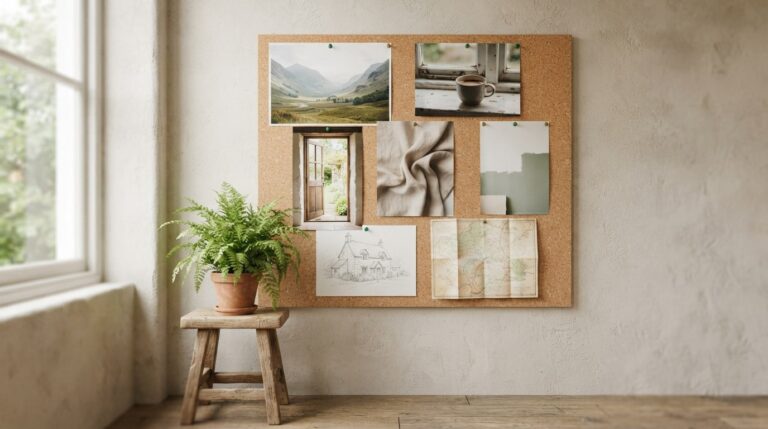
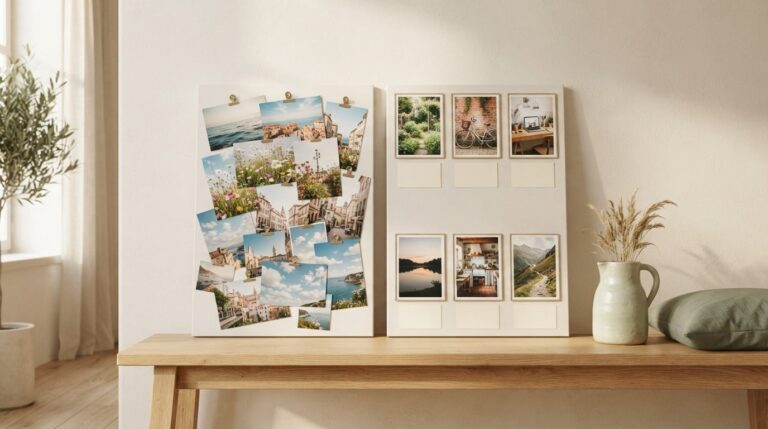
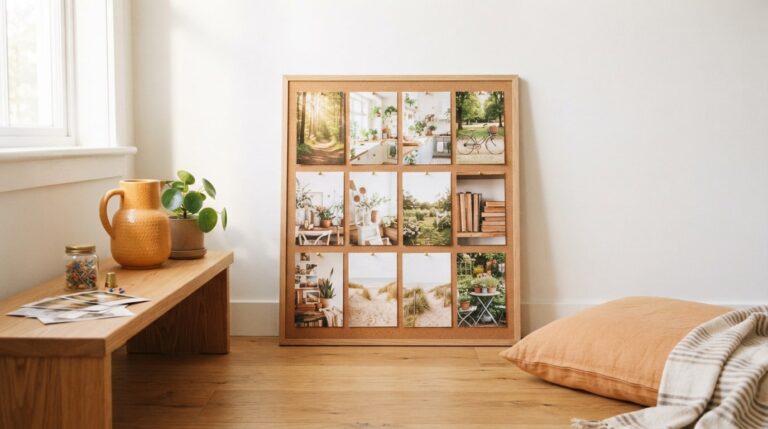
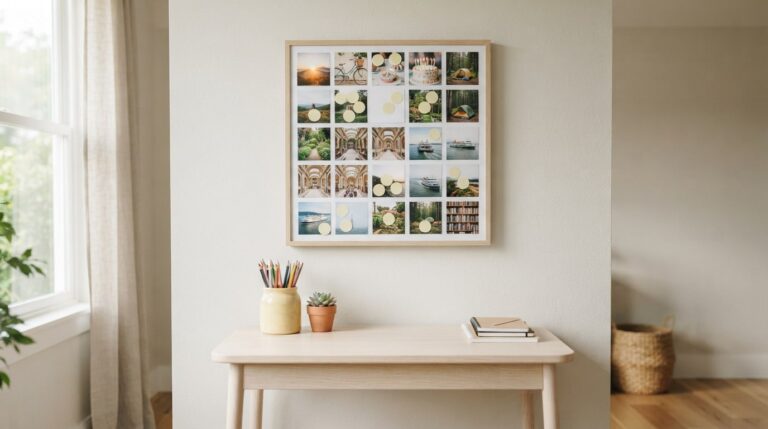
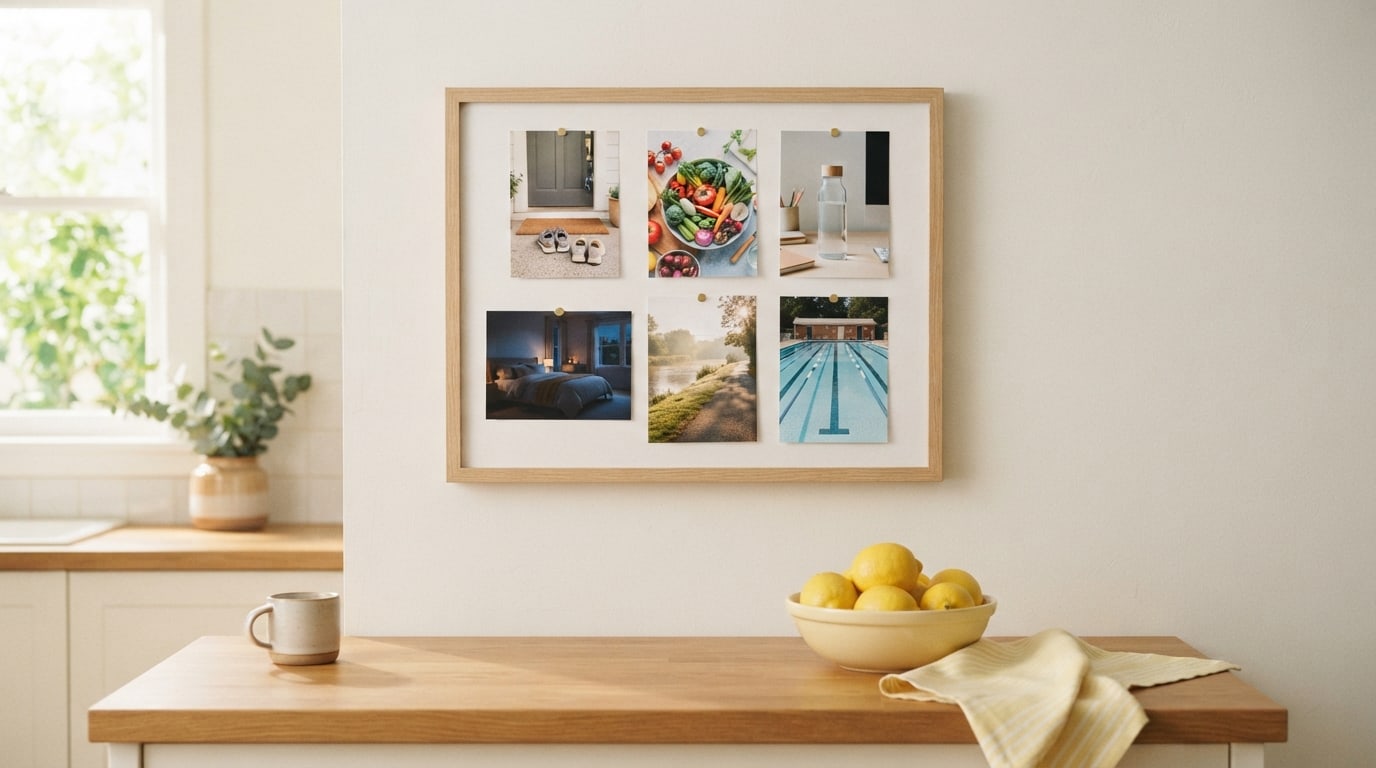
Picture six photos on a kitchen wall. Walking shoes by the door for “walk after dinner, five evenings a week”. A bowl of vegetables for “cook one new recipe each Sunday”. A water bottle on a desk for “water within reach at work”. A calm bedroom for “lights out by eleven”. A riverside path for “Saturday walk with a friend”. And a simple square with a calendar for “appointment with my doctor booked”. No numbers anywhere. Every square is something to do today. If you prefer a ready layout with space for a goal in your own words, the vision board weight goal page gives you squares and captions to fill with habits like these.
Keep reading
Vision board ideas for weight loss: your questions
Good vision board ideas for weight loss focus on habits rather than numbers: a daily walk, a new home-cooked recipe each week, water within reach, a regular bedtime, a walking partner and an appointment with a doctor or dietitian. Picture each habit as a scene from your day.
Many people find a vision board works better without a goal weight on it. Numbers can bring pressure and comparison each time you look. Habits such as walks, home cooking and good sleep give you something kind and doable today. Discuss any targets with a qualified professional.
Choose pictures of places, objects and activities for a weight loss vision board: walking shoes by the door, a pool lane, a bowl of vegetables, a calm bedroom or a riverside path. Leave off before and after photos and pictures of other people’s bodies.
Track the habits on your weight loss vision board rather than results. Tick every walk, every home-cooked meal and every early night, and note how you feel, such as calmer evenings or more energy. A run of ticks is progress worth celebrating.
Yes, professional support deserves a square on a vision board about health habits. Add a picture for booking time with a doctor or dietitian, and another for the people who support you, such as a walking partner or a friend to cook with.
Three to five habits suit most weight loss vision boards. Fewer habits are easier to keep, and each one gets real attention. Start with one or two, practise them until they feel normal and easy, then add another habit to the board when you feel ready.
Keep your vision board alive
A board built in your browser resets when you close the tab. Vision Boardly saves your boards, reminds you as each vision date arrives, and tracks the habits and moods moving you toward them.
Get Vision Boardly Free