How to Make a Vision Board That Really Works
The version that goes beyond pretty pictures: true goals, honest obstacles, if-then plans and a daily habit that keeps it moving.
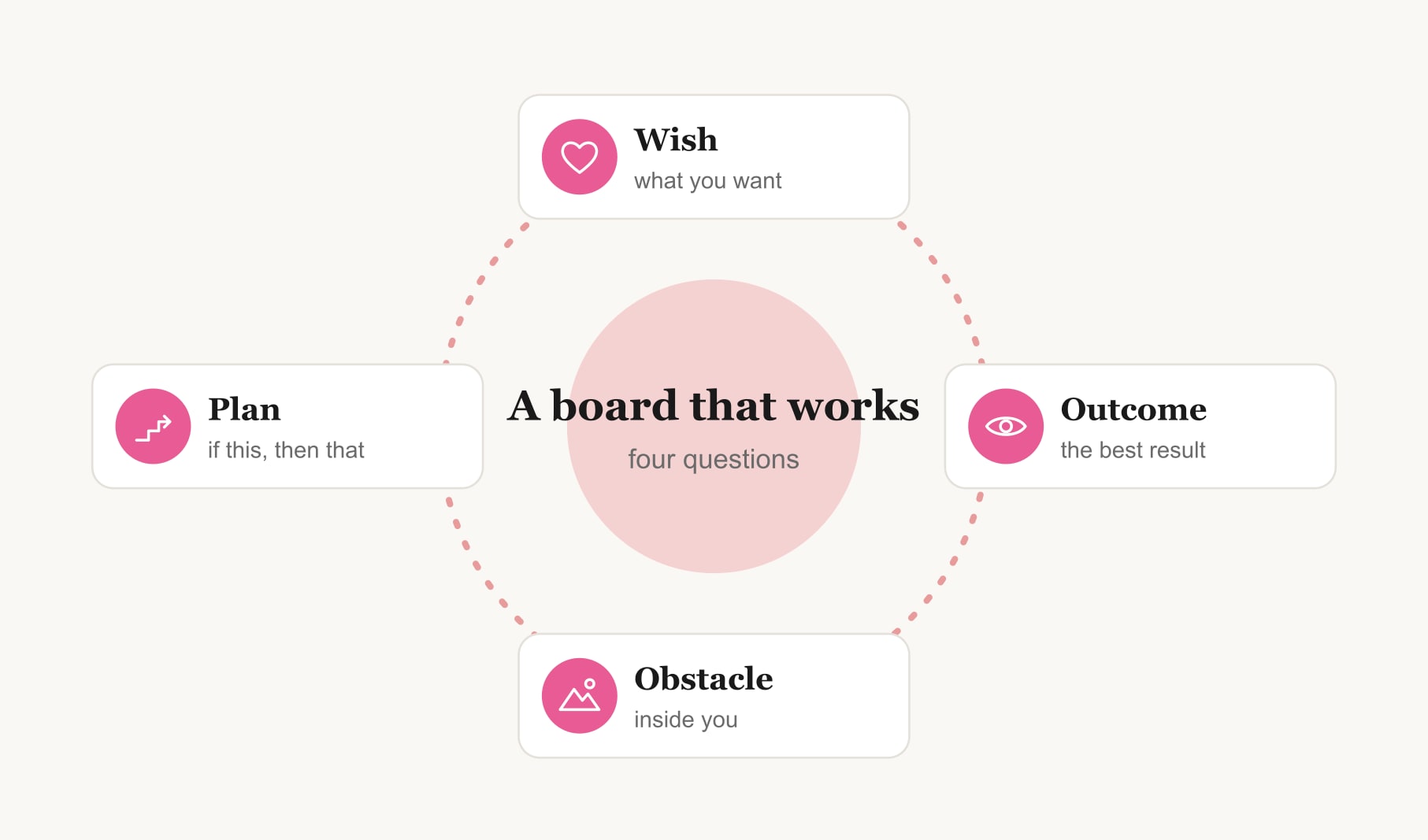
To make a vision board that really works, choose three to five goals you truly want, picture each one done, then name the main obstacle inside you and write an if-then plan for it. Pick an image from inside each goal, add a month and first step, hang it where you see it daily and review it weekly.

Most boards fail quietly, and it is rarely because of the pictures. They fail because nothing on them prepares you for the hard days. So here is how to make a vision board that really works, from scratch, with one extra ingredient most guides skip: planning for the obstacle inside you. If you already have a board and want to improve it, my checklist for how to make a vision board that works is the quicker route.
How to make a vision board that really works, and why most do not
Because pure positive picturing can feel so good that it replaces effort. Research by Gabriele Oettingen found that people who only fantasise about a positive future sometimes put in less effort than those who also think about what stands in the way. The fix is simple: picture the goal, then picture the obstacle, then make a plan. I cover the evidence in more detail in do vision boards work.
Step 1: How do you choose goals that really work?
Pick three to five goals you truly want, not ones borrowed from a feed or set to please someone. Write each in one specific sentence: “Walk four mornings a week from March.” “Finish a short course by summer.”
Step 2: Why picture the best outcome?
Because it gives the goal emotional pull. Spend a minute on each: where are you, what do you see, how does it feel? This is the part vision boards are known for, and it matters. It just is not enough on its own.
Step 3: What is the obstacle inside you?
For each goal, ask what inside you is most likely to get in the way: tiredness, doubt, distraction, perfectionism, saying yes to everything. Be honest. Naming it is not negative; it is how you prepare for it.
Step 4: How do you plan for the obstacle?
Write an if-then plan: “If I feel too tired after work, then I walk for ten minutes.” “If I want to scroll instead of study, then I put my phone in another room.” These implementation intentions are one of the best-supported tools in goal research.
Step 5: Which images work best?
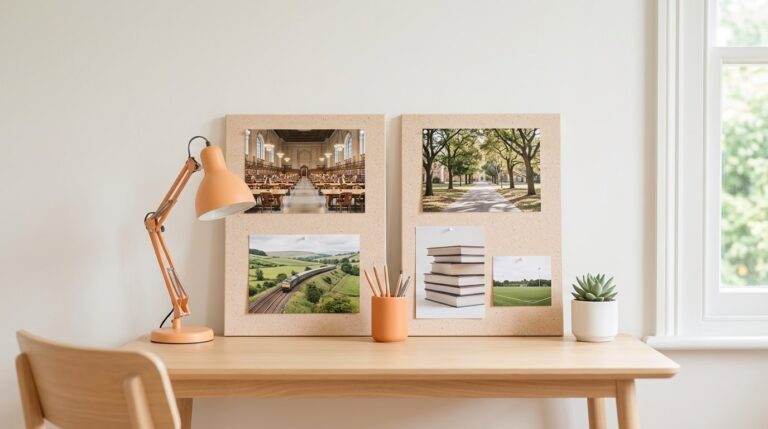
Images from inside the goal, seen from where you would stand: the path underfoot, the desk you will study at, the view from the new flat. They make the goal feel reachable and personal. Your own photos are often the strongest choice.
Step 6: What goes under each image?
Three short lines: a month, a first step and the if-then plan. “March. First step: trainers by the door tonight. If tired, then ten minutes.” It looks less decorative, but it is far more useful.

Step 7: Where should the board go?
Somewhere you pass every day without trying, or on your lock screen. A board you see daily keeps the plan fresh in your mind at the moments you need it.
Step 8: How do you keep it working?
One small action a day for one goal, and a ten-minute review every week. Log actions in a goal tracker for your vision board so you can see progress on slow weeks. At each review, ask whether the obstacle has changed and update the if-then line if it has.
What does a board that really works look like?
Here is one. A mountain trail: hike a big hill by September, first step, a local walk on Saturday, if it rains, then an indoor stair session. A desk by a window: finish a course by June, first step, enrol this week, if I want to scroll, then phone in the hall. A garden bed: grow vegetables this summer. Three goals, each with a plan for the moment it would usually fall apart.
What if the obstacle is outside your control?
Some obstacles are, like a busy season at work or a family commitment. Plan for those too, but focus the if-then line on what you can control: “If work runs late, then I do the ten-minute version.” You cannot always change the circumstance, but you can decide in advance how you will respond to it.
How long before you know it is working?
Give it thirty days. If you are taking more small actions than usual and recovering faster from missed days, it is working. For more exercises to sharpen goals first, see my goal setting vision board ideas.
Keep reading
How to make a vision board that really works: your questions
Choose three to five goals you truly want, picture each one done, name the main obstacle inside you and write an if-then plan for it. Add an image from inside each goal with a month and first step, hang it where you see it daily and review weekly.
Most vision boards do not work because they rely on positive picturing alone, which can feel so satisfying that it replaces effort. Adding honest obstacles, if-then plans, first steps and a daily action is what makes a vision board really work.
An obstacle is the habit, feeling or pattern inside you most likely to stop a goal, such as tiredness, doubt, distraction or perfectionism. Naming it honestly on your vision board helps you prepare a plan for the moment it shows up.
An if-then plan pairs an obstacle with a response, such as if I feel too tired after work, then I walk for ten minutes. Writing one under each image makes your vision board a practical plan for difficult days, not just a picture of the good ones.
Images from inside each goal work best, showing life as if the goal were real from where you would stand, such as the path underfoot or the desk you will study at. Your own photos are often the most motivating images on a vision board.
Give a vision board about thirty days before judging it. If you are taking more small actions than usual and recovering faster after missed days, it is working. Finishing the goals themselves often takes longer, depending on their size and your circumstances.
Review your vision board for about ten minutes every week. Check which actions happened, whether the obstacles have changed and whether each if-then plan still fits. Update the lines under each image so the whole board stays honest and useful all year round.
Keep your vision board alive
A board built in your browser resets when you close the tab. Vision Boardly saves your boards, reminds you as each vision date arrives, and tracks the habits and moods moving you toward them.
Get Vision Boardly Free