Best Examples of Vision Boards
The best boards are not the prettiest ones online. They are the ones that get used. Here are five tests, six boards that pass and one rewrite.
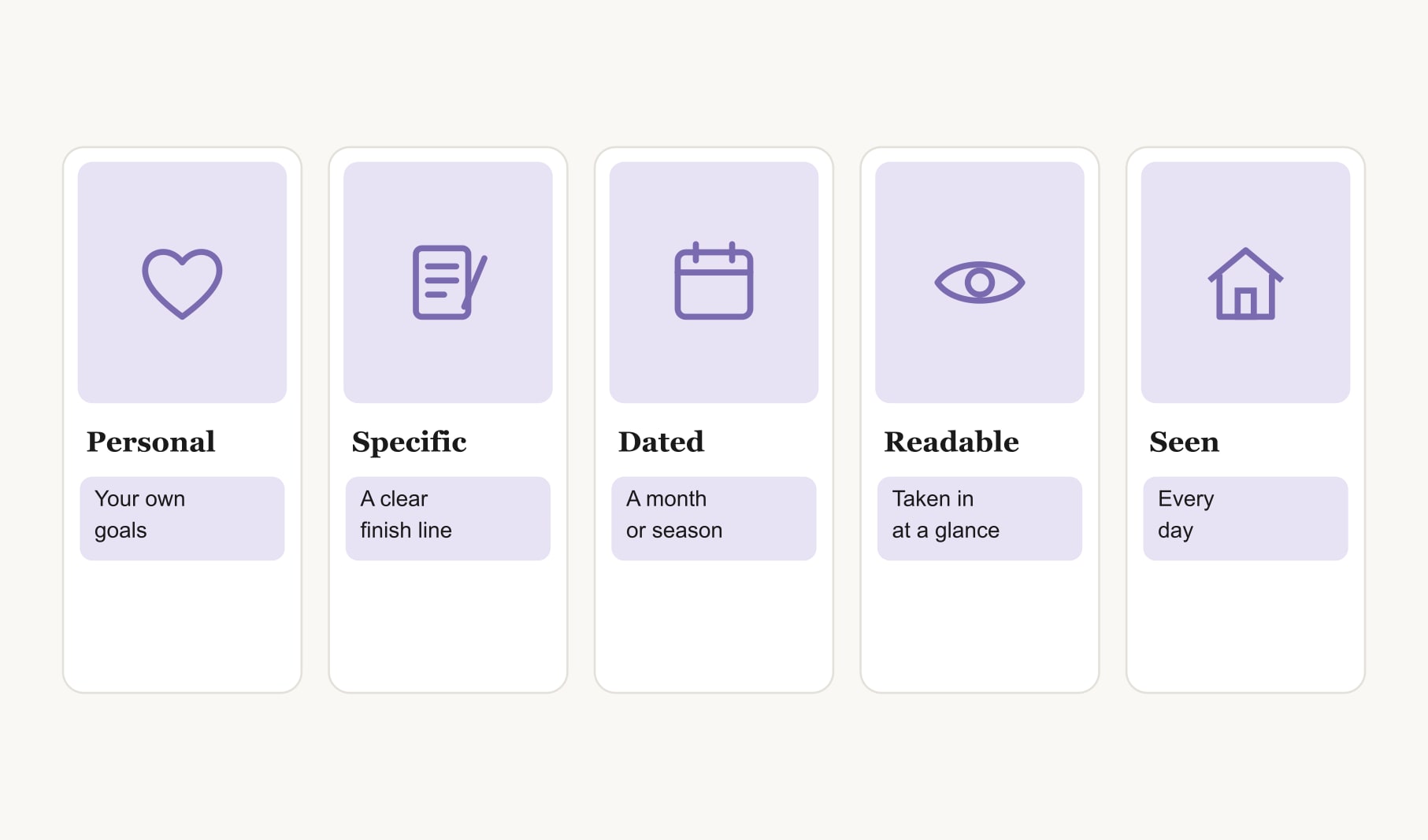
The best examples of vision boards pass five tests: the goals are personal, specific, dated, readable at a glance and seen daily. Strong examples include a three-goal starter board, a single big-goal board, a word of the year board, a shared household board, a career change board and a rest board.
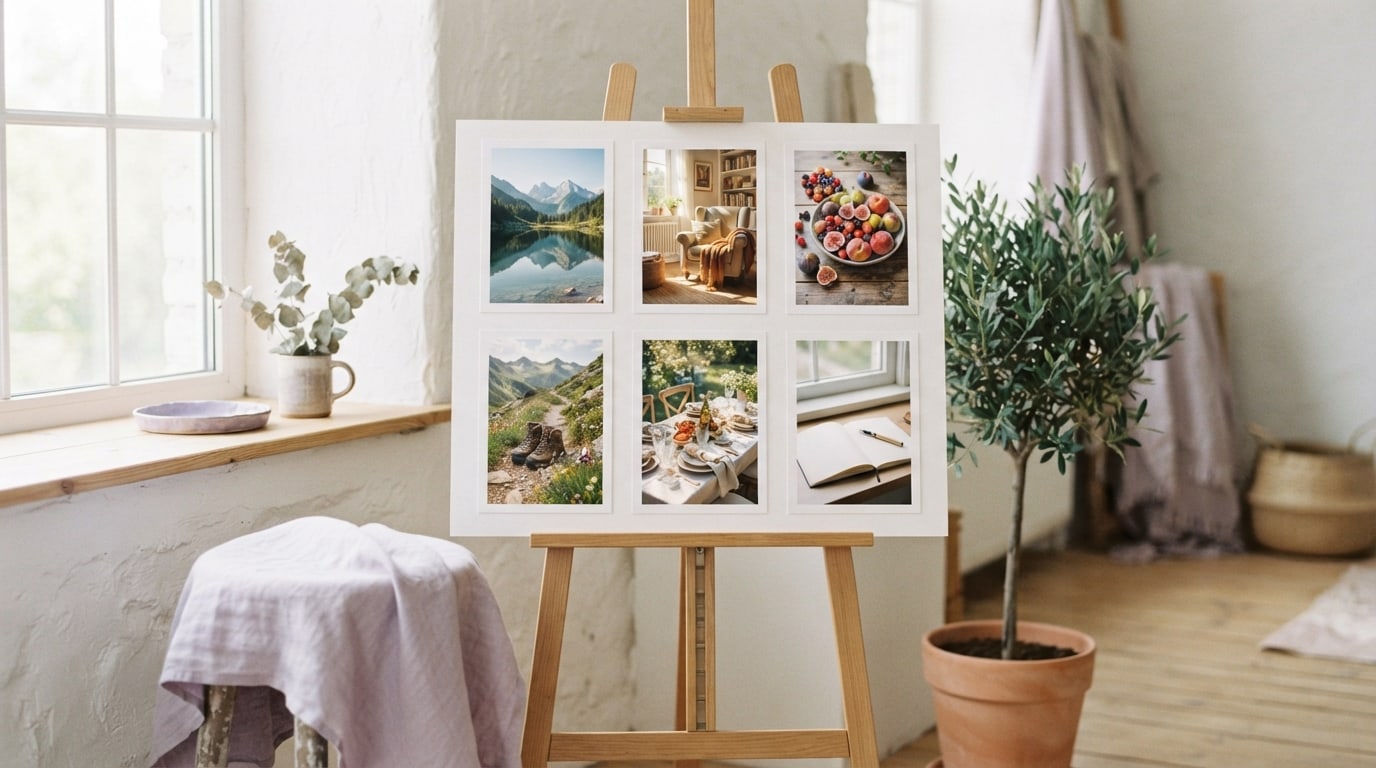
The best examples of vision boards are not the most beautiful ones you can find online. They are the ones that get used, week after week, until the goals on them are done. So before I show you any examples, here are the five tests I judge every board by. Then six boards that pass them, and one that does not, rewritten so it does.
What makes the best examples of vision boards?
Five qualities, and a board needs all of them. Personal: every goal is genuinely the maker’s own, not borrowed from a feed. Specific: each goal has a clear finish line. Dated: each has a month, a season or a timeframe. Readable: you can take the whole board in during a quick glance. Seen: it lives somewhere the maker looks every day.
Notice what is not on the list: expensive materials, artistic skill, a large size or a trendy look. Style is a matter of taste. These five are what make the difference.
Example 1: The three-goal starter
A small sheet of card with three photographs and plenty of white space. A swimming pool: “Swim a length of front crawl within three months. First step: book a lesson.” A guitar: “Play three songs by summer. First step: fifteen minutes on Tuesday.” A tidy desk: “Clear the home office this month. First step: one drawer tonight.” It passes every test, and it takes about forty minutes to make. For a first board, I would choose this over anything grander.
Example 2: The single big goal
One dream gets the whole board. A large image of the finish line sits in the centre, perhaps a finished half marathon or a first short story in print, with four smaller milestone images around it, each dated. It works because a big goal can feel shapeless, and the milestones give it a path you can see.
Example 3: The word of the year board
A single word across the top, such as “steady”, with five photographs beneath, each a goal that fits the word: a weekly walk, a savings habit, an earlier bedtime, a monthly call with a parent, a finished course. The word acts as a filter, so every goal on the board points the same way.
Example 4: The shared household board
Made together by everyone in a home, with one image chosen by each person plus two or three shared goals, such as a family trip or a garden project. It hangs in the kitchen. It works because everyone sees it and everyone owns a piece of it. A family vision board builder makes this easy to put together around a table.
Example 5: The career change board
Four images, each a stage of a move into new work: a course, a portfolio, a conversation over coffee and a desk in the new field. Each has a date that builds on the one before. It works because career changes are long, and seeing the stages laid out turns an overwhelming leap into a staircase. For more ideas in this direction, browse these career vision board examples.
Example 6: The rest and recovery board
A gentle board for a season of rest: an early night, a slow morning with a book, a walk by water, an afternoon with no plans. Captions are soft but still specific: “In bed by ten on weeknights.” “One unplanned afternoon each fortnight.” It works because rest is easy to postpone forever, and a board makes it as visible as any other goal. A self-care tracker for your vision board pairs well with it.
What does a weak example look like, and how do you fix it?
Here is a board that fails most of the tests. Twenty images cut from magazines: a mansion, a sports car, a perfect beach body, a stack of money, a celebrity wedding. No captions, no dates, no steps. It hangs in a spare room that nobody uses. It is not personal, not specific, not dated, not readable and not seen.
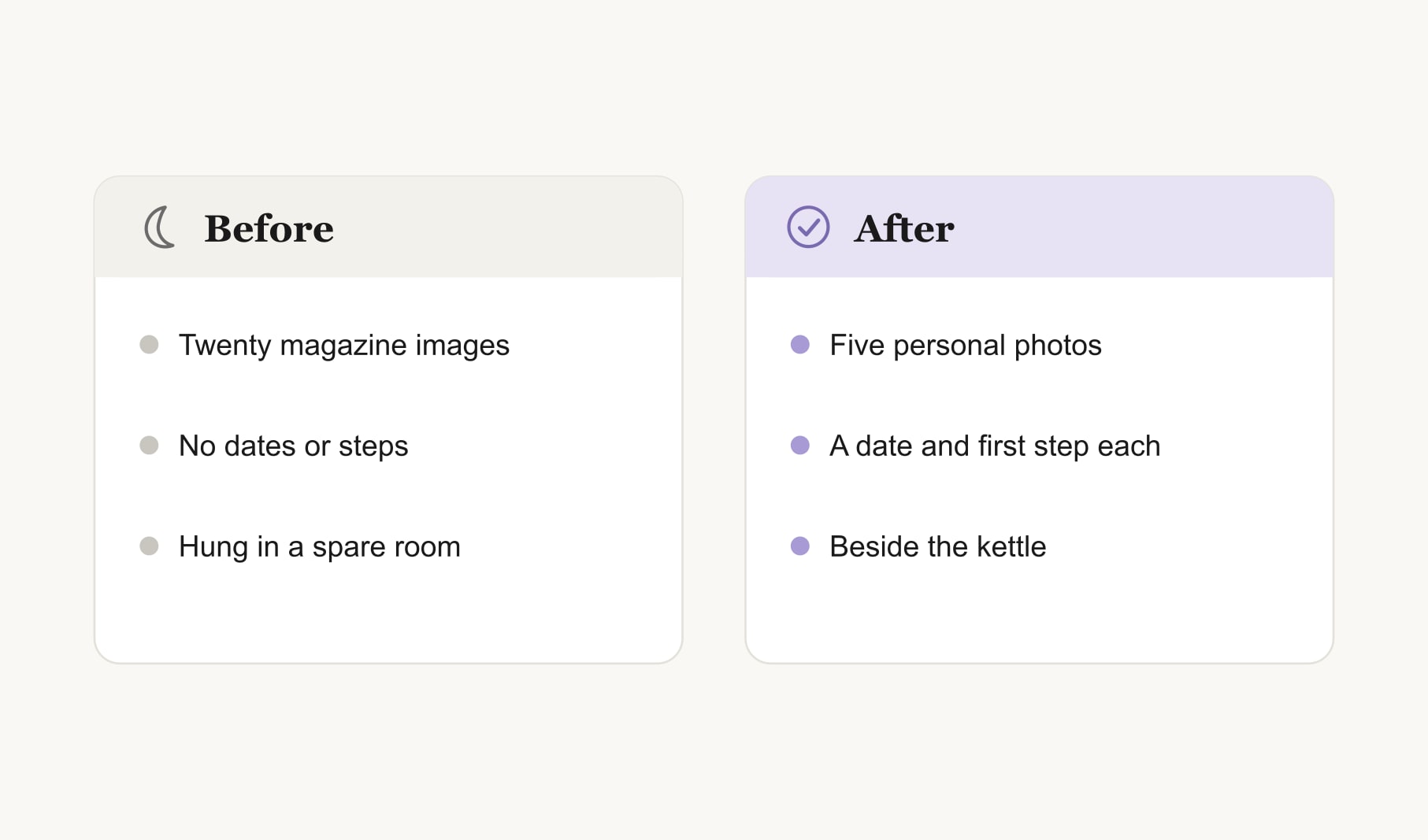
The rewrite keeps the dreams underneath and changes everything else. The mansion becomes a photo of a sunny kitchen like the one the maker actually wants, with “Save for a deposit each week from this month.” The beach body becomes walking boots: “Walk three mornings a week.” The celebrity wedding becomes a table of friends: “Host one dinner a month.” Five images, each with a date and a first step, moved to the spot beside the kettle. Same person, same dreams, a far better board.
How do you find more good examples to learn from?
Look past the styling and run the five tests. A gorgeous board with no dates and no steps is a mood board. A plain board with clear goals and a daily home is a vision board that works. If you would like a polished layout to start from, the best vision board template gallery gives you designs that already leave room for a date and caption under every image.
Why do the best examples look so plain?
Because clarity beats decoration. A board you read in two seconds needs space, a few strong images and short captions. Heavy decoration competes with the goals for your attention. The best boards often look almost bare in photos, and that is exactly why they work on a wall.
Which of these examples should you copy first?
If you have never made a board, copy the three-goal starter. If one dream dominates your thoughts, copy the single big goal. If your life feels scattered, the word of the year board brings it into focus. And if you share a home, the household board gets everyone pulling together. Whichever you choose, run the five tests before you hang it, and again after a month.
Keep reading
Best examples of vision boards: your questions
The best vision board examples pass five tests: the goals are personal, specific, dated, readable at a glance and seen every day. Style, size and materials matter far less. A plain board that passes all five tests will do more for you than a beautiful one that fails them.
A three-goal starter board is a good vision board example for beginners: three photographs on a small card, each with a caption, a date and a first step, hung where you look daily. It takes under an hour to make and passes every test that matters.
Many vision board examples online use dozens of magazine images with no captions, dates or steps, chosen for how they look rather than what the maker wants. They look striking but are hard to act on. Look past the styling and check for specific, dated goals.
Keep the dreams and change the board. Swap generic images for personal ones, cut to about five goals, add a date and first step under each, and move the vision board somewhere you see it daily. Most weak boards can be fixed in under an hour.
Yes. A rest board with specific captions, such as in bed by ten on weeknights or one unplanned afternoon each fortnight, makes a strong vision board example. It keeps rest as visible as any other goal, which helps stop it being postponed forever.
A shared household vision board works well when each person adds at least one image of their own and two or three goals are shared, such as a trip or a garden project. Hanging it in the kitchen keeps it seen, and shared ownership keeps everyone involved.
No. The best vision board examples rely on clear, personal goals with dates and first steps, not artistic skill. A neat grid of photographs on plain card works beautifully. If you enjoy making things, a collage is lovely too, as long as each goal stays easy to see.
Keep your vision board alive
A board built in your browser resets when you close the tab. Vision Boardly saves your boards, reminds you as each vision date arrives, and tracks the habits and moods moving you toward them.
Get Vision Boardly Free